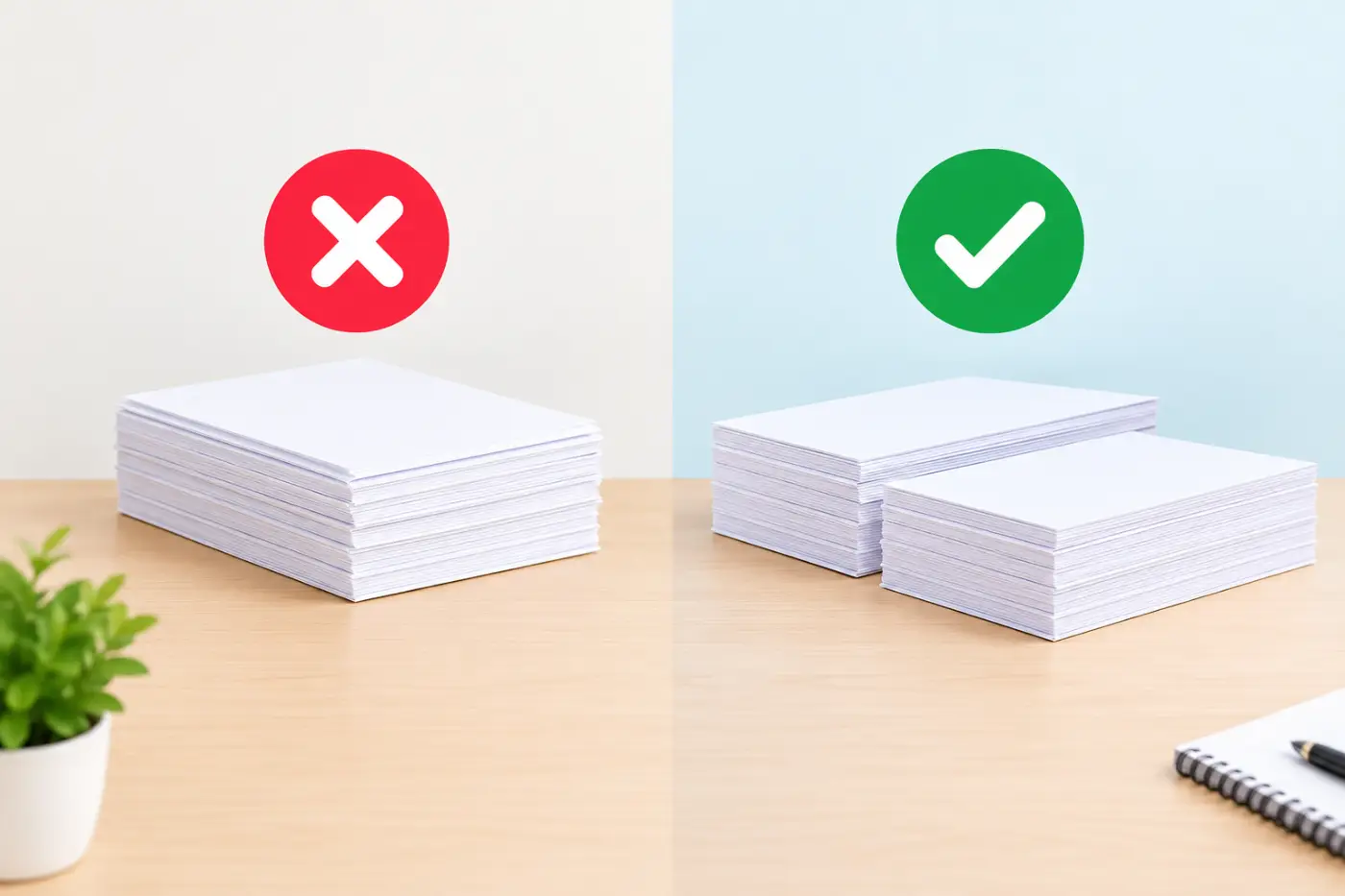
If you’re wondering about copys or copies, the correct spelling is copies. The word copys isn’t the standard English spelling. Use copies when you mean more than one copy or when you use copy as a verb with he, she, or it.
This small spelling question can cause confusion because many English words form their plural by adding s. For example, book becomes books and car becomes cars. But words that end in a consonant followed by y usually change the y to ies.
So, one copy becomes two copies. You’d also write, “She copies the report every morning.” In both cases, the spelling changes from y to ies.
The same pattern appears in many common English words. City becomes cities. Party becomes parties. Story becomes stories. Once you understand the rule, this spelling becomes much easier to remember.
This guide explains the difference in plain English. You’ll see the grammar rule, real sentence examples, common mistakes, pronunciation tips, and related words that follow the same pattern.
Quick Definition
Copies is the correct standard spelling. It can be the plural form of copy, meaning more than one copy, or the verb form used with he, she, or it. Copys is not standard English.
Direct Answer
The correct spelling is copies, not copys. Use copies for the plural of copy and for the third person singular form of the verb copy.
Comparison Table
| Word or Phrase | Meaning | Example Sentence | When to Use It |
|---|---|---|---|
| Copy | One duplicate or one version of something. | I need one copy of the form. | Use it for one item or as the base verb. |
| Copies | More than one copy. | I printed three copies of the form. | Use it for two or more items. |
| Copies | The third person singular form of copy. | She copies the notes carefully. | Use it with he, she, or it when copy is a verb. |
| Copys | Not a standard English spelling. | The word copys is incorrect in standard English. | Avoid it in normal English writing. |

Why Copies Is Correct
The spelling copies follows a common rule in English. When a word ends in a consonant followed by y, the y often changes to i before you add es.
The word copy ends with py. The letter before the final y is p, which is a consonant. That gives us the pattern consonant plus y.
When we make the plural, we change the final y to i and add es.
Copy becomes copies.
The same pattern works with many other words.
- City becomes cities.
- Family becomes families.
- Baby becomes babies.
- Country becomes countries.
- Party becomes parties.
- Story becomes stories.
This isn’t just a spelling trick for one word. It’s part of a larger pattern that appears throughout English.
The Basic Spelling Rule
Here’s the rule in its simplest form.
When a noun ends in a consonant plus y, change the y to i and add es to make the plural.
You can think of the process like this.
- Copy becomes copies.
- Baby becomes babies.
- Library becomes libraries.
- Dictionary becomes dictionaries.
- Company becomes companies.
The spelling changes because English doesn’t normally form these plurals by simply adding s after the final consonant plus y pattern.
That’s why copys doesn’t work as the standard plural spelling.
The change is easy to miss because the word still sounds familiar. When you hear someone say “copies,” you don’t hear the spelling change. You only hear the pronunciation. That can make the written form harder to remember.
Why Copys Looks Tempting
The incorrect form copys seems logical at first.
Many English plurals simply take s. You have one pen and two pens. You have one phone and two phones.
That simple pattern leads people to write copy plus s as copys.
The problem is that copy belongs to a different spelling group. Because it ends in a consonant followed by y, the plural changes the ending.
This is one reason English spelling can feel less predictable than English pronunciation. You may know exactly what a word sounds like but still need to remember its written pattern.
The good news is that you don’t need to memorize every word separately. Learning the pattern gives you a shortcut.
The Plural Form Of Copy
When you have more than one copy, use copies.
For example.
- “I made two copies of the contract.”
- “The teacher handed out copies of the worksheet.”
- “Please keep three copies for your records.”
- “We need enough copies for everyone.”
- “The office printed fifty copies of the report.”
In each sentence, copies refers to more than one version of something.
A copy can be a printed document, a duplicate file, a reproduction of an image, or another version of the same material.
The meaning can change based on the context, but the plural spelling stays the same.
The Verb Form Of Copy
There is another reason people see copies and get confused.
Copies isn’t only a plural noun. It’s also a verb.
The base verb is copy.
With I, you, we, and they, you normally use copy.
- “I copy the information into my notes.”
- “You copy the file to another folder.”
- “We copy the data every Friday.”
- “They copy the design by hand.”
- With he, she, or it, the verb becomes copies.
- “She copies the information into her notebook.”
- “He copies the file to his computer.”
- “The program copies the data automatically.”
This means copies can have two different grammatical jobs.
It can mean more than one copy.
It can also mean that one person or thing performs the action of copying.
Context tells you which meaning is intended.
Copies As A Noun
A noun names a person, place, thing, or idea. Copy can be a noun when it means a duplicate or version of something.
For example.
“I need a copy of your receipt.”
Here, copy is a singular noun. You’re talking about one version of the receipt.
Now look at this sentence.
“I need three copies of your receipt.”
Here, copies is a plural noun. You’re talking about three versions.
The meaning stays closely connected. The number changes, so the form changes too.
Examples With Copies As A Noun
Here are some natural examples.
- “Can you make five copies of this document.”
- “The students received copies of the reading material.”
- “I saved two copies of the file.”
- “We ordered extra copies of the book.”
- “The store keeps several copies of the form.”
- “Please send copies of the invoices to the accounting team.”
- “The library has multiple copies of the novel.”
- “She brought copies of her resume to the interview.”
In each example, copies means more than one version or duplicate.
Notice that the word can work with both physical and digital items.
You can have copies of a printed document.
You can have copies of a photo.
The spelling doesn’t change based on the type of item.
Copies As A Verb
The word copies can also function as a verb.
The base form is copy. When the subject is he, she, or it, standard English uses copies.
Consider these examples.
- “She copies the answer from the board.”
- “He copies the information into the form.”
- “The machine copies the document quickly.”
- “She copies the file before making changes.”
- “The software copies the folder to another location.”
In these sentences, copies describes an action.
This is different from the noun use.
Compare these two examples.
- “I made three copies.”
- “She copies the notes.”
In the first sentence, copies is a noun. It refers to three duplicate items.
In the second sentence, copies is a verb. It describes what she does.
The spelling is identical, but the grammatical role changes.
Copy And Copies In Everyday English
You’ll see this word often in school, work, business, technology, and everyday communication.
At school, you might ask for copies of a worksheet.
At work, you might make copies of a report.
On a computer, you might copy a file.
In an office, a machine might copy a document.
In publishing, a company might print thousands of copies of a book.
For example.
- “Please make two copies of the presentation.”
- “She copies the information into the spreadsheet.”
- “Keep copies of your important documents.”
- “The printer made several copies of the form.”
These sentences sound natural because they use the correct form for the job.
The Rule For Words Ending In Y
The spelling pattern behind copies becomes much easier when you learn the broader rule.
Many nouns ending in consonant plus y change y to ies in the plural.
Here are several examples.
- Baby becomes babies.
- City becomes cities.
- Country becomes countries.
- Family becomes families.
- Fly becomes flies.
- Party becomes parties.
- Story becomes stories.
- Try becomes tries.
- Company becomes companies.
- Dictionary becomes dictionaries.
This pattern is common enough to be worth learning.
Words That Keep The Y
There is an important detail.
Not every word ending in y changes to ies.
If a word ends in a vowel followed by y, you normally add s.
For example.
- Boy becomes boys.
- Day becomes days.
- Key becomes keys.
- Toy becomes toys.
- Journey becomes journeys.
- Valley becomes valleys.
The difference is the letter directly before the final y.
In copy, the letter before y is p, which is a consonant. So copy becomes copies.
In boy, the letter before y is o, which is a vowel. So boy becomes boys.
That small detail helps explain the spelling clearly.
A Simple Comparison
Look at these pairs.
- Copy becomes copies.
- Boy becomes boys.
- City becomes cities.
- Day becomes days.
- Family becomes families.
- Key becomes keys.
- Party becomes parties.
- Toy becomes toys.
The rule is much easier to remember when you compare the words side by side.
Common Mistakes With Copy
Spelling mistakes usually happen because writers apply a familiar rule to the wrong word.
Here are some of the most common errors.
Adding Only S
The first common mistake is writing copys.
A writer may think the plural is formed by adding s to copy.
That gives copy plus s, or copys.
Standard English doesn’t use that spelling.
The correct form is copies.
The same mistake can happen with other words that follow the same pattern.
- Baby does not become babys.
- City does not become citys.
- Party does not become partys.
- Family does not become familys.
Each one changes the final y to i before adding es.
Using Copies For Every Situation
The opposite mistake can happen too.
Some writers learn that copies is correct and then use it everywhere.
That’s not right either.
- If you mean one duplicate, use copy.
- “I need a copy of the receipt.”
- If you mean several duplicates, use copies.
- “I need copies of the receipts.”
The number matters.
Confusing Copies And Copying
Another common issue involves the word copying.
- Copy is the base verb.
- Copies is the third person singular form.
- Copying is the present participle or gerund form.
For example.
- “I copy the text.”
- “She copies the text.”
- “They are copying the text.”
The spelling changes because the grammar changes.
Understanding these forms helps prevent mistakes in both writing and speaking.
Copy Copies And Copied
These three forms are worth knowing together.
- Copy is the base form.
- Copies is used as a plural noun or as the third person singular verb.
- Copied is the past tense and past participle.
Look at these examples.
- “I copy the information every morning.”
- “She copies the information every morning.”
- “She copied the information yesterday.”
- “The files were copied to another folder.”
The spelling becomes easier when you see the word as part of a family.
- Copy.
- Copies.
- Copied.
- Copying.
Each form has its own job.
Why The Spelling Changes
English spelling often changes the final letter of a word when a suffix is added.
In this case, the plural ending is es after changing y to i.
Copy becomes copi plus es.
The final result is copies.
This pattern developed as part of English spelling conventions. It also makes the plural form easier to pronounce naturally.
You don’t need to study the history of English to use the rule. Just remember the practical pattern.
Consonant plus y becomes ies in many common plurals.
That’s enough to get the spelling right in everyday writing.
Real Examples Of Copies
Learning through examples is often more useful than memorizing a rule by itself.
Here are several situations where copies fits naturally.
- “Please print two copies of the application.”
- This sentence asks for two duplicate versions of an application.
- “The teacher gave the students copies of the article.”
- Here, more than one student received a version of the same article.
- “I keep copies of my important records.”
- The speaker keeps multiple duplicate documents.
- “The office needs extra copies before the meeting.”
- The office needs more than one version of a document.
- “She made copies for everyone on the team.”
- The speaker is talking about several duplicate items.
- “The printer can produce hundreds of copies.”
- The word refers to many printed versions.
- “The website provides copies of the original documents.”
Here, copies can refer to digital versions.
Each example uses the same spelling because the same plural noun is involved.
When Copy Is Better
Use copy when you’re talking about one item or the basic action.
For example.
- “I need a copy.”
- “Please copy this page.”
- “Can you copy the file.”
- “She will copy the information later.”
- “We can copy the document tomorrow.”
The context tells you if copy is being used as a noun or a verb.
If you can replace the word with one duplicate, it is probably the noun copy.
If you can replace it with the action of making a duplicate, it is probably the verb copy.
When Copies Is Better
Use copies when you’re talking about multiple duplicates.
For example.
- “I need two copies.”
- “Please send three copies.”
- “We printed ten copies.”
You also use copies as a verb with he, she, or it.
For example.
“She copies the information.”
- “He copies the file.”
- “The machine copies the document.”
This gives you two quick checks.
Ask how many items you mean.
Then check who is doing the action if you’re using copy as a verb.
A Quick Memory Trick
A simple way to remember the spelling is to connect copy with city.
- Copy becomes copies.
- City becomes cities.
- Both words end in a consonant plus y. Both change the y to ies.
- You can also remember the contrast.
- Copy becomes copies.
- Boy becomes boys.
- The word before the final y determines the pattern.
- If a consonant comes before y, think ies.
- If a vowel comes before y, think s.
This isn’t a perfect guide for every unusual English word, but it works well for many common words and is especially useful for everyday spelling.
Common Word Pairs
Learning related words can make spelling patterns stick.
Here are some useful examples.
- Baby and babies.
- City and cities.
- Family and families.
- Party and parties.
- Story and stories.
- Country and countries.
- Company and companies.
- Library and libraries.
- Dictionary and dictionaries.
- Activity and activities.
Each pair follows the same basic pattern.
The singular form ends in consonant plus y. The plural changes y to ies.
You can use this pattern as a mental shortcut when you come across a new word.
What About Copy’s
It’s also useful to separate copies from copy’s.
They aren’t the same.
- Copies can be a plural noun or a verb.
- Copy’s is a possessive form or a contraction.
For example, in the phrase “the copy’s cover,” the apostrophe shows possession. The phrase means the cover belonging to the copy.
In a sentence such as “The copy’s ready,” the apostrophe can represent copy is. This use is grammatical in informal writing.
- The apostrophe matters.
- Compare these examples.
- “I made two copies.”
- “The copy’s cover is torn.”
- “The copy’s ready.”
- The first uses the plural form.
- The second uses a possessive form.
- The third uses a contraction.
This distinction is useful because writers sometimes add an apostrophe when they only need a plural.
Don’t use an apostrophe just to make a regular plural.
Why Copys Is Not Standard
The form copys doesn’t follow the normal spelling rule for this word.
It may appear in usernames, names, informal online posts, file names, or other places where people don’t follow standard spelling. You might also see it in a typo.
That doesn’t make it a standard English form.
For formal writing, school assignments, business documents, websites, emails, and other polished content, use copies.
Standard spelling gives readers a clear signal that the word is being used correctly.
How To Use Copies Correctly
The easiest way to master the word is to see it in different sentence patterns.
The word can appear after numbers.
“I printed four copies.”
It can appear after words such as several, many, and multiple.
- “Several copies were missing.”
- It can appear after a quantity phrase.
- “We need a few copies for the meeting.”
- It can also appear as the main verb.
- “She copies the notes every afternoon.”
The meaning depends on the sentence.
Copies After Numbers
A number greater than one normally requires the plural form.
- One copy.
- Two copies.
- Three copies.
- Ten copies.
- One hundred copies.
For example.
- “The school ordered one copy.”
- “The school ordered twenty copies.”
The singular and plural forms are easy to compare.
The number tells you which form to use.
Copies After Quantity Words
Words such as many, several, few, and multiple normally refer to more than one item.
So they work with copies.
- “Several copies are available.”
- “Many copies were sold.”
- “A few copies remain.”
- “Multiple copies were saved.”
This is a useful clue when you’re unsure about the spelling.
If the sentence clearly talks about more than one duplicate, copies is the form you need.
Copies With Of
The word often appears in the pattern copies of.
For example.
- “Copies of the report were sent to the staff.”
- “I need copies of these receipts.”
- “The library has copies of the book.”
- “She made copies of the photographs.”
This pattern is very common in everyday English.
You can use it for physical documents and digital material.
- “Copies of the file were stored online.”
- “Copies of the photo were saved on the computer.”
The phrase is simple and natural.
Copies In School Writing
Students often use this word when talking about assignments, worksheets, notes, and books.
Here are some natural examples.
- “Please bring two copies of your essay.”
- “The teacher handed out copies of the worksheet.”
- “I made copies of my notes for my study group.”
- “The students received copies of the reading.”
- “We need enough copies for the entire class.”
- The same spelling rule applies every time.
If the sentence means more than one copy, use copies.
A Useful School Example
Imagine a teacher has one worksheet.
You could say.
“The teacher has one copy of the worksheet.”
Now imagine the teacher prints twenty worksheets.
You could say.
“The teacher has twenty copies of the worksheet.”
The noun changes from singular to plural because the number changes.
That is the whole idea.
Copies In Business Writing
The word is also common in professional communication.
For example.
- “Please send copies of the invoices.”
- “Keep copies of the signed agreement.”
- “We need two copies for our records.”
- “Copies of the report were shared with the team.”
- “Please make copies before the meeting.”
- These sentences are clear and natural.
In formal writing, spelling errors can distract readers from the message. Using copies correctly keeps the writing clean and professional.
Copies In Digital Communication
The word copy has also become strongly connected with computers and digital files.
- You can copy a file.
- You can copy text.
For example.
- “Save copies of your important files.”
- “The program copies the folder automatically.”
- “She copies the text into the document.”
- “The system creates copies of the data.”
The spelling still follows the same grammar rules.
Technology doesn’t change the English form of the word.
Copy And Duplicate
The words copy and duplicate are closely related, but they aren’t always interchangeable.
A copy is another version of something.
A duplicate is something that matches another item closely or exactly.
For example.
- “I made a copy of the document.”
- “I created a duplicate of the file.”
Both sentences can describe the same basic action.
Still, copy is often more natural in everyday conversation.
People commonly say “make a copy,” “copy the file,” and “send me a copy.”
The word duplicate can sound more technical in some contexts.
Copy And Replica
A replica is another related word, but it has a narrower meaning.
A replica is usually a reproduction made to resemble an original object.
For example.
“The museum displayed a replica of the ancient statue.”
You wouldn’t normally use replica for an ordinary photocopy.
You’d say.
“I need a copy of the document.”
You wouldn’t normally say.
“I need a replica of the document.”
Choosing the right related word makes your writing more precise.
Copy And Version
Version can also overlap with copy, especially with digital content.
For example.
- “I saved a copy of the file.”
- “I saved an earlier version of the file.”
A copy usually focuses on duplication.
A version often focuses on a particular form or stage of something.
You might have several copies of the same version.
You might also have several versions of the same document.
The words are related, but they highlight different ideas.
Copy And Original
The word original describes the first or source item.
A copy is based on that item.
For example.
“Keep the original and make two copies.”
Here, the original is the source. The copies are additional versions.
This distinction matters in documents, photographs, artwork, records, and digital files.
You may hear people say “original copy” in casual speech, but the phrase can be confusing because original and copy suggest different roles.
Clear writing usually identifies the original and the copies separately.

The Pronunciation Of Copies
Copies is pronounced roughly like kop eez.
The final part sounds like eez, not simply s.
- Copy has two syllables.
- Copies also has two syllables.
The spelling change does not create a completely different word. It changes the ending to fit the plural and verb pattern.
Pronunciation can help you recognize the form when you’re listening, but spelling is what tells you how to write it.
Copies And Other Y Words
The spelling pattern becomes easier when you see it across many words.
Consider these examples.
- Activity becomes activities.
- Community becomes communities.
- Emergency becomes emergencies.
- Opportunity becomes opportunities.
- Responsibility becomes responsibilities.
- University becomes universities.
These words all follow the same basic y to ies pattern because they end with a consonant before the final y.
This is why learning spelling patterns can be more useful than memorizing isolated words.
Once you know the pattern, you can apply it to new words.
When The Rule Does Not Apply
The consonant plus y rule applies to many common words, but English has different patterns in different situations.
The biggest contrast involves words ending in vowel plus y.
For example.
- Day becomes days.
- Key becomes keys.
- Boy becomes boys.
- Toy becomes toys.
- Essay becomes essays.
- The y stays in place.
That’s because a vowel comes directly before it.
There are also words borrowed from other languages, proper names, abbreviations, and special terms that may follow different conventions.
For ordinary everyday words, though, the consonant plus y pattern is a reliable guide.
FAQs
Is copys a correct word?
No. Copys isn’t the standard spelling in English. Use copies as the plural of copy and as the third person singular form of the verb copy.
Is copies the plural of copy?
Yes. Copies is the standard plural form of copy. For example, “I printed three copies of the document.”
Why does copy change to copies?
Copy ends with a consonant followed by y. In the plural form, the y changes to i and es is added, giving you copies.
Is it copy or copies?
Use copy for one duplicate or as the base verb. Use copies for more than one duplicate or as the verb with he, she, or it.
Is copies a noun or a verb?
It can be either. In “I made three copies,” it is a plural noun. In “She copies the notes,” it is a verb.
Is copy’s the same as copies?
No. Copy’s uses an apostrophe and can show possession or represent copy is. Copies is the normal plural form and can also be a verb.
Do I say two copy or two copies?
Say two copies. A number greater than one normally requires the plural form.
What is the past tense of copy?
The past tense is copied. For example, “She copied the information into her notebook.”
Conclusion
The correct spelling is copies, not copys. Use copies when you mean more than one copy. You also use copies as the verb with he, she, or it.
The key spelling rule is simple. When a word ends in a consonant followed by y, the y usually changes to i before es is added. That’s why copy becomes copies.
Remember the difference between copy, copies, copied, and copying. Use copy for the base form, copies for the plural or third person singular verb, copied for the past tense, and copying for the form used with ing.
If you ever hesitate over copys or copies, check the word before the final y and think about the role of the word in the sentence. For the word copy, the answer is clear: write copies.

Dr. Arthur Pendelton is a veteran historical linguist and grammar expert with over 30 years of experience in academic editing. A retired professor, Arthur specializes in the etymology and evolution of the English language. He is passionate about “unpacking the history behind the rules,” helping readers understand why we spell, punctuate, and phrase things the way we do today. Whether he’s settling debates on archaic usage or explaining complex linguistic shifts, Dr. Pendelton brings scholarly precision to every article.