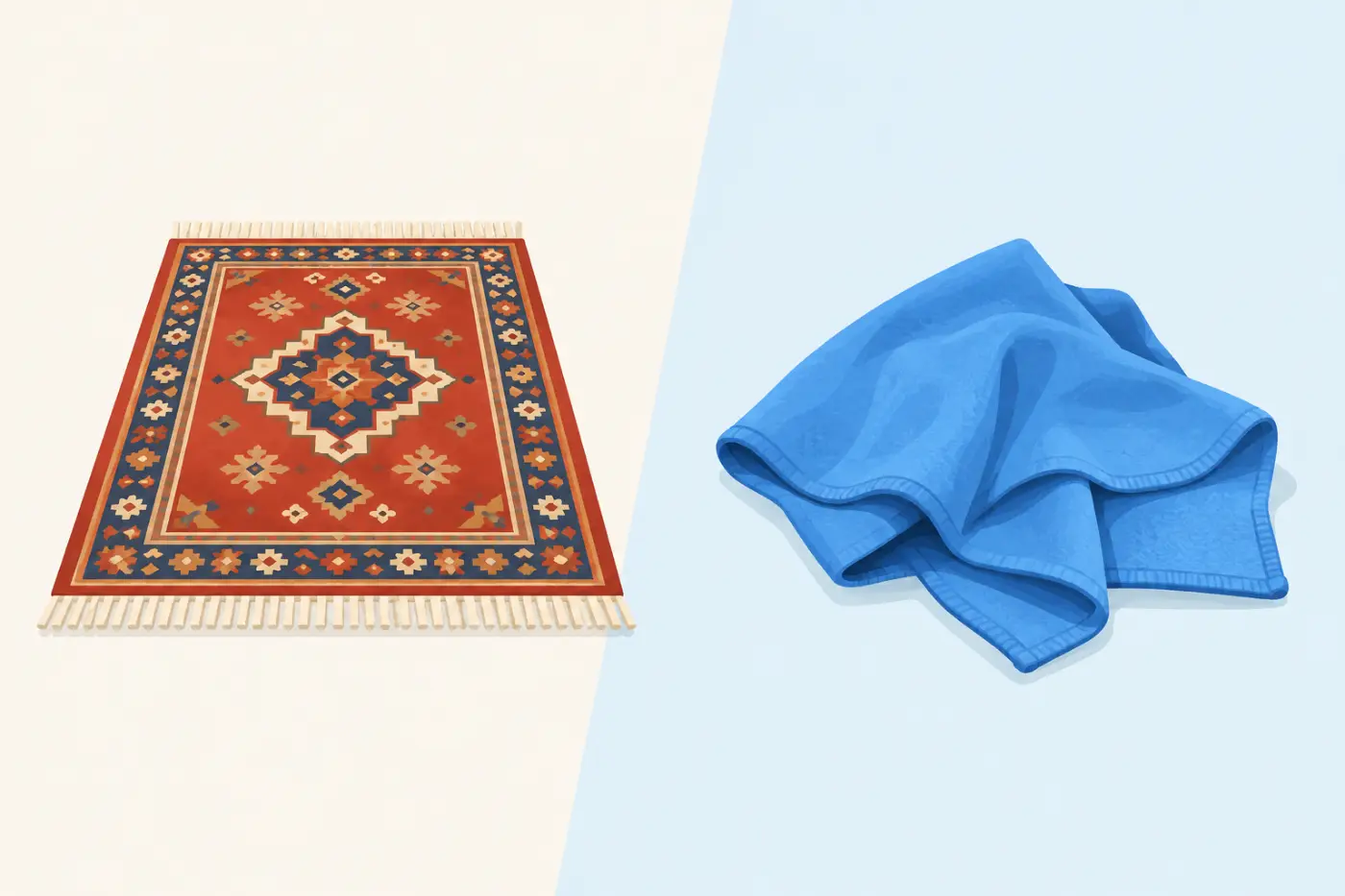
If you’ve ever wondered about rug vs rag, you’re not alone. The two words look and sound similar, but they describe very different things. A rug is usually a piece of fabric used to cover or decorate a floor. A rag is an old or unwanted piece of cloth that people often use for cleaning, wiping, or other simple jobs.
The easiest way to remember the difference is this. A rug is usually meant to be kept and used as part of a room. A rag is usually a piece of cloth used for cleaning or other rough work.
That basic difference clears up most confusion. Still, context matters. The word rug can refer to different kinds of floor coverings, while rag can describe cloth used for cleaning, polishing, wiping, or even certain types of clothing in informal speech.
This guide explains the meaning of both words, shows how they work in real sentences, and covers the common mistakes that cause confusion. You’ll also learn how the words differ in size, purpose, tone, and everyday use.
Quick Definition
A rug is a piece of fabric or other material placed on a floor for comfort, decoration, warmth, or protection. A rag is usually a piece of old or unwanted cloth used for cleaning, wiping, polishing, or other practical tasks.
Direct Answer
A rug is mainly a floor covering, while a rag is mainly a piece of cloth used for cleaning or other rough work. They can both be made from fabric, but their purpose and typical use are different.
Comparison Table
| Word or Phrase | Meaning | Example Sentence | When to Use It |
|---|---|---|---|
| Rug | A piece of material used to cover part of a floor | We put a soft rug beside the bed. | Use it for a floor covering. |
| Rag | A piece of cloth used for cleaning or wiping | Grab a rag and wipe the table. | Use it for cleaning or similar work. |
| Area rug | A decorative rug that covers part of a room | The area rug makes the living room feel warmer. | Use it for a movable floor covering. |
| Cleaning rag | A piece of cloth used for cleaning | I keep a cleaning rag under the sink. | Use it when talking about cleaning cloth. |
| Rag cloth | Cloth made from or resembling worn pieces of fabric | The craft uses colorful rag cloth. | Use it when discussing cloth or crafts. |
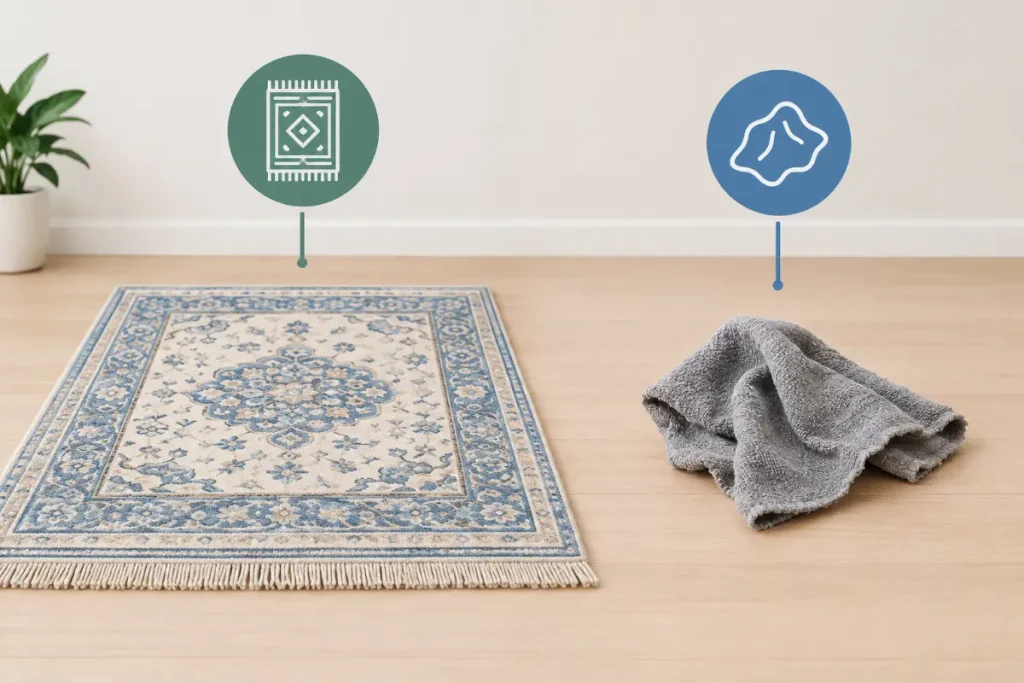
What A Rug Means
A rug is a piece of material designed to sit on a floor. It can add color, warmth, comfort, or style to a room. Rugs come in many shapes and sizes, from small mats placed beside a bed to large pieces that cover most of a living room floor.
Most rugs are made from materials such as wool, cotton, nylon, polyester, or other fibers. Some are woven by hand, while others are made by machines. A rug can be simple and inexpensive, or it can be a valuable decorative piece.
The key point is purpose. A rug normally has a finished look and is meant to be part of a living space.
A Rug Covers A Floor
The most common use of rug refers to something placed on a floor.
For example:
- We bought a new rug for the living room.
- She put a small rug in front of the kitchen sink.
- The dog sleeps on the rug every afternoon.
In each sentence, the item belongs on the floor. It might protect the floor, make the room more comfortable, or simply look nice.
That floor connection is the easiest clue to remember.
Rugs Come In Many Sizes
Not every rug is large. A rug can be very small.
A small rug might sit beside a bed. Another might cover the space under a coffee table. A larger rug might sit under a dining table or cover most of a bedroom.
For example:
- I need a small rug for the bathroom.
- The dining table sits on a large rug.
- We placed a round rug under the coffee table.
The size doesn’t decide if something is a rug. Its intended use matters more.
Rugs Can Be Decorative
Many people buy rugs because they change the appearance of a room.
A plain room can feel warmer with a colorful rug. A rug can also help connect the colors of furniture, curtains, walls, and other decorations.
For example:
- The blue rug matches the sofa.
- We chose a simple rug because the room already has a lot of color.
- The patterned rug gives the bedroom more character.
Here, the rug isn’t simply protecting the floor. It also plays a visual role.
Rugs Can Add Comfort
A rug can make a hard floor feel softer under your feet. This can be especially useful in bedrooms, living rooms, and other areas where people walk or sit often.
For example:
- I like stepping onto the soft rug when I get out of bed.
- The rug makes the hardwood floor more comfortable.
- We put a thick rug in the playroom so the kids could sit on the floor.
A rug can also help make a room feel warmer. It doesn’t replace heating, but it can make a cold floor more pleasant to walk on.
What A Rag Means
A rag is usually a piece of cloth used for a practical job. Cleaning is one of its most common uses.
You might use a rag to wipe a counter, clean a window, polish furniture, dry a surface, or remove dirt from a tool. Rags are often made from old shirts, towels, sheets, or other pieces of fabric that are no longer useful for their original purpose.
For example:
- Use a rag to wipe up the spilled coffee.
- He grabbed a rag and cleaned the grease from his hands.
- Keep a few rags in the garage for messy jobs.
Unlike a rug, a rag doesn’t usually serve as room decoration. It’s a working piece of cloth.
A Rag Is Often Old Cloth
The word rag often suggests that the cloth is old, worn, cheap, or no longer wanted for its original purpose.
An old T shirt can become a rag after it develops holes or stains. Instead of throwing it away, someone might cut it into pieces and use those pieces for cleaning.
For example:
- I turned my old shirt into a rag for the garage.
- These old towels make great rags.
- Don’t throw that cloth away. I can use it as a rag.
The word doesn’t always mean the cloth is dirty. It mainly points to its practical use and often its worn condition.
Rags Are Useful For Cleaning
You’ll often hear rag in homes, garages, workshops, and other places where people clean things by hand.
For example:
- Wipe the dust off with a dry rag.
- Use a damp rag to clean the table.
- He used an old rag to polish the metal.
The type of rag can change based on the job. A soft cloth may work well for delicate surfaces, while a rough cloth may be better for removing heavy dirt.
Rag Can Refer To A Piece Of Clothing
Rag can also appear in expressions that refer to poor or worn clothing.
For example, someone might describe very old clothes as rags. This use is more expressive than the basic cleaning meaning.
- You might hear:
- He was dressed in rags.
This means the person was wearing very old, damaged, or poor quality clothing.
In this sense, rag isn’t talking about a cleaning cloth. The word describes worn clothing.
The Main Difference Between A Rug And A Rag
The biggest difference is purpose.
A rug is designed or chosen to cover a floor. A rag is generally used as a piece of cloth for cleaning, wiping, polishing, or similar work.
Think about what you would do with each item.
You might place a rug under a table.
You might use a rag to clean that table.
That simple picture makes the difference easy to remember.
A rug normally stays in one place for a period of time. A rag is usually picked up and moved around while someone works.
A rug often has a finished appearance. A rag may be old, torn, stained, or uneven.
A rug is usually part of the room. A rag is usually a tool.
Rug And Rag In Everyday Sentences
Seeing the two words in similar sentences can make the difference even clearer.
She bought a new rug for the bedroom.
She used a rag to clean the bedroom floor.
The first sentence talks about something placed on the floor. The second talks about something used to clean the floor.
Here’s another example.
- The rug under the table is dirty.
- Grab a rag and clean the table.
- Again, the rug is part of the room. The rag is being used to do a job.
- You can also use both words in one sentence.
- He moved the rug before using a rag to clean the floor.
That sentence shows the difference perfectly. One item belongs on the floor. The other helps clean the floor.
More Examples With Rug
- The rug in the hallway is starting to fade.
- We need a larger rug for the living room.
- She shook the rug outside to remove the dust.
- The cat curled up on the rug.
- I moved the rug so I could sweep underneath it.
- This rug feels soft under my feet.
- Each sentence describes a floor covering.
More Examples With Rag
- I need a clean rag for the kitchen.
- He used a rag to wipe the window.
- Keep an old rag in the car.
- She cleaned the paintbrush with a rag.
- The mechanic wiped his hands with a rag.
- I used a damp rag to remove the stain.
- Each sentence treats the cloth as something used for a task.
Why People Confuse These Words
The confusion usually comes from their similar spelling and sound.
Both words are short. Both contain the same first letter and a similar ending sound.
That last point makes the confusion stronger.
A rug can be made from fabric. A rag can also be made from fabric. But that doesn’t make them interchangeable.
- The purpose changes the word.
- Imagine two pieces of cloth.
One is woven, finished, attractive, and designed to sit under a coffee table. That’s a rug.
The other is an old cotton shirt cut into a small piece and kept under the sink. That’s a rag.
The material can be similar. The job is different.
This is a useful lesson for many English word pairs. Two words can describe things made from the same material while still having different meanings.
Rug Vs Rag In Different Situations
Context can help you choose the right word quickly.
In A Living Room
- Use rug when you mean a floor covering.
- The rug makes the living room look cozy.
- Use rag when you mean cloth used for cleaning.
- I need a rag to wipe the coffee table.
In A Kitchen
- A rug might sit near the sink or stove.
- The kitchen rug is getting dirty.
- A rag might clean the counter.
- Use a damp rag on the counter.
Can A Rag Be Used As A Rug
Technically, almost any piece of fabric can be placed on the floor. But simply putting a rag on the floor doesn’t automatically make it a rug in normal English.
Imagine dropping an old cleaning cloth beside your desk. You wouldn’t normally call it a rug. It’s still a rag.
Now imagine that someone takes pieces of old fabric and turns them into a woven floor covering. That finished object can be called a rug.
The distinction comes from how the item is made, intended, and used.
A temporary piece of cloth thrown onto the floor for a quick job may still be called a cloth or rag. A finished floor covering intended to stay there is normally a rug.
Can A Rug Be Used As A Rag
You could use a rug to wipe something, but that doesn’t make rug the normal word for the item.
For example, imagine using a small old rug to clean up a spill in a garage. You might say you used an old rug to wipe the spill because that is what the item was.
Still, if you were describing a piece of cloth specifically kept for cleaning, rag would be the more natural word.
English often depends on the intended function of an object. A spoon used as a makeshift tool is still usually called a spoon. The same idea applies here.
Rug And Carpet Are Not Exactly The Same
Another common question is the difference between a rug and a carpet.
The two words overlap, but they aren’t always interchangeable in American English.
A rug is usually a movable floor covering. You can pick it up, roll it, shake it, or move it to another room.
Carpet usually refers to floor covering that covers a large area and is often attached to the floor.
For example:
- We put a rug under the coffee table.
- The bedroom has wall to wall carpet.
A rug can cover part of a floor. Carpet often covers the floor itself.
There are exceptions and regional differences, but this basic distinction works well for everyday American English.
Common Mistakes With These Words
The most common mistake is using rag when you mean rug.
For example, if you say:
I bought a new rag for my living room.
Most listeners will probably imagine a piece of cloth used for cleaning. They won’t picture a decorative floor covering.
The natural sentence is:
I bought a new rug for my living room.
Another common mistake is calling a cleaning cloth a rug.
You might say:
Give me a rug so I can wipe the counter.
That sounds strange in standard American English.
Instead, say:
Give me a rag so I can wipe the counter.
The words aren’t difficult once you connect each one to its main job.
Easy Ways To Remember The Difference
A simple memory trick can save you from second guessing yourself.
Think rug equals room.
A rug belongs in a room as part of the floor.
Think rag equals work.
A rag helps you do a job.
You can also picture the two objects.
Imagine a patterned rug under a coffee table. Now imagine an old cloth beside a bottle of cleaner.
The first picture gives you rug.
The second gives you rag.
Another useful trick is to ask yourself a simple question.
Is this cloth meant to be part of the floor or used to do a task.
If it’s meant to be part of the floor, rug is usually right.
If it’s being used to wipe, clean, polish, or handle a messy job, rag is usually right.
Related Words You Should Know
Understanding related terms can make the difference even easier.
Cloth
Cloth is a broad word for material made from fibers. It doesn’t automatically mean a cleaning item.
For example:
- This dress is made from soft cloth.
- You can also call a cleaning item a cloth.
Use a clean cloth to wipe the glass.
Cloth is broader than rag.
Towel
A towel is a piece of absorbent material used for drying.
For example:
Grab a towel and dry your hands.
An old towel can become a rag when you start using it for cleaning.
Mat
A mat is usually a smaller floor covering or protective surface.
For example:
Wipe your feet on the mat.
A bath mat goes near a bathtub or shower. A doormat goes near an entrance.
A mat and a rug can serve similar purposes, but they aren’t always the same type of item.
Carpet
Carpet usually covers a large floor area and often stays attached to the floor.
For example:
We replaced the carpet in the bedroom.
A rug is generally more portable.
Wipe
Wipe is a verb that describes cleaning or drying a surface with a cloth or similar object.
For example:
Wipe the table with a clean cloth.
The word wipe is strongly connected with rag because a rag is often used to wipe things.
Is Rag A Bad Word
No. Rag isn’t a bad word.
It is a normal English word with several meanings. The meaning depends on context.
The most common everyday meaning refers to a piece of cloth used for cleaning.
For example:
I need a rag to clean the window.
Rag can also appear in informal expressions. In some contexts, it can mean to tease or make fun of someone. That meaning is separate from the cloth meaning.
For example:
His friends were ragging him about his old car.
This is informal American English. It means they were teasing him.
So don’t assume rag always means a cleaning cloth. Context tells you which meaning applies.
Can Rag Be A Verb
Yes. Rag can function as a verb in informal English.
One meaning is to tease someone or give them a hard time.
For example:
His coworkers ragged him about being late.
Another meaning can relate to cleaning or working with a rag, although this use is less common in everyday American speech.
The noun meaning is the one most learners need to know first.
When you hear someone say, “Grab a rag,” they’re almost certainly talking about a piece of cloth.
What Does Ragged Mean
Ragged is related to rag, but it doesn’t simply mean something that is being used as a cleaning cloth.
Ragged can describe something torn, worn, uneven, or rough in appearance.
For example:
- He was wearing a ragged jacket.
- The old flag looked ragged after years outside.
- The word can describe the condition of something.
It can also describe rough or uneven movement in certain contexts. The exact meaning depends on the sentence.
Don’t confuse ragged with rugged.
Rugged usually means strong, rough, or able to handle difficult conditions.
For example:
He bought a rugged backpack for hiking.
Ragged suggests worn, torn, or uneven.
Rugged suggests tough or durable.
Those words look similar, but they carry different ideas.
Is A Rug Always Made Of Fabric
No.
Many rugs are made from fabric fibers, but rugs can also be made from other materials.
You can find rugs made from natural fibers such as wool, cotton, jute, and sisal. Synthetic materials such as nylon and polyester are also common.
There are also rugs made from materials such as rubber, plastic, bamboo, and other materials.
The defining feature isn’t simply the material. A rug is generally a floor covering.
That’s why focusing on function is more useful than focusing only on what something is made from.
What Does Area Rug Mean
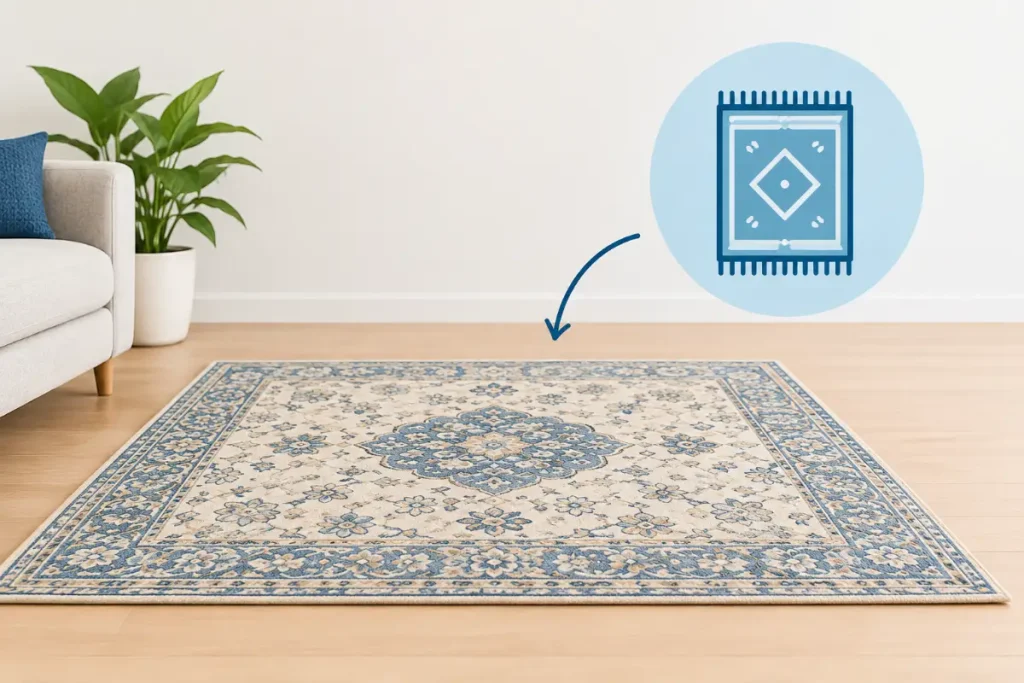
An area rug is a rug designed to cover a specific section of a room instead of the entire floor.
For example:
We bought an area rug for the seating area.
The area rug sits under the sofa and coffee table.
Area rugs are popular because they’re easy to move. They can define a space inside a larger room and add warmth or decoration without covering the entire floor.
The term is especially common in American English.
What Does Throw Rug Mean
A throw rug is a small rug that can be placed in a limited area.
For example, you might put one beside a bed, in front of a sink, or near a doorway.
The term can overlap with small rug and area rug in everyday speech.
For example:
She put a throw rug beside the bed.
The important point is that it refers to a small floor covering rather than a cleaning cloth.
What Does Rag Rug Mean
A rag rug is a type of rug made from strips or pieces of fabric. Traditionally, people made these rugs from old clothing, sheets, and other pieces of cloth.
This is where the two words can appear together.
A rag rug is still a rug because its purpose is to cover the floor. The word rag describes the material or method used to make it.
For example:
My grandmother made a colorful rag rug from old clothes.
This is a useful exception to remember. The presence of rag doesn’t mean the object is a cleaning rag.
A rag rug is a finished floor covering.
Examples That Make The Difference Clear
Let’s look at a few everyday situations.
Cleaning A Table
You need to clean a table.
The natural sentence is:
I need a rag to wipe the table.
You wouldn’t normally say:
I need a rug to wipe the table.
The cleaning job points to rag.
Decorating A Bedroom
You want something under a chair.
The natural sentence is:
I bought a small rug for the bedroom.
You wouldn’t normally say:
I bought a small rag for the bedroom.
The floor covering points to rug.
Cleaning A Car
You want to remove dust from the dashboard.
The natural sentence is:
Use a soft rag to clean the dashboard.
Again, the cloth is a working tool.
Adding Warmth To A Room
You want the floor to feel softer.
The natural sentence is:
We put a thick rug in the room.
The object is a floor covering.
Cleaning Up Oil
Someone spills oil in the garage.
You might say:
Grab an old rag and wipe up the oil.
A rag is ideal for messy work because it can get stained without ruining something valuable.
When To Use Rug
Use rug when you’re talking about a floor covering.
Common examples include:
- living room rug.
- bedroom rug.
- kitchen rug.
- bathroom rug.
- area rug.
- outdoor rug.
- entryway rug.
You can also use rug in descriptions of color, shape, size, texture, and design.
For example:
- a round rug.
- a soft rug.
- a wool rug.
- a large rug.
- a patterned rug.
- a washable rug.
These phrases all describe floor coverings.
When To Use Rag
Use rag when you’re talking about a piece of cloth used for cleaning, wiping, polishing, or other practical work.
Common phrases include:
- cleaning rag.
- old rag.
- wet rag.
- dry rag.
- dirty rag.
- shop rag.
- polishing rag.
For example:
- Keep a few clean rags in the kitchen.
- He used an old rag to clean the tools.
- The mechanic reached for a shop rag.
The word usually carries a practical and informal feel.
A Simple Rule For Everyday English
If you remember only one rule, remember this.
A rug goes on the floor. A rag helps you clean.
That rule won’t cover every unusual use of the words, but it works for the vast majority of everyday situations.
When you see a new sentence, look at the action around the word.
If someone is placing, moving, washing, shaking, buying, or decorating with the item as a floor covering, rug probably fits.
If someone is wiping, cleaning, polishing, drying, or removing dirt with the item, rag probably fits.
The verb often gives you the answer.
Why Context Matters In English
English words don’t always have one fixed meaning.
Rag is a good example. It can mean a piece of cloth, worn clothing, or a way of teasing someone in informal speech.
Rug also has more than one use. In some contexts, it can refer to a small floor covering. In informal American speech, rug can also refer to a toupee or artificial hairpiece.
For example:
He wears a rug because he doesn’t have much hair.
This meaning is informal and can sound humorous or old fashioned. It has nothing to do with floor coverings.
So when learning vocabulary, don’t memorize one meaning and stop there. Learn the common meanings first, then notice how context changes them.
A Note About American English
In American English, rug is a very common word for a movable floor covering.
For example:
- We need a new rug for the living room.
- People commonly use area rug when they want to make the distinction from carpet clear.
- Rag is also common in American English for an old or useful piece of cloth.
For example:
Throw that old shirt in the rag pile.
The exact vocabulary can vary by region, age, and situation, but the basic meanings remain stable.
FAQs
Is a rug the same as a rag?
No. A rug is normally a floor covering, while a rag is usually a piece of cloth used for cleaning or similar work. They can both be made from fabric, but they serve different purposes.
Which word should I use for cleaning cloth?
Use rag for an old or simple piece of cloth used for cleaning. Cloth is also a common general term. For example, you can say, “Use a clean rag to wipe the counter.”
Is a rug used for cleaning?
A rug isn’t normally described as a cleaning tool. You could use an old rug to clean something in an unusual situation, but rag is the more natural word for a cloth kept for cleaning.
Can you say rag rug?
Yes. A rag rug is a real type of rug made from strips or pieces of fabric. The word rag describes the material used to make the rug, while rug describes its purpose as a floor covering.
Why do rug and rag sound similar?
They are short words with similar spelling and sounds. Both can also relate to pieces of fabric, which makes the confusion easy. Their meanings become clear when you look at how the item is used.
Is rag a rude word?
Rag is not normally a rude word when it means a piece of cloth. It can have informal meanings in other contexts, including teasing someone. The tone depends on how the word is used.
What is the easiest way to remember rug and rag?
Think of a rug as something that belongs in a room and on the floor. Think of a rag as something you use for work such as cleaning or wiping. That simple association will help in most everyday situations.
Can an old shirt be called a rag?
Yes. An old shirt can be called a rag when someone uses it as a piece of cloth for cleaning or other messy work. The shirt’s original purpose no longer matters as much as how you’re using it.
Conclusion
The difference in rug vs rag becomes simple once you focus on purpose. A rug is normally a finished floor covering that adds comfort, protection, or decoration to a room. A rag is generally a piece of cloth used for cleaning, wiping, polishing, or other practical jobs.
You can remember the difference with one short idea. A rug belongs on the floor. A rag helps with the work.
The words can sometimes appear together, as in rag rug. That doesn’t break the rule. A rag rug is still a rug because it’s made to cover a floor. The word rag simply tells you something about the material used to make it.
So the next time you need to choose between these two words, look at the purpose first. If you’re talking about something under a table, beside a bed, or across part of a floor, use rug. If you’re talking about cloth used to wipe a counter, clean a tool, or handle a messy job, use rag.

Dr. Arthur Pendelton is a veteran historical linguist and grammar expert with over 30 years of experience in academic editing. A retired professor, Arthur specializes in the etymology and evolution of the English language. He is passionate about “unpacking the history behind the rules,” helping readers understand why we spell, punctuate, and phrase things the way we do today. Whether he’s settling debates on archaic usage or explaining complex linguistic shifts, Dr. Pendelton brings scholarly precision to every article.
1 thought on “Rug vs Rag: 7 Key Differences Explained”