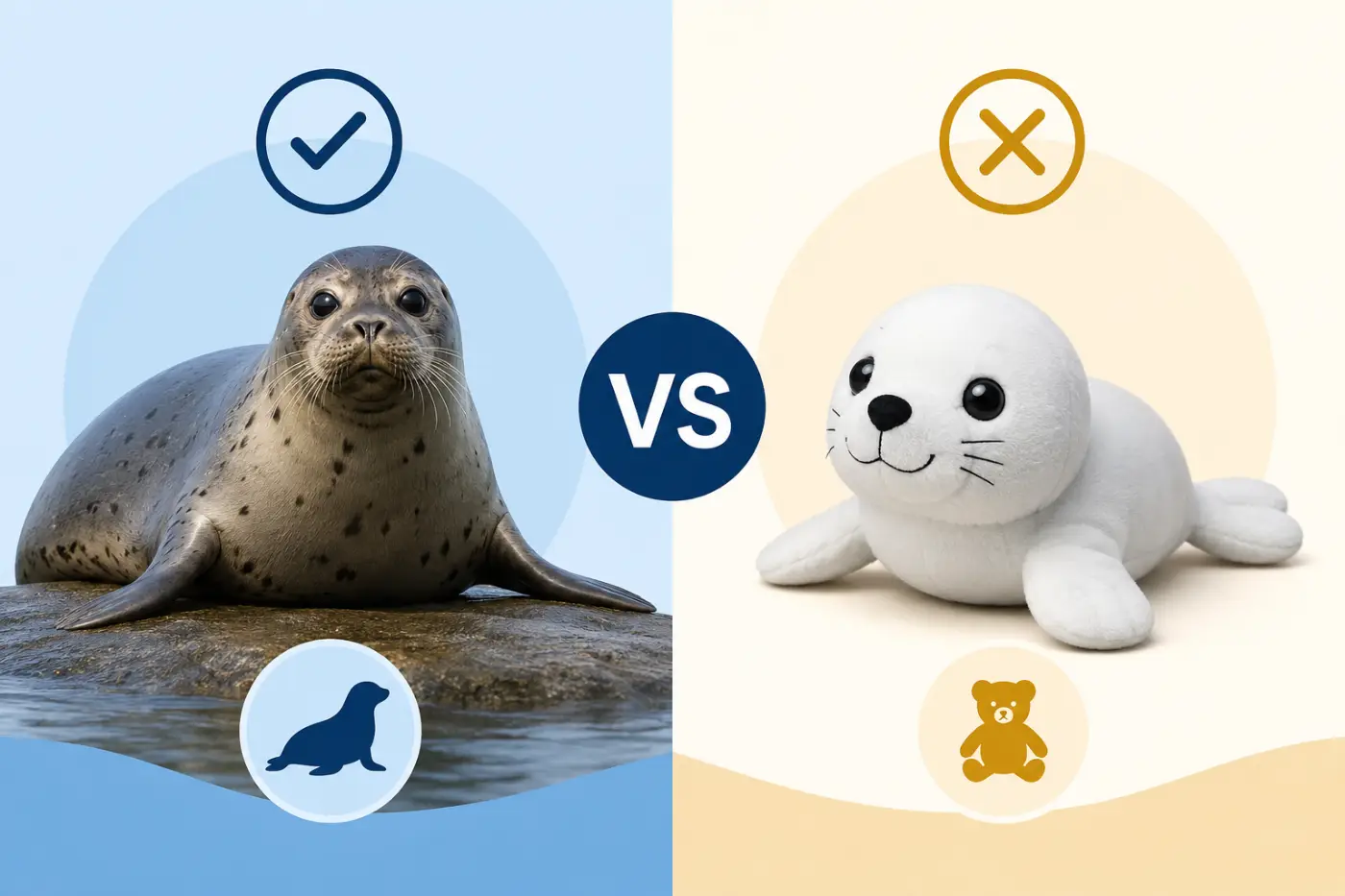
If you’re confused by seal vs seel, you’re not alone. These words look almost identical and sound alike in many forms of English. The difference is that seal is a common modern English word with several meanings, while seel is a rare and mostly specialized word used in falconry or older English.
In everyday American English, seal is almost always the word you need. You can seal an envelope, seal a container, seal a crack, or say that something has a tight seal. You can also use seal as a noun for the marine animal that swims and hunts in the ocean.
Seel is a real word, but it has a much narrower use. In falconry, it means to close or sew shut the eyes of a hawk or falcon during part of its training. It can also mean to close the eyes or blind someone in old or archaic usage.
So if you are writing an email, school paper, article, business message, or everyday sentence, seal will almost certainly be the correct spelling. This guide explains the difference, shows you how each word works, and gives you simple ways to remember the right one.
Quick Definition
Seal is a common word that can mean to close something tightly, make something secure, confirm something, or refer to a marine animal. Seel is a rare verb connected mainly with falconry and older English, where it means to close the eyes of a hawk or falcon.
Direct Answer
The correct word for normal modern English is seal. Use seel only when you specifically mean the rare falconry term or an archaic use involving closing the eyes.
Seal And Seel At A Glance
| Word | Meaning | Example Sentence | When to Use It |
|---|---|---|---|
| seal | To close or secure something | Please seal the package before mailing it. | Everyday English |
| seal | A marine animal | We saw a seal near the shore. | Animals and nature |
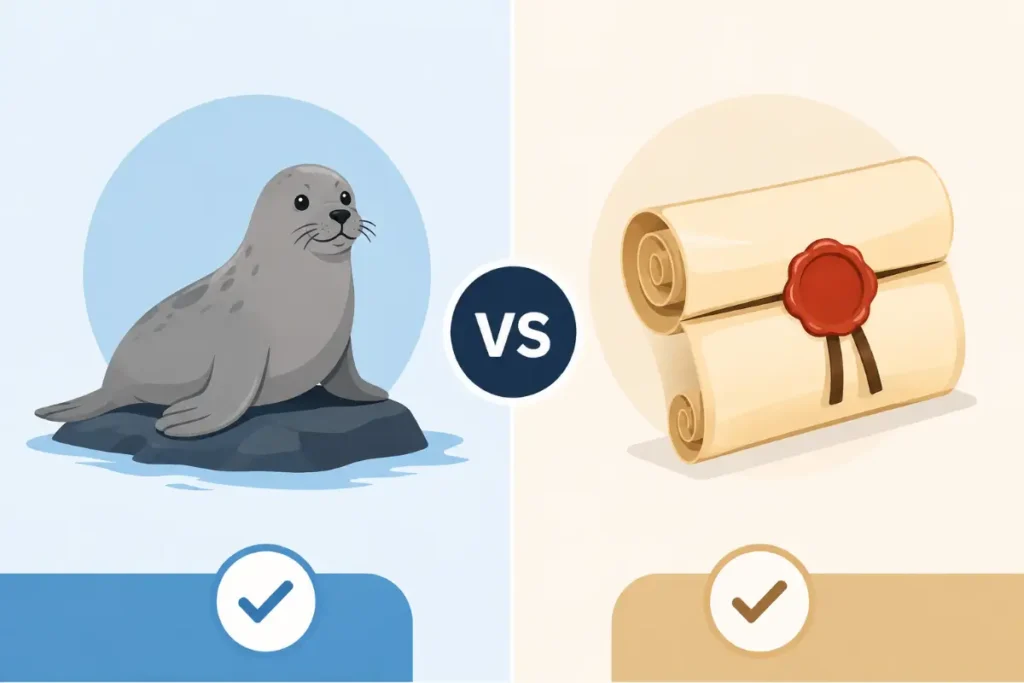
| seal | A mark that proves authenticity or authority | The document bears the official seal. | Legal and formal writing |
| seal | To make something final or certain | That goal sealed the team’s victory. | Figurative English |
| seel | To close the eyes of a hawk or falcon | The old text describes how falconers would seel a bird. | Specialized falconry writing |
| seel | To close or blind the eyes | The word appears with this meaning in older English. | Archaic or historical writing |
Understanding The Difference
The easiest way to understand these words is to look at how often people use them and what they mean.
Seal belongs to normal modern English. You will see it in news stories, books, instructions, school writing, business documents, and everyday conversation. It works as both a noun and a verb. It also has several meanings that are not closely related at first glance.
Seel, by contrast, has a very narrow meaning. Dictionaries define it mainly as a falconry verb. The word refers to sewing or closing the eyelids of a hawk or falcon. Older sources also use it to mean closing the eyes or blinding.
That difference matters because spelling mistakes often happen when two words sound the same but have very different meanings. If you mean close, secure, confirm, or the animal, choose seal. If you are writing about the historical practice of closing a falcon’s eyes, seel may be the word you need.
What Seal Means
Seal has several common meanings.
The first major use is as a verb meaning to close something securely. You might seal an envelope before mailing it. You might seal a box with tape.
For example:
- Please seal the envelope before you leave.
- Here, seal means close the envelope securely.
You can also seal a gap or opening. Builders may seal a window to keep air and water from entering a house. A food package can have a seal that keeps the contents fresh. A jar can have a tight seal that prevents liquid from leaking.
For example:
- The technician sealed the crack around the window.
- In this sentence, the person closed the opening so that air or water could not pass through.
- Seal also has a figurative meaning. It can mean to make something final or certain.
For example:
- Her final score sealed the team’s victory.
- The score did not physically close anything. Instead, it made the result certain.
- Another common use appears in phrases such as seal a deal.
Seal can also be a noun. It can refer to a mark, symbol, stamp, or design used to show authority or authenticity. An official document might carry the seal of a government agency, school, court, or organization.
For example:
The certificate carries the official seal of the university.
There is another very familiar meaning. A seal is also a marine mammal with flippers that lives in the water and comes onto land or ice.
For example:
We watched a seal swim near the rocks.
So one small word can cover a surprising amount of ground.
What Seel Means
Seel is a much less common word.
Its main modern dictionary meaning is connected with falconry. Falconry is the practice of training and hunting with birds of prey. In this specialized context, seel means to close or sew shut the eyes of a hawk or falcon during part of its training.
For example:
The historical account describes how the falconer would seel the young hawk.
This sentence uses the word correctly, but it is not a word you would normally need in everyday conversation.
Older English also used seel in the sense of closing the eyes or blinding. That use is now considered archaic or obsolete.
For modern readers, this is the key point. Seel is not a normal alternative spelling of seal.
If you want to say that you closed a box, sealed a letter, secured a container, or finalized an agreement, seel is not the correct choice.
Why These Words Cause Confusion
The confusion comes from more than their similar spelling.
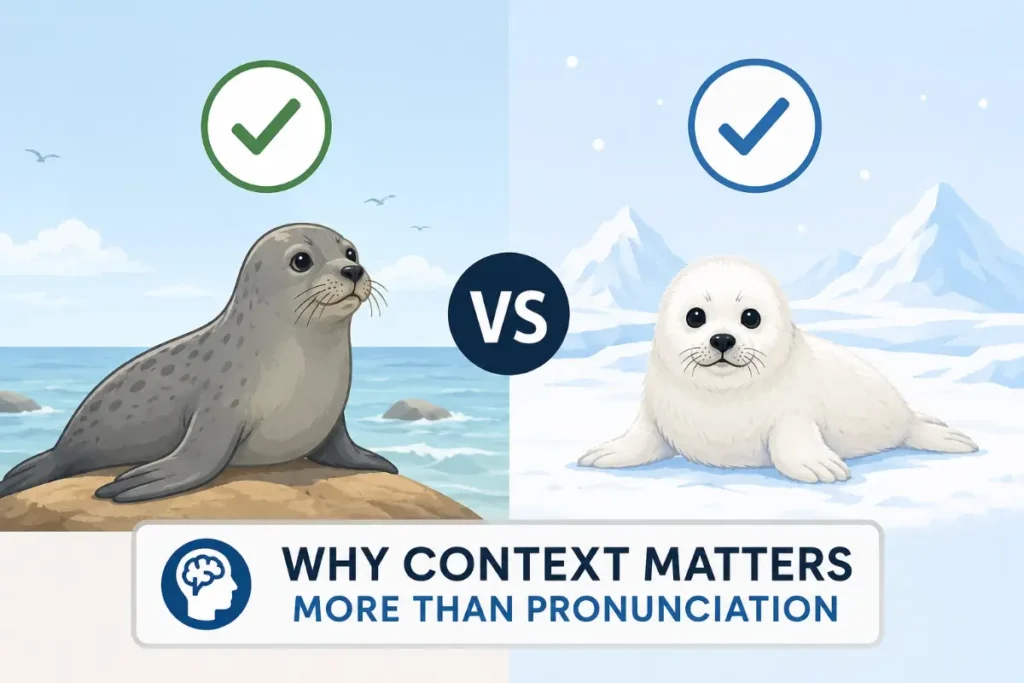
They can also have similar pronunciations. Merriam Webster gives seel the pronunciation shown as “sēl,” while seal has the same basic long e sound in American English.
That means you usually cannot solve the problem by listening to the word.
- You have to look at the meaning.
- Imagine someone says:
- Please seal the box.
You hear the sound and think about the context. A box needs to be closed securely. That tells you the spelling is seal.
- Now imagine a history book says:
- The falconer would seel the bird’s eyes.
- The unusual subject matter points to the specialized word seel.
This is a useful lesson for many confusing English words. Pronunciation alone does not always tell you the spelling. Context does the heavy lifting.
When To Use Seal
For almost every ordinary situation, seal is the word you want.
Sealing An Envelope
- Use seal when you close an envelope.
- I sealed the letter before putting it in the mailbox.
- Make sure you seal the envelope properly.
- She sealed the invitation with a small sticker.
- The word describes the act of closing the envelope so it stays shut.
Sealing A Container
- Use seal when you close a container tightly.
- Seal the container after opening it.
- The bottle has a tight seal.
- We sealed the food in an airtight bag.
- This use is common in cooking, storage, packaging, manufacturing, and everyday life.
The basic idea stays the same. You close something so that air, water, gas, or another substance cannot pass through.
Sealing A Deal
Seal also works in business and everyday speech when you mean finalize an agreement.
- They shook hands to seal the deal.
- The new contract sealed the partnership.
- Her approval sealed the agreement.
- This is a figurative use, but it is extremely common.
Sealing A Fate Or Result
Another familiar expression is seal someone’s fate.
- The evidence sealed his fate.
- This means the evidence made the outcome certain.
You can also say:
- The mistake sealed their defeat.
- That decision sealed the company’s future.
Again, nothing is being physically closed. The word carries the idea of making something final.
Using Seal As A Noun
Seal does not only work as a verb.
- It can be a noun that describes a closure.
- The bottle has a broken seal.
- It can also describe an official mark.
- The document has the mayor’s seal.
- And it can name the animal.
- The seal disappeared beneath the water.
These meanings are common enough that most English speakers encounter them regularly.
When To Use Seel
There is one main reason to use seel today.
You may need it when writing about historical falconry.
Merriam Webster defines the verb as closing the eyes of a bird such as a hawk by drawing threads through the eyelids. The dictionary also lists an archaic meaning connected with closing the eyes.
Collins gives the same basic falconry meaning and identifies the word as an older English term.
For example:
- The manuscript describes the old practice of seeling a hawk.
- That is a valid use because the sentence is discussing a specialized historical practice.
Another example is:
- The writer used seel in its older sense of closing the eyes.
- This also works because the sentence is talking about the word itself and its historical meaning.
- In normal writing, though, you should not reach for seel simply because it sounds like seal.
If your sentence is about an envelope, package, door, container, crack, agreement, result, official mark, or marine animal, use seal.
Common Mistakes With Seal And Seel
The most common mistake is treating seel as a spelling variation of seal.
It is not.
Mistake One
Please seel the package before shipping it.
Correct:
Please seal the package before shipping it.
A package needs to be closed securely. That meaning belongs to seal.
Mistake Two
The judge placed his seel on the document.
Correct:
- The judge placed his seal on the document.
- An official mark or emblem is a seal.
Mistake Three
We saw a seel swimming near the beach.
Correct:
- We saw a seal swimming near the beach.
- The marine animal is a seal.
Mistake Four
- They finally seeled the deal.
- Correct:
- They finally sealed the deal.
- The phrase means they finalized the agreement.
Correct Use Of Seel
The historical text explains how falconers would seel a hawk.
This is one of the rare situations where seel is the right choice.
Seal In Common Expressions
Learning common phrases can make the correct spelling easier to remember.
Seal Of Approval
- This means an official or clear sign of approval.
- The project received the board’s seal of approval.
Seal Your Lips
- This means to keep something secret.
- She promised to seal her lips about the surprise.
Seel As A Marine Animal
One reason the word seal can seem confusing is that it has a completely different meaning as an animal name.
A seel is a marine mammal. Merriam Webster describes seals as carnivorous marine mammals with limbs adapted for swimming.
For example:
- The seel rested on the rocks.
- We saw several seals near the coast.
The seal dove into the water.
The spelling has nothing to do with the verb meaning to close something. English simply has one word with several meanings.
This is common in English. The same spelling can carry different meanings depending on the sentence.
Context tells you which meaning is intended.
Seal In Formal And Legal Writing
Seal also appears often in legal and official language.
A seal can be a mark or emblem that authenticates a document or identifies an institution. Merriam Webster lists this meaning alongside the broader idea of something that confirms or makes something secure.
For example:
- The court document bears the official seal.
- You might also see phrases such as:
- filed under seal.
- This refers to material that has been kept from public access in a legal setting.
- The word also appears in formal expressions such as:
- sealed records.
Here, sealed means the records are closed from public access.
These uses are common in American English, especially in legal documents and news reports.
The History Behind The Two Words
The two spellings have different histories, even though they now look and sound very similar.
The word seal has more than one historical source because its major meanings developed separately. The animal sense traces back through Middle English to Old English. The noun connected with an official mark came through French from Latin roots related to a sign or mark.
The verb meaning to close also developed through older forms of English and French. Over time, the modern spelling became established as seal.
The history of seel is different. Merriam Webster traces it through Middle English and Anglo French roots connected with the eyelid. The word has been used since at least the 15th century.
That history explains something useful.
Seel is not simply a typo that somehow became accepted. It is a genuine old word with its own history and meaning.
The problem comes when modern writers use it in places where English requires seal.
A Simple Memory Trick
You do not need to memorize a complicated rule.
- Think of seal as the everyday word.
- You can seal something shut.
- A seal can live in the ocean.
- A seal can appear on an official document.
- You can seal a deal.
- You can seal a crack.
- You can seal your lips.
- Almost all of these uses involve the idea of closing, securing, confirming, or the animal.
- For seel, think of a bird of prey and an old historical text.
- That is the unusual word.
- If your sentence has nothing to do with falconry or an old use involving the eyes, you probably want seal.
- A quick mental check can save you from the mistake:
- Close it, secure it, confirm it, or name the animal. Use seal.
- Talking about the old falconry term. Use seel.
Examples You Can Copy
Seeing the words in natural sentences is often more helpful than memorizing definitions.
Everyday Uses Of Seal
Please seal the box before you send it.
- The workers sealed the opening around the pipe.
- The package arrived with the seal intact.
- She sealed the envelope and placed it on the desk.
- The company sealed the agreement on Friday.
- That final goal sealed the victory.
- The official document carries the state seal.
- We watched a seal swim through the cold water.
- The lid creates a tight seal.
- The dentist used a sealant to protect the tooth.
- Each sentence uses seal in a normal modern sense.
Specialized Use Of Seel
- The old book describes how a falconer would seel a hawk.
- The writer used seel as an archaic verb for closing the eyes.
- Students studying medieval falconry may encounter the word seel.
These examples show why the word still appears in dictionaries even though most people rarely use it.
How To Choose The Right Word
When you are writing quickly, use meaning instead of sound.
Ask yourself what the sentence is trying to say.
- If you mean close, use seal.
- If you mean make secure, use seal.
- If you mean prevent air or liquid from passing, use seal.
- If you mean make an agreement final, use seal.
- If you mean an official mark, use seal.
- If you mean the marine animal, use seal.
- If you mean the historical falconry practice of closing a bird’s eyes, use seel.
That short test covers nearly every situation you are likely to face.
Related Words You Should Know
The word seal has several related forms that appear often in everyday writing.
Sealed is the past tense.
She sealed the package yesterday.
Sealing is the present participle.
He is sealing the boxes now.
Sealable is an adjective that describes something that can be sealed.
The bag has a resealable opening.
Reseal means to seal something again.
Please reseal the package after opening it.
Sealant is a substance used to close gaps or prevent air and liquid from passing through.
The contractor applied sealant around the window.
These words all connect to the common modern word seal.
The specialized word seel has far fewer everyday forms. You may encounter seeling in historical or specialist writing about falconry. Merriam Webster lists seeling as the present participle of seel.
Why Context Matters More Than Pronunciation
English has many words that sound alike but have different spellings and meanings.
Seal and seel are a good example.
If you hear someone say the word, you may not know which spelling they mean. That is especially true in American English, where both words can have the same basic pronunciation.
The solution is simple.
Look at the sentence.
If someone says:
I need to seal the container.
The object gives you the answer. Containers are sealed.
If someone says:
The historian wrote about how falconers would seel hawks.
The subject gives you the answer. The sentence is about a rare historical falconry practice.
This approach works far beyond this word pair. When two words sound alike, meaning should guide your spelling.
FAQs
Is seal or seel correct?
Seal is correct in almost all ordinary modern English situations. Seel is a rare word mainly used in falconry or older English.
Is seel a real English word?
Yes. Seel is a real English word. It is mainly used as a specialized falconry term meaning to close or sew shut the eyes of a hawk or falcon.
What does seal mean?
Seal can mean to close or secure something. It can also mean an official mark, a confirmation, or a marine animal.
What does seel mean?
Seel mainly means to close the eyes of a hawk or falcon as part of historical falconry practice. Older English also used it to mean closing or blinding the eyes.
Is seel another spelling of seal?
No. The two words have different meanings and different histories. Seel is not a normal alternate spelling for the common word seal.
How do you remember the difference between seal and seel?
Think of seal as the everyday word. You seal a package, seal a crack, seal a deal, or see a seal in the ocean. Think of seel as the rare historical word connected with falconry.
Is seal a noun or a verb?
Seal can be both a noun and a verb. As a noun, it can refer to a closure, an official mark, or a marine animal. As a verb, it can mean to close, secure, confirm, or make something final.
Can I use seel in normal conversation?
You could, but most people would rarely need it. It is mainly useful in specialized or historical writing about falconry and older uses of English.
Conclusion
The difference between seal vs seel is much easier once you focus on meaning instead of spelling.
Use seal for everyday English. You seal an envelope, seal a package, seal a crack, seal an agreement, or talk about a seal swimming in the ocean. The word also appears in many familiar expressions such as seal the deal and seal of approval.
Use seel only for its rare meaning connected with falconry or older English. It refers mainly to closing the eyes of a hawk or falcon. Dictionaries mark its other eye related meanings as archaic or obsolete.
So when you are unsure, ask what the sentence means. If you are talking about closing, securing, confirming, an official mark, or a marine animal, seal is the safe choice.

Dr. Arthur Pendelton is a veteran historical linguist and grammar expert with over 30 years of experience in academic editing. A retired professor, Arthur specializes in the etymology and evolution of the English language. He is passionate about “unpacking the history behind the rules,” helping readers understand why we spell, punctuate, and phrase things the way we do today. Whether he’s settling debates on archaic usage or explaining complex linguistic shifts, Dr. Pendelton brings scholarly precision to every article.
3 thoughts on “Seal vs Seel Which Word Is Correct”