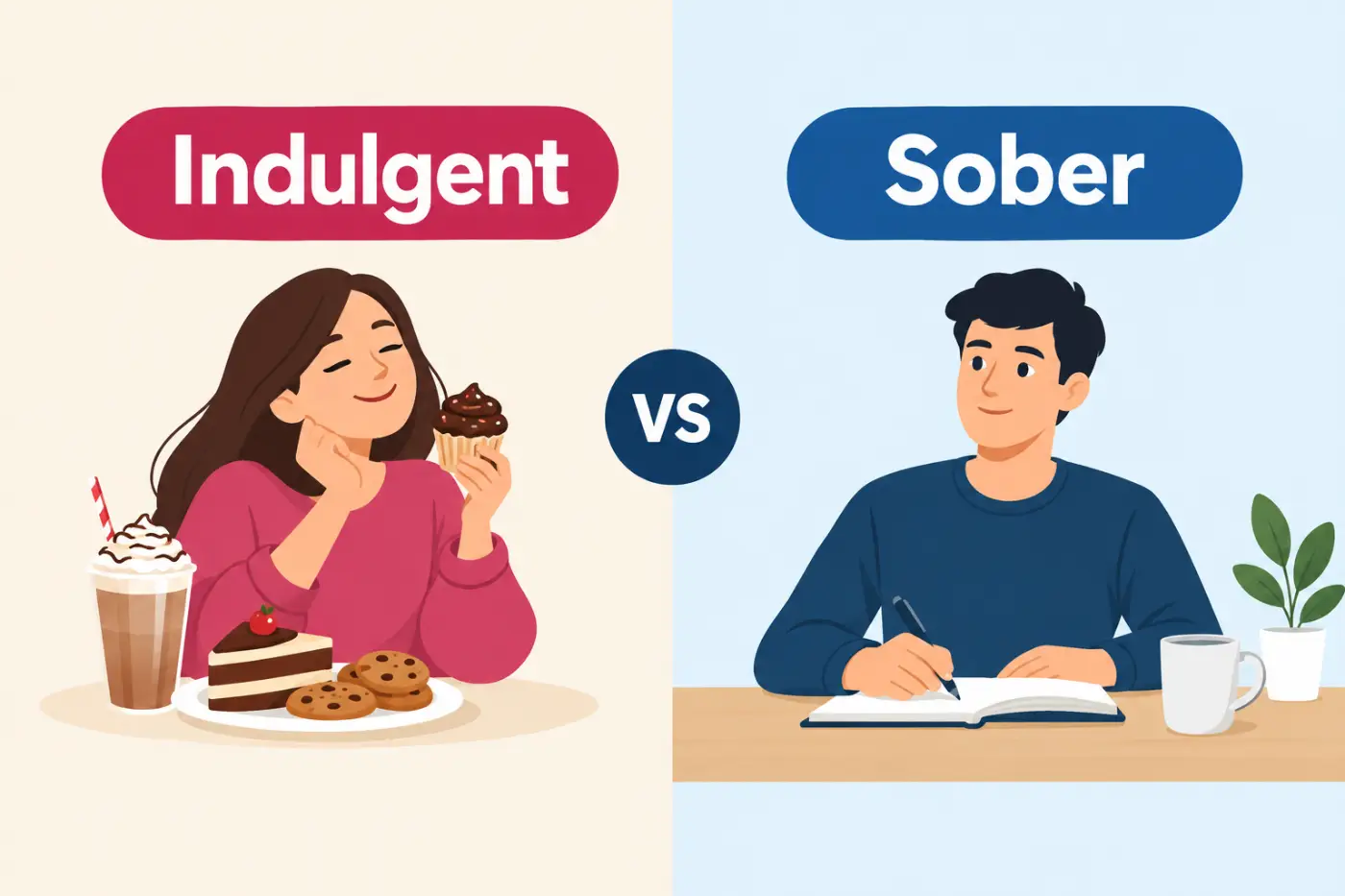
If you’re confused by indulgent vs sober, you’re dealing with two words that describe very different ideas. Indulgent usually means allowing yourself or someone else plenty of pleasure or freedom. Sober usually means not affected by alcohol, but it can also describe someone or something serious, calm, or restrained.
These words can seem connected because both can describe a person’s behavior or attitude. Still, they point in different directions. An indulgent person may give in to pleasure, treat themselves, or be very forgiving. A sober person may avoid excess, stay serious, or simply be free from alcohol.
The key is context. You can talk about an indulgent meal, an indulgent parent, a sober driver, or a sober mood. Each example uses the word in a slightly different way.
This guide explains the meanings, differences, examples, common mistakes, and related words so you can choose the right term with confidence.
Quick Definition
Indulgent describes someone who allows pleasure, comfort, or freedom, often more than usual. It can also describe something luxurious or enjoyable. Sober mainly means not drunk, but it can also mean serious, restrained, calm, or plain in style.
Direct Answer
Indulgent and sober do not mean the same thing. Indulgent is connected to pleasure, leniency, or allowing yourself something enjoyable, while sober is connected to sobriety, seriousness, restraint, or a lack of alcohol.
Comparison Table
| Word or Phrase | Meaning | Example Sentence | When to Use It |
|---|---|---|---|
| Indulgent | Giving in to pleasure or allowing too much freedom. | She was indulgent with her children. | Use it for lenient behavior or generous treatment. |
| Indulgent | Providing great pleasure or comfort. | The dessert was rich and indulgent. | Use it for food experiences or luxurious treats. |
| Sober | Not affected by alcohol or drugs. | He stayed sober at the party. | Use it when talking about alcohol or sobriety. |
| Sober | Serious and thoughtful. | She gave a sober assessment of the problem. | Use it for moods opinions or judgments. |
| Sober | Plain or restrained. | He chose a sober suit for the ceremony. | Use it for colors clothing or styles that are not flashy. |
What Indulgent Means
The word indulgent has a strong connection with giving in to pleasure or being lenient. It comes from the idea of allowing something instead of denying it.
An indulgent person may give themselves permission to enjoy something special. They may also be unusually forgiving toward another person.
For example, imagine someone who normally eats simple meals. On their birthday, they order a huge slice of chocolate cake and enjoy every bite. You could call that an indulgent choice.
The word can also describe another person’s behavior.
A parent who rarely says no to a child’s requests might be described as indulgent. That does not always mean the parent is bad. It simply suggests that the parent gives the child a lot of freedom or allows things that a stricter parent might refuse.
Indulgent Can Describe Pleasure
One common use relates to food, relaxation, shopping, entertainment, and other enjoyable experiences.
Consider these examples.
The hotel served an indulgent breakfast with pastries, eggs, fresh fruit, and rich coffee.
She treated herself to an indulgent spa day after finishing a difficult project.
The restaurant is known for its indulgent chocolate desserts.
He bought an indulgent meal after weeks of eating carefully.
In these examples, indulgent suggests something rich, pleasurable, or special. The word often carries a positive feeling.
Still, context can change the tone.
If someone eats an enormous amount of dessert every night, a writer might describe the habit as indulgent. In that case, the word can suggest excess.
Indulgent Can Describe People
Indulgent also describes a person who is very forgiving or permissive.
Suppose a father lets his children stay up late, eat dessert before dinner, and skip chores. Someone might say he is an indulgent father.
Here are a few natural examples.
Her grandmother was wonderfully indulgent and always brought her favorite cookies.
The coach was indulgent with new players during their first week.
His boss was surprisingly indulgent about small mistakes.
The teacher was kind but not indulgent when students ignored the rules.
Notice the difference between kind and indulgent. Kindness means treating someone well. Indulgence often means giving someone more freedom, comfort, or forgiveness than expected.
Indulgent Can Describe Self Treatment
You can also use indulgent for the way someone treats themselves.
An indulgent weekend might include sleeping late, ordering favorite food, watching movies, and doing very little work.
That does not automatically mean the person is irresponsible. It may simply mean they allowed themselves extra comfort.
For example.
- I had an indulgent Sunday and spent most of the afternoon reading.
- She gave herself an indulgent break after a long week.
- He enjoys an indulgent breakfast on Saturday mornings.
The idea is simple. Indulgence involves allowing pleasure instead of always choosing restraint.
What Sober Means
Sober has several important meanings. The most common one relates to alcohol.
A sober person is not drunk or under the influence of alcohol. The word can also describe someone who has chosen not to drink alcohol.
For example.
- She stayed sober because she was driving home.
- He has been sober for three years.
- The group offers support for people who want to remain sober.
- The word has another major meaning. Sober can describe a serious or thoughtful mood.
For example.
- The meeting took a sober turn after the manager shared the financial results.
- She gave a sober warning about the risks.
- His sober response showed that he understood the seriousness of the situation.
- Sober can also describe a plain or restrained appearance.
A sober color is usually quiet and not bright or flashy. Black gray navy and other muted shades can be described this way depending on the context.
For example.
- He wore a sober gray suit to the funeral.
- The room had a sober design with simple furniture.
- The painting uses sober colors that create a calm mood.
Sober Does Not Always Mean Serious
This point causes confusion for many readers.
When people hear sober, they often think only about alcohol. But the word has a broader meaning.
A sober person can mean someone who has not been drinking. A sober color can mean a subdued color.
The surrounding words usually make the meaning clear.
Compare these sentences.
- He is sober.
- He made a sober decision.
- He wore sober colors.
The first sentence most likely refers to alcohol. The second points to careful and serious thinking. The third refers to appearance or style.
Sober Can Mean Restrained
Sober can also suggest a lack of excess.
A sober approach does not chase excitement or dramatic results. It focuses on facts and careful judgment.
For example.
- The company took a sober approach to the new investment.
- She offered a sober view of the situation.
- His sober estimate was lower than everyone expected.
This meaning connects sober with words such as serious, calm, restrained, sensible, and realistic.
Indulgent vs Sober in Everyday Language
The easiest way to understand the difference is to think about excess and restraint.
Indulgent often points toward allowing pleasure or giving extra freedom. Sober often points toward restraint, seriousness, or a lack of intoxication.
Imagine two people at a restaurant.
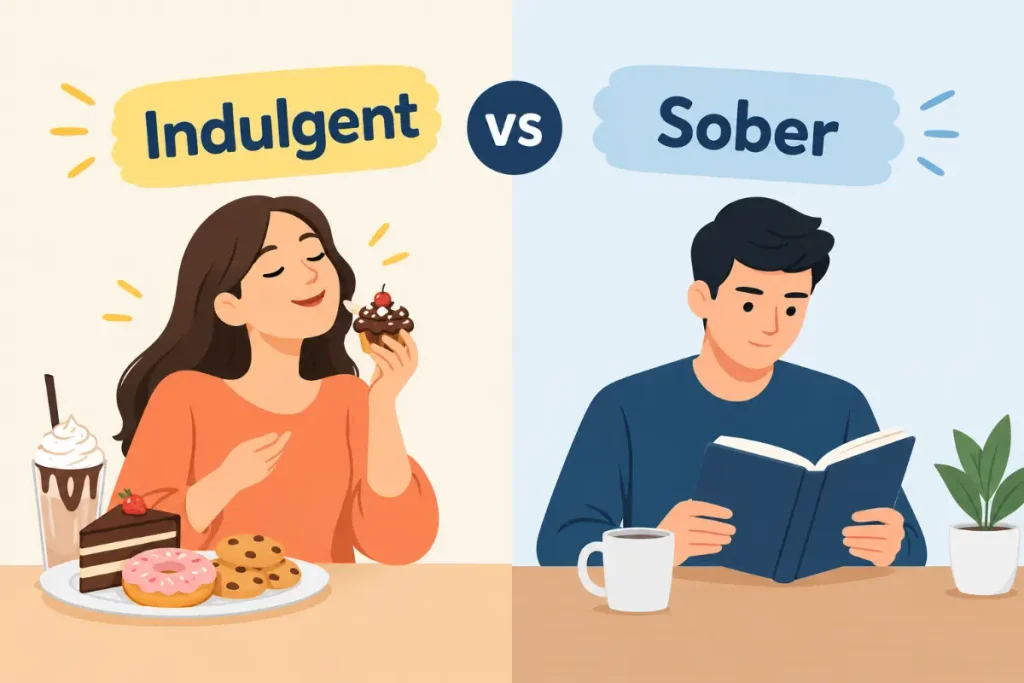
One orders a large dessert with extra chocolate and whipped cream. That choice could be called indulgent.
The other orders water and avoids alcohol because they need to drive. Their choice could be described as sober.
The words describe different qualities. One highlights pleasure or permission. The other highlights restraint or clear judgment.
Still, the two words are not exact opposites.
That matters.
Someone can be sober and indulgent at the same time.
A person may never drink alcohol but still love expensive desserts. They are sober in the alcohol sense and indulgent in their eating habits.
Likewise, someone can drink alcohol occasionally and still make sober decisions in other areas of life.
This is why you should not treat the words as simple opposites.
Why These Words Get Confused
The confusion often comes from the broad meanings of both words.
Indulgent can describe behavior, food, treatment, or personal choices. Sober can describe alcohol use, mood, judgment, clothing, colors, and style.
They also appear in discussions about lifestyle.
A person may describe one lifestyle as indulgent and another as sober. In that setting, the words create a contrast between pleasure and restraint.
For example.
- The resort offered an indulgent escape from daily stress.
- After the trip, she returned to a sober routine built around work and simple meals.
Here, the words create a clear contrast. One side emphasizes comfort and pleasure. The other emphasizes simplicity and control.
But this contrast comes from the context. The dictionary meanings do not make the words perfect opposites.
How to Use Indulgent in a Sentence
The best way to learn a word is to see it used naturally.
Talking About Food
- Food is one of the most common contexts for indulgent.
- The cake was rich and indulgent.
- We ordered an indulgent dessert after dinner.
- That creamy pasta makes an indulgent weekend meal.
- She prepared an indulgent breakfast for her guests.
- The word works especially well when the food feels rich or luxurious.
You could say the meal was delicious. You could also say it was indulgent if you want to stress that it felt like a special treat.
Talking About Parents
- Indulgent can describe parents who give their children a lot of freedom.
- Her parents were indulgent and rarely punished her.
- His indulgent grandmother always gave him extra dessert.
- The children loved their indulgent uncle because he never said no.
- The word can sound positive or negative depending on the situation.
An indulgent parent may be warm and generous. The same word may also suggest that the parent gives in too easily.
Talking About Personal Habits
- You can describe a habit as indulgent when it provides extra comfort or pleasure.
- Reading in bed with a cup of hot chocolate was my indulgent evening routine.
- She allowed herself one indulgent afternoon without checking work emails.
- He has an indulgent habit of buying fresh pastries on Sunday mornings.
These sentences sound natural because the word adds an idea of treating yourself.
How to Use Sober in a Sentence
Sober has several common sentence patterns.
Talking About Alcohol
- This is the most familiar use.
- He has been sober since last year.
- She stayed sober during the celebration.
- The driver was sober when the police stopped him.
- They created a sober living environment for people recovering from alcohol addiction.
In this context, sober means free from the effects of alcohol. It can also refer to a person who chooses to avoid alcohol.
Talking About Serious Thinking
Sober can describe a serious and realistic view.
- We need a sober assessment of the costs.
- The report gives a sober picture of the situation.
- He offered a sober response instead of making an emotional decision.
- She took a sober look at her finances.
- Here, sober has nothing to do with alcohol.
It means calm serious realistic and free from wild excitement.
Talking About Style
- Sober can describe colors clothing or decoration.
- She wore a sober black dress.
- The office has a sober design.
- He prefers sober shades such as navy and gray.
The word suggests restraint. The style does not demand attention through bright colors or dramatic details.
The Difference Between Indulgent and Excessive
Indulgent and excessive can seem similar, but they are not identical.
Indulgent means allowing pleasure or giving extra freedom. Excessive means going beyond a reasonable amount.
- A single rich dessert can be indulgent without being excessive.
- A person who eats an entire cake alone might be described as excessive.
Consider this sentence.
- She enjoyed an indulgent dinner after completing her exams.
- Nothing in that sentence suggests a problem.
Now consider this.
- His excessive spending left him unable to pay his bills.
- The second sentence clearly suggests a harmful level.
Indulgent can sometimes suggest excess, but it does not always carry that negative meaning.
The Difference Between Sober and Serious
Sober and serious overlap in some contexts, but they are not interchangeable.
Serious is much broader.
You can describe a serious illness, serious problem, serious mistake, or serious person.
Sober works best when you want to suggest calmness, restraint, realism, or a lack of cheerfulness.
Compare these examples.
- She gave a serious answer.
- She gave a sober answer.
The first simply says she did not joke. The second suggests a calm and thoughtful answer that may reflect the gravity of the situation.
That small difference can make your writing more precise.
The Difference Between Sober and Abstinent
These words are closely related when talking about alcohol, but they do not mean exactly the same thing.
Abstinent means deliberately avoiding something. It can refer to alcohol or other things.
Sober means not affected by alcohol or drugs and can also describe a person living without alcohol or drugs.
For example.
- He is abstinent from alcohol.
- He has remained sober for five years.
The first sentence focuses on avoiding alcohol. The second focuses on a state or period of sobriety.
In everyday speech, sober is often the more natural word when discussing recovery from alcohol addiction.
Can Someone Be Indulgent and Sober
Yes.
This is one of the most useful points to remember.
A person can be sober and still enjoy food travel shopping entertainment or other pleasures.
For example.
- She is sober but enjoys indulgent desserts.
- He lives a sober lifestyle and treats himself to luxury vacations.
- They avoid alcohol but still enjoy indulgent meals.
- The words describe different parts of a person’s behavior.
- Sober can describe alcohol use. Indulgent can describe pleasure.
- There is no contradiction.
This also shows why using one word as the direct opposite of the other can lead to inaccurate writing.
Common Mistakes With These Words
A few mistakes appear again and again.
Treating Them as Exact Opposites
This is the biggest mistake.
Indulgent does not simply mean the opposite of sober.
- If you need a direct opposite for indulgent, words such as restrained, disciplined, strict, or self denying may work depending on the sentence.
- If you need an opposite for sober in the alcohol sense, drunk or intoxicated may fit.
- If sober means serious, playful or lighthearted may work as a contrast.
Context decides the best opposite.
Using Sober Only for Alcohol
This limits your vocabulary and can make some sentences unclear.
- A sober analysis does not mean an analysis written by someone who has not been drinking.
- It means a serious and realistic analysis.
- A sober mood does not mean everyone has stopped drinking.
- It means the mood is serious or subdued.
Assuming Indulgent Is Always Negative
Indulgent can have a warm and positive tone.
- An indulgent dessert sounds appealing.
- An indulgent grandmother may sound loving.
- An indulgent weekend can sound relaxing.
The word becomes negative mainly when the context suggests too much pleasure or too much leniency.
Confusing Indulgent With Indulged
These forms are related but they focus on different things.
Indulgent describes someone who gives pleasure or allows freedom.
Indulged describes someone who receives special treatment.
For example.
- She is an indulgent mother.
- Her children are indulged.
- The mother gives. The children receive.
- That distinction is worth remembering.
Indulgent vs Sober in Different Contexts
Context can change the best word quickly.
Food
Use indulgent when food is rich luxurious or especially enjoyable.
The restaurant serves an indulgent chocolate cake.
Sober is rarely used to describe food unless you are creating a figurative contrast.
Alcohol
Use sober when someone is not drunk or does not drink.
He stayed sober during the event.
Indulgent may describe drinking behavior in a broader sense if someone gives themselves permission to enjoy alcohol. Still, it does not mean drunk.
Parenting
Use indulgent for a parent who gives children extra freedom or treats.
Her indulgent father let her choose her own bedtime.
Sober is not normally used to describe parenting.
Mood
Use sober when the mood is serious quiet or subdued.
The room became sober after the announcement.
Indulgent does not normally describe a serious mood.
Fashion and Design
Use sober for restrained colors or styles.
He chose a sober navy suit.
Indulgent can describe luxurious materials or rich design in some contexts.
The hotel has an indulgent interior filled with velvet furniture and warm lighting.
Words Related to Indulgent
Learning related words makes the meaning easier to remember.
Lenient
Lenient means not strict.
The teacher was lenient about late homework.
This word focuses on rules and punishment more than pleasure.
Permissive
Permissive means allowing a lot of freedom.
The school has a permissive dress policy.
This word often relates to rules and behavior.
Luxurious
Luxurious means very comfortable expensive or rich.
They stayed at a luxurious hotel.
This word focuses on comfort and quality.
Self Indulgent
Self indulgent describes someone who gives themselves too much pleasure or attention.
Watching movies all day felt self indulgent.
This expression often has a mildly negative tone, but it can also be playful.
Words Related to Sober
Sober also has several useful related words.
Serious
Serious describes something important or lacking humor.
The problem is serious.
It is broader than sober.
Restrained
Restrained means controlled and not excessive.
She gave a restrained response.
This word fits situations where someone avoids strong emotion or excess.
Calm
Calm means peaceful and not upset.
He remained calm during the argument.
Sober can suggest calmness, but sober carries extra ideas depending on context.
Realistic
Realistic means based on facts and practical expectations.
She has a realistic view of the costs.
A sober assessment is often realistic too.
Memory Tricks That Actually Help
You do not need to memorize a long dictionary definition.
Think of indulgent as permission.
If you allow yourself an extra treat, you are being indulgent.
If a parent gives a child extra freedom, the parent may be indulgent.
Think of sober as restraint or clear judgment.
If you avoid alcohol, you are sober.
If you take a serious and realistic view, your approach can be sober.
A simple mental picture can help.
Imagine a dessert table on one side and a quiet meeting room on the other.
The dessert represents indulgence.
The serious meeting represents a sober mood.
The images are different enough that the meanings become easier to recall.
How Context Changes Meaning
Good vocabulary choices depend on context.
- Take the word sober.
- He was sober.
- He gave a sober speech.
- He wore sober colors.
The first relates to lenient treatment. The second and third relate to pleasure and comfort.
This is why reading the whole sentence matters. A single word rarely tells you everything.
How Writers Can Use These Words Precisely
Strong writing depends on precise word choice.
If you want to describe a rich dessert, indulgent is often better than good.
The good dessert was chocolatey.
The indulgent dessert was rich creamy and luxurious.
The second sentence gives the reader a stronger picture.
If you want to describe a realistic opinion, sober may be more precise than serious.
- He gave a serious opinion.
- He gave a sober assessment.
The second sentence suggests thoughtfulness and realism.
Still, do not choose a word just because it sounds more advanced. Choose the word that fits the meaning.
Simple accurate writing is stronger than complicated writing.
Examples You Can Use
Here are natural examples that show the contrast.
- The resort offered an indulgent weekend filled with spa treatments and rich meals.
- She was indulgent with her children and often gave them extra chances.
- He chose a sober approach to the problem and focused on the facts.
- She stayed sober throughout the party because she had to drive.
- The meal was indulgent but worth every bite.
- His sober assessment helped the team avoid a costly mistake.
- Her indulgent grandmother always brought homemade cookies.
- The funeral had a sober atmosphere.
- He enjoys an indulgent breakfast on Sundays.
- The company needs a sober review of its spending.
These examples show that the words belong to different meaning groups even when they appear in the same general discussion.
A Closer Look at Tone
- Tone matters more than many people realize.
- Indulgent can sound affectionate.
- Her indulgent aunt let the kids stay up late.
- It can also sound playful.
- I had an indulgent afternoon and ate way too much cake.
- But it can become critical.
- His indulgent spending created serious financial problems.
- Sober often sounds serious from the start.
- The report offered a sober warning.
- She took a sober look at the situation.
- The mood became sober after the announcement.
- Still, sober does not always sound negative. It often suggests maturity and careful thought.
- That makes it useful in professional writing.
When Not to Use Indulgent
Do not use indulgent simply to mean good.
- A good movie is not automatically indulgent.
- A good teacher is not automatically indulgent.
- A good meal is not automatically indulgent.
The word needs an idea of pleasure excess luxury or leniency.
For example.
- The movie was excellent.
- The meal was delicious.
- The teacher was patient.
- Those sentences are clear.
Use indulgent when you want to add the idea of treating yourself or allowing someone extra freedom.
When Not to Use Sober
Do not use sober as a fancy replacement for serious in every sentence.
- A serious problem is natural.
- A sober problem sounds unusual unless you mean something specific.
- A serious person is natural.
- A sober person could suggest someone who is not drunk or someone who has a serious manner.
- The word needs the right context.
Good writing is not about using impressive words. It is about using accurate words.
A Simple Rule for Choosing the Right Word
Ask yourself what idea you want to express.
- If you mean pleasure comfort luxury or leniency, choose indulgent.
- If you mean freedom from alcohol, choose sober.
- If you mean serious realistic calm or restrained, sober may also fit.
- If you mean strict disciplined or controlled, consider other words such as restrained or disciplined.
This quick check will solve most cases.
FAQs
What does indulgent mean in simple English?
Indulgent means allowing yourself or someone else extra pleasure freedom or comfort. It can describe a rich treat or a person who is very lenient.
What does sober mean in simple English?
Sober usually means not drunk or affected by alcohol. It can also mean serious realistic calm or restrained.
Is indulgent the opposite of sober?
No. The two words can create a contrast in some contexts, but they are not exact opposites. Indulgent relates to pleasure or leniency, while sober has meanings connected to alcohol seriousness and restraint.
Can a person be sober and indulgent?
Yes. Someone can avoid alcohol and still enjoy rich food luxury travel or other pleasures. For example, a sober person may still enjoy an indulgent dessert.
Is indulgent a positive or negative word?
It can be either. An indulgent dessert can sound appealing, while indulgent spending can suggest too much money being spent.
What is the difference between indulgent and lenient?
Indulgent often means allowing pleasure freedom or special treatment. Lenient mainly means not strict about rules or punishment.
What is the difference between sober and serious?
Serious is a broad word for something important or lacking humor. Sober can mean serious, but it also suggests restraint realism or freedom from alcohol.
Can sober describe food or clothing?
Sober can describe clothing colors and design when they look restrained or subdued. It is not normally used to describe food, where words such as simple, plain, rich, or indulgent are more natural.
Conclusion
The easiest way to remember indulgent vs sober is to focus on the central idea behind each word. Indulgent points toward pleasure, comfort, generosity, or giving someone extra freedom. Sober points toward freedom from alcohol, seriousness, realism, calmness, or restraint.
The words can appear in similar conversations, but they do different jobs. An indulgent meal is rich and enjoyable. An indulgent parent is generous with permission. A sober person is not drunk. A sober opinion is serious and realistic.
Also remember that indulgent and sober are not perfect opposites. A person can be sober and still enjoy an indulgent meal. A sober lifestyle can include plenty of comfort and pleasure.
When you need the right word, ask what the sentence is trying to show. If the focus is on pleasure or leniency, indulgent is likely the better choice. If the focus is on alcohol, seriousness, realism, or restraint, sober will usually fit.
That small distinction can make your writing much clearer. Instead of choosing the word that sounds right, choose the one that carries the exact meaning you want your reader to understand.

Dr. Arthur Pendelton is a veteran historical linguist and grammar expert with over 30 years of experience in academic editing. A retired professor, Arthur specializes in the etymology and evolution of the English language. He is passionate about “unpacking the history behind the rules,” helping readers understand why we spell, punctuate, and phrase things the way we do today. Whether he’s settling debates on archaic usage or explaining complex linguistic shifts, Dr. Pendelton brings scholarly precision to every article.
1 thought on “Indulgent vs Sober: 5 Simple Examples”