
If you are confused about gradual vs insidious you are not alone. Both words can describe something that happens slowly. That overlap makes them easy to mix up. But they do not carry the same meaning.
Gradual simply means happening slowly over time. It focuses on the pace of change. Insidious describes something that develops quietly and often causes harm or trouble before people notice it. It focuses on the hidden or harmful nature of the change.
That difference matters because you can describe a change as gradual without saying it is bad. You can also call something insidious when its slow development is only part of the concern. The word suggests that the problem is hard to spot and may have a harmful effect.
Once you see this key difference the two words become much easier to use. This guide explains their meanings in plain English. You will also see examples from everyday speech and formal writing. By the end you should know exactly when to use each word.
Quick Definition.
Gradual means slow and steady over a period of time. Insidious means slowly developing in a quiet way that can cause harm or create a problem before people notice it.
Direct Answer.
Use gradual when you want to describe slow change. Use insidious when you want to stress that the change is subtle and harmful or dangerous.
Comparison Table.
| Word or phrase | Meaning | Example sentence | When to use it |
|---|---|---|---|
| Gradual | Happening slowly over time | The town saw a gradual increase in traffic. | Use it for slow change without a strong negative meaning. |
| Insidious | Slowly spreading or developing in a hidden and harmful way | The disease can have an insidious effect on the body. | Use it when the slow change is difficult to notice and causes harm or trouble. |
| Gradually | In a slow and steady way | Her confidence gradually improved. | Use it when describing how an action or change happens. |
| Insidiously | In a subtle and harmful way | The habit can insidiously affect daily life. | Use it when the hidden harmful effect matters. |
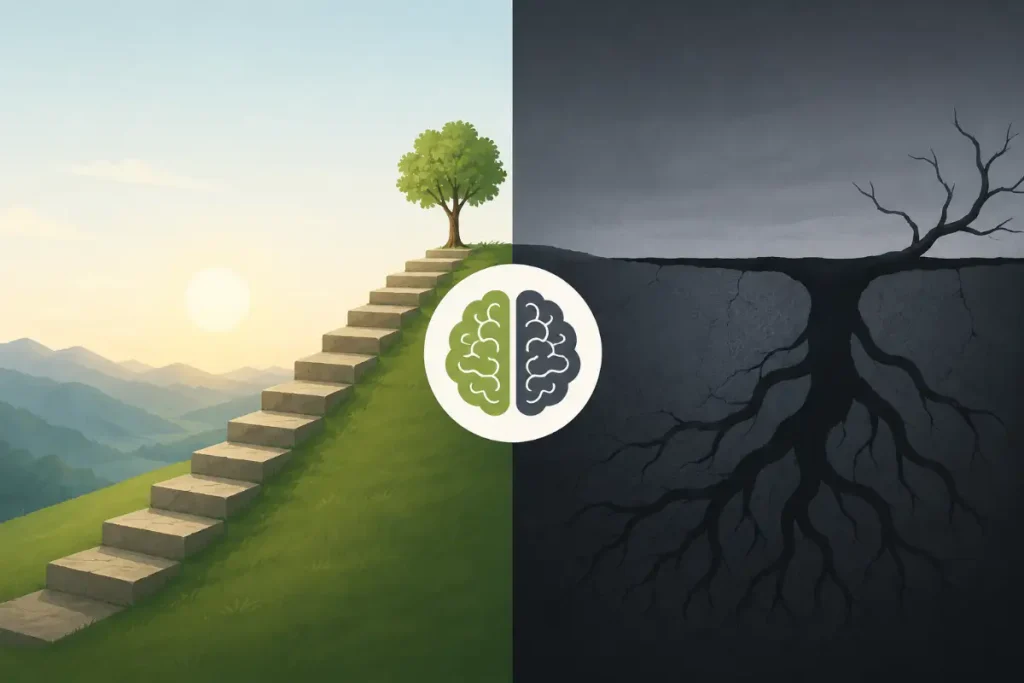
The Main Difference Between Gradual And Insidious.
The easiest way to remember the difference is to focus on what each word tells you.
Gradual tells you how fast something happens.
Insidious tells you how a problem develops and why it can be dangerous.
Imagine a tree growing in your yard. Its growth is gradual. You do not see a dramatic change from one day to the next. Yet there is nothing harmful about the process.
Now imagine a small leak behind a wall. It slowly damages the wood. You may not notice anything at first. Months later the damage becomes serious. That process can be called insidious because the problem develops quietly and causes harm before it becomes obvious.
This is the central distinction.
A gradual change can be positive negative or neutral. An insidious change usually carries a negative meaning. It often involves danger damage deception or a problem that stays hidden.
Consider these examples.
- The company experienced a gradual increase in sales.
- The child made gradual progress in reading.
- The weather became gradually warmer.
- None of these sentences suggests a hidden threat.
- Now look at these examples.
- The disease had an insidious effect on his health.
- An insidious form of corruption slowly weakened the system.
- The habit had an insidious impact on her finances.
These examples point to something more serious. The problem does not simply happen slowly. It works quietly and creates harm.
What Gradual Really Means.
Gradual is one of the simpler words in this pair.
Something gradual happens in small steps instead of happening suddenly. The change can take days months years or even longer. The exact time does not matter. The key idea is slow progress.
- You can use gradual for physical changes.
- The patient made a gradual recovery.
- The mountain slope rises in a gradual curve.
- The temperature showed a gradual increase.
- You can also use it for emotional or personal changes.
- He developed a gradual interest in photography.
- Her fear faded through gradual exposure to the situation.
- The friendship grew through gradual trust.
- The word also works well for social and economic changes.
- The city saw a gradual rise in housing costs.
- The business made a gradual shift toward online sales.
- The neighborhood went through gradual changes over several years.
- Notice something important in these examples. Gradual does not tell you that the result is good or bad.
- A gradual improvement is good.
- A gradual decline is bad.
- A gradual change in color can be neutral.
- A gradual increase in prices can be frustrating.
- The word simply describes the speed and pattern of change.
Gradual Does Not Mean Hidden.
This is one of the most common points of confusion.
Something can happen slowly while everyone can see it.
Suppose a child grows taller over several years. That growth is gradual. It is not hidden. Parents can measure it. Teachers can notice it. The child may even talk about it.
The change is slow but visible.
That is why gradual does not automatically mean secret subtle or harmful.
Consider another example.
The company gradually reduced its office space.
Employees may have known about every change. Managers may have announced each step. The process still counts as gradual because it happened over time.
Now compare that with a problem that quietly spreads inside a company. Employees may not notice the problem until it causes serious damage. Calling that problem insidious adds a meaning that gradual does not provide.
What Insidious Really Means.
Insidious is stronger and more specific.
It describes something that develops slowly and quietly. It often causes harm without making the danger clear at first.
The word has a strong negative tone in modern English.
You may see it in writing about disease crime corruption addiction social problems misinformation and other forms of harm.
For example.
- The disease can have an insidious effect.
- The policy created an insidious form of discrimination.
- The rumor had an insidious influence on public opinion.
- The company faced an insidious threat from inside the organization.
In each case the problem is more than slow. It has a hidden quality. The harmful effect may take time to become clear.
That hidden quality gives insidious its power.
Why Insidious Often Sounds More Serious.
- If you say something is gradual you give the reader information about its pace.
- If you say something is insidious you give the reader information about its nature.
- That is why insidious often feels more serious.
- Compare these two sentences.
- The decline in trust was gradual.
- The decline in trust was insidious.
- The first sentence says trust fell slowly.
The second suggests a deeper problem. The loss of trust may have happened quietly. People may not have noticed the cause. The damage may have spread over time.
The second sentence makes the reader look for a threat.
That does not mean insidious always describes something dramatic. In fact its power often comes from the opposite idea. The danger may look small at first.
Gradual Can Describe Good Changes.
One useful test is to ask if the change can be positive.
If the answer is yes then gradual may be the natural choice.
Try these examples.
- She made gradual progress in math.
- His confidence grew gradually.
- The patient showed gradual improvement.
- The team made a gradual transition to a new system.
- The garden showed gradual growth throughout the spring.
- The word fits because these changes happen slowly. Nothing about the word itself suggests danger.
- You would not normally replace gradual with insidious in these sentences.
- She made insidious progress in math.
- His confidence grew insidiously.
- The patient showed insidious improvement.
These sentences sound wrong or change the intended meaning.
Insidious Usually Describes A Problem.
Insidious is most natural when something unwanted develops over time.
Common examples include disease corruption addiction prejudice manipulation and financial damage.
For instance.
- The disease can remain hidden for years.
- The addiction began with small choices but became an insidious problem.
- Corruption can have an insidious effect on public trust.
- The company faced an insidious threat to its reputation.
- The financial habit had an insidious impact on his savings.
Each example has a sense of danger or harm.
- You should not use insidious just because something takes a long time.
- A long sunset is gradual.
- A slow recovery is gradual.
- A quiet improvement is gradual.
- A hidden form of harm can be insidious.
The Words Can Appear Together.
There is an important point that helps explain the relationship between these words.
Something can be both gradual and insidious.
For example.
- The decline was gradual and insidious.
- This sentence makes sense because the two words describe different parts of the same event.
- Gradual tells us that the decline happened slowly.
- Insidious tells us that the decline was quiet and harmful.
- The same idea appears in this example.
- The company faced a gradual but insidious loss of public trust.
- Gradual describes the pace. Insidious describes the nature and effect.
This is one of the best ways to understand the distinction. The words are not always competing choices. Sometimes they work together because they provide different information.
Real Life Examples Of Gradual.
Health And Recovery.
The patient made a gradual recovery after surgery.
This means the recovery took time. It happened step by step. The sentence does not suggest that the recovery itself was dangerous or hidden.
You could also say.
- Her strength returned gradually.
- His pain decreased gradually.
- The medication produced a gradual improvement.
- These sentences describe slow change.
Learning
Learning often happens gradually.
A student may gradually build vocabulary. A beginner may gradually improve at playing guitar. Someone learning to drive may gradually become more confident.
For example.
- Her writing skills improved gradually over the school year.
- The student made gradual progress after practicing every day.
- The meaning is clear. Progress came in small steps.
Business
Businesses often experience gradual changes.
Sales may rise gradually. Costs may increase gradually. A company may gradually change its products.
For example.
- The store saw a gradual increase in online orders.
- The company gradually expanded into new markets.
- Again the word describes the pace of change.
Nature
Nature provides many clear examples.
A forest can gradually change as trees grow. A river can gradually change its course. A hill can have a gradual slope.
For example.
- The trail makes a gradual climb toward the summit.
- The leaves gradually changed color.
- These are slow visible changes.
Real Life Examples Of Insidious.
Disease
Insidious is common in medical writing because some illnesses can develop quietly.
For example.
The disease can have an insidious onset.
This means the illness begins in a subtle way. The person may not immediately realize that something is wrong.
Another example is.
The condition can cause insidious damage over time.
Here the focus is not just on slow development. The focus is on harm that may remain unnoticed.
Addiction
Addiction can also be described as insidious.
A person may start with a small habit. Over time the habit can become stronger. The effects may slowly spread into work relationships finances and daily life.
For example.
Addiction can be an insidious problem because its effects may grow before the person recognizes them.
The word works because the problem can develop quietly and cause serious harm.
Corruption
Corruption is another strong context for insidious.
Small dishonest acts may seem harmless at first. If they spread through an organization they can damage trust and fairness. For example.
Corruption can have an insidious effect on public institutions.
The sentence suggests a slow harmful influence that may be difficult to see at first.
Manipulation
People can also use insidious to describe harmful influence.
For example.
The campaign used an insidious form of manipulation.
This suggests that the manipulation was subtle and harmful. The person being influenced may not have noticed what was happening.
Gradual Vs Insidious In Simple Sentences
- The fastest way to learn the distinction is to compare sentences side by side.
- The town experienced a gradual population decline.
- This tells us the population fell slowly.
- The town faced an insidious decline in public safety.
This suggests a deeper problem. The decline may have developed quietly and caused harm before people understood its seriousness.
Here is another pair.
- She experienced a gradual loss of confidence.
- This simply means her confidence decreased over time.
- She experienced an insidious loss of confidence.
- This suggests that something harmful may have quietly damaged her confidence.
- The second sentence carries more emotional weight.
- Now consider a health example.
- The patient had a gradual recovery.
- The recovery was slow.
- The patient had an insidious illness.
- The illness developed in a subtle and harmful way.
These words can appear in the same general topic but they serve different jobs.
Common Mistakes With These Words
Using Insidious As A Fancy Word For Slow
This is the biggest mistake.
Insidious does not simply mean slow.
If you write that a plant had an insidious growth pattern you may confuse the reader. The plant may grow slowly but that does not make its growth harmful or hidden.
Use gradual for ordinary slow development.
Use insidious when the development has a harmful or threatening quality.
Assuming Gradual Always Means Positive.
- Gradual can describe negative changes too.
- The company experienced a gradual decline in revenue.
- The patient suffered a gradual loss of hearing.
- The neighborhood saw a gradual rise in crime.
- None of these changes is positive.
- The word only describes the pace.
Thinking Insidious Always Means Intentional
- Insidious does not require a person to plan the harm.
- A disease can be insidious.
- A social problem can be insidious.
- A harmful effect can be insidious.
- A person does not have to sit down and plan the process.
- The word focuses on the subtle harmful development.
Using Insidious For Every Hidden Problem
A hidden problem is not automatically insidious.
The word usually works best when the problem develops quietly and has a harmful effect.
If you simply cannot see something then hidden or concealed may be better.
For example.
- The key was hidden under the table.
- You would not normally say.
- The key was insidious under the table.
- That changes the meaning completely and sounds unnatural.
A Simple Memory Trick
- Think of gradual as a slow staircase.
- You move from one step to the next. The change happens over time.
- Think of insidious as a slow leak.
You may not notice the problem at first. By the time you see the damage the problem may have become serious.
This simple picture can help you choose the right word.
- If you are talking about speed use gradual.
- If you are talking about quiet harm use insidious.
- If both ideas matter you can use both words.
For example.
- The company faced a gradual and insidious decline.
- That tells the reader the decline was slow and harmful.
Gradual And Insidious In Formal Writing
Both words appear in formal English but they create different effects.
Gradual is useful when you want a neutral and precise description.
For example.
- The study found a gradual increase in average temperatures.
- This sentence makes a factual claim about the pace of change.
Insidious is more forceful.
For example.
The report warned about the insidious spread of false information.
The writer is not simply saying the information spread slowly. The writer is pointing to a harmful process that can operate quietly.
Because of this difference you should choose insidious carefully. It carries judgment. It tells the reader that the subject deserves concern.
Gradual And Insidious In Everyday Speech
- Gradual is common in everyday conversation.
- You might say.
- My recovery has been gradual.
- The weather is getting gradually warmer.
- She is gradually getting used to her new job.
- Insidious appears less often in casual speech. It is more common in serious discussions and formal writing.
- You might hear it in conversations about health politics crime business or social problems.
For example.
- That kind of debt can be insidious.
- The problem has an insidious effect on families.
- The disease can be very insidious.
- Even in casual speech the word usually carries a serious tone.
Related Words For Gradual
Several words can replace gradual in the right context.
Slow
- Slow is the simplest choice.
- The change was slow.
- This sentence is easy and natural. It does not add the sense of steady steps that gradual can sometimes suggest.
Steady
- Steady focuses on consistent movement or progress.
- She made steady progress.
- This can suggest regular progress rather than simply slow progress.
Incremental
- Incremental means happening through small steps or additions.
- The company made incremental changes to its policy.
- This word is more formal than gradual.
Progressive
- Progressive can describe change that develops over time. It has several meanings depending on context.
- The disease caused progressive weakness.
- Here it means the condition continued to worsen.
Slow moving
- This phrase can describe something that develops or moves slowly.
- The project became slow moving after the leadership change.
- In many cases gradual sounds cleaner.
Related Words For Insidious
Insidious has several close ideas but none is a perfect replacement in every sentence.
Subtle
- Subtle means difficult to notice or understand.
- The change was subtle.
- This does not necessarily mean the change is harmful.
Hidden
- Hidden means kept out of sight or difficult to see.
- The problem remained hidden for months.
- Again this does not automatically suggest gradual harm.
Stealthy
- Stealthy describes something that happens quietly to avoid attention.
- The company made a stealthy move into the market.
- This often involves intentional action.
Harmful
- Harmful simply means causing damage.
- The policy had harmful effects.
- This tells us about the result but not the quiet or hidden development.
Deceptive
- Deceptive means misleading or designed to create a false impression.
- The advertisement was deceptive.
- This often involves intention. Insidious does not always require intention.
When Gradual Is The Better Choice
Choose gradual when the main fact you want to share is that something happens slowly.
- Ask yourself a simple question.
- Am I describing the pace of change.
- If yes then gradual is probably the better word.
For example.
- The temperature dropped gradually.
- The answer is clear because the important detail is the slow change.
- The company gradually reduced its debt.
- Again the sentence focuses on the process.
- Her relationship with the new team developed gradually.
- Nothing about the sentence suggests danger.
When Insidious Is The Better Choice
Choose insidious when the slow development also involves a hidden harmful effect.
- Ask yourself another simple question.
- Am I warning the reader about a problem that can quietly cause harm.
- If yes then insidious may fit.
For example.
- The disease had an insidious onset.
- The problem is not simply slow. It begins in a way that may escape attention.
Another example is.
- The practice had an insidious effect on workplace morale.
- The phrase suggests that morale suffered through a quiet harmful process.
Can Something Be Gradual Without Being Insidious
Yes.
- Most gradual changes are not insidious.
- A gradual sunrise is not harmful.
- A gradual improvement in health is not insidious.
- A gradual increase in knowledge is not insidious.
- A gradual change in temperature is not insidious.
- The word gradual has no built in warning.
- That is why it is safer when you want neutral language.
Can Something Be Insidious Without Being Very Gradual.
Insidious usually involves slow or subtle development. Still the main idea is the hidden harmful quality rather than a strict measure of speed.
The word does not give you an exact timeline.
Something can begin to cause trouble quickly but still have an insidious quality if its harmful nature is subtle and hard to recognize.
In most everyday writing you will see insidious linked with slow development. That is the pattern worth remembering.
How The Meaning Changes With Context.
- Context can shape the force of both words.
- Consider the word decline.
- A gradual decline means something gets worse slowly.
- An insidious decline suggests a quiet harmful process that may escape notice.
- Now consider influence.
- Gradual influence suggests that something slowly changes how people think or act.
- Insidious influence suggests that the effect is subtle and harmful.
- Now consider spread.
- A gradual spread means something expands slowly.
- An insidious spread suggests that the expansion creates harm and may be difficult to stop.
- The noun stays the same. The adjective changes the message.
Examples That Show The Difference Clearly
- Here are several pairs that you can use as a quick reference.
- Gradual: The company saw a gradual drop in sales.
- The sales decline happened slowly.
- Insidious: The company faced an insidious loss of customer trust.
- The loss of trust developed quietly and caused harm.
- Gradual: Her hearing loss was gradual.
- Her hearing became weaker over time.
- Insidious: The disease caused insidious damage to the nervous system.
- The damage developed in a subtle harmful way.
- Gradual: The child showed gradual improvement.
- The child improved slowly.
- Insidious: The habit had an insidious effect on his finances.
- The habit quietly created financial harm.
- Gradual: The neighborhood underwent gradual change.
- The area changed slowly over time.
- Insidious: The neighborhood faced an insidious rise in organized crime.
- The problem spread in a harmful way that may have been difficult to detect.
How To Choose The Right Word Quickly
You do not need to memorize a long dictionary definition.
Use this three step test.
- First ask if the change is slow.
- If it is not slow then gradual probably does not fit.
- Second ask if the change is hidden or difficult to notice.
- If not then insidious may not fit.
- Third ask if the change has a harmful or troubling effect.
- If the answer is no then gradual is usually the safer choice.
For example.
- The river changed course slowly.
- That is gradual.
- The problem spread quietly and damaged the community.
- That is insidious.
- The decline happened slowly and caused hidden damage.
- That can be both gradual and insidious.
- This test works in most everyday situations.
Why Writers Choose Insidious Instead Of Gradual
Writers often choose insidious because they want to warn the reader.
Compare these sentences.
- The issue had a gradual effect on the community.
- The issue had an insidious effect on the community.
- The first sentence is fairly neutral. It says the effect developed over time.
- The second sentence suggests danger. It tells the reader that the effect was subtle and harmful.
- That single word can change the emotional force of a sentence.
Good writers use that force with care. If the situation is simply slow then gradual is clearer. If there is a hidden threat then insidious can communicate the deeper concern.
A Note About The Word Insidious
Insidious has a long history of describing something that works in a quiet harmful way.
In modern English it often appears with words such as effect problem disease threat influence spread and damage.
- You may see phrases like these.
- Insidious disease.
- Insidious threat.
- Insidious effect.
- Insidious influence.
- Insidious problem.
- Insidious spread.
These pairings sound natural because each noun can describe something that develops quietly and causes trouble.
A Note About The Word Gradual
Gradual appears in many kinds of writing because it has a broad meaning.
- Common pairings include.
- Gradual change.
- Gradual increase.
- Gradual decrease.
- Gradual improvement.
- Gradual decline.
- Gradual recovery.
- Gradual transition.
- Gradual growth.
- Gradual shift.
These phrases cover positive negative and neutral changes.
That broad range makes gradual much more common than insidious in everyday English.
Which Word Sounds More Negative
- Insidious is clearly more negative.
- Gradual is neutral.
- You can use gradual in a positive sentence.
- The patient made gradual progress.
- You can use it in a negative sentence.
- The patient suffered a gradual decline.
- The word itself does not tell us how we should feel about the change.
- Insidious usually signals concern.
- The disease had an insidious effect.
- The practice had an insidious influence.
- The corruption spread in an insidious way.
- These sentences all point toward harm or danger.

Which Word Is More Precise.
- Neither word is always more precise. They answer different questions.
- Gradual is more precise when you need to describe the speed of change.
- Insidious is more precise when you need to describe a subtle harmful development.
- Using the wrong word can weaken your sentence.
- If you call a harmless slow change insidious you make the situation sound more dangerous than it is.
- If you call a hidden harmful problem gradual you may remove an important warning.
- Strong writing depends on choosing the word that carries the meaning you actually intend.
FAQs.
Is gradual the same as insidious?
No. Gradual means something happens slowly over time. Insidious suggests that something develops quietly and causes harm or trouble.
Can gradual and insidious describe the same thing?
Yes. A change can be gradual and insidious at the same time. Gradual describes its slow pace while insidious describes its subtle harmful nature.
Is insidious always a negative word?
Almost always. Modern English uses insidious to describe something harmful dangerous deceptive or troubling that develops in a subtle way.
Can gradual have a negative meaning?
Yes. Gradual is neutral by itself. A gradual decline can be negative while a gradual improvement can be positive.
What is an easy way to remember gradual vs insidious?
Think of gradual as slow change. Think of insidious as slow or subtle harm that can hide in plain sight. If the main idea is pace use gradual. If the main idea is hidden danger use insidious.
Is gradual more common than insidious?
Yes. Gradual has many everyday uses. Insidious appears more often in serious writing about health danger harm corruption influence and social problems.
Can I use gradual and insidious together?
Yes. You can say that a problem was gradual and insidious when it developed slowly and also caused hidden harm. The two words add different details rather than repeating the same meaning.
What is the opposite of gradual?
Sudden is a common opposite. Rapid can also provide a useful contrast in some sentences.
What is the closest simple word to insidious?
Subtle is often close in meaning but it does not always include the idea of harm. Harmful hidden or quietly damaging may express the meaning more clearly in simple English.
Conclusion
The key difference in gradual vs insidious is simple. Gradual describes something that happens slowly over time. Insidious describes something that develops quietly and has a harmful or dangerous effect.
Think about the kind of information you want to give your reader. If you only want to explain the pace of change use gradual. If you want to show that the change is subtle and harmful use insidious.
Remember that the two words can work together. A problem can develop gradually and still be insidious. In that case gradual tells us how the problem develops while insidious tells us why the problem deserves concern.

Dr. Arthur Pendelton is a veteran historical linguist and grammar expert with over 30 years of experience in academic editing. A retired professor, Arthur specializes in the etymology and evolution of the English language. He is passionate about “unpacking the history behind the rules,” helping readers understand why we spell, punctuate, and phrase things the way we do today. Whether he’s settling debates on archaic usage or explaining complex linguistic shifts, Dr. Pendelton brings scholarly precision to every article.
6 thoughts on “Gradual vs Insidious What Is the Difference”