If you are searching for emersion vs immersion, the short answer is simple. Immersion is the common word you usually need. Emersion is a real word too, but it has a much narrower meaning and is rarely used in everyday English.
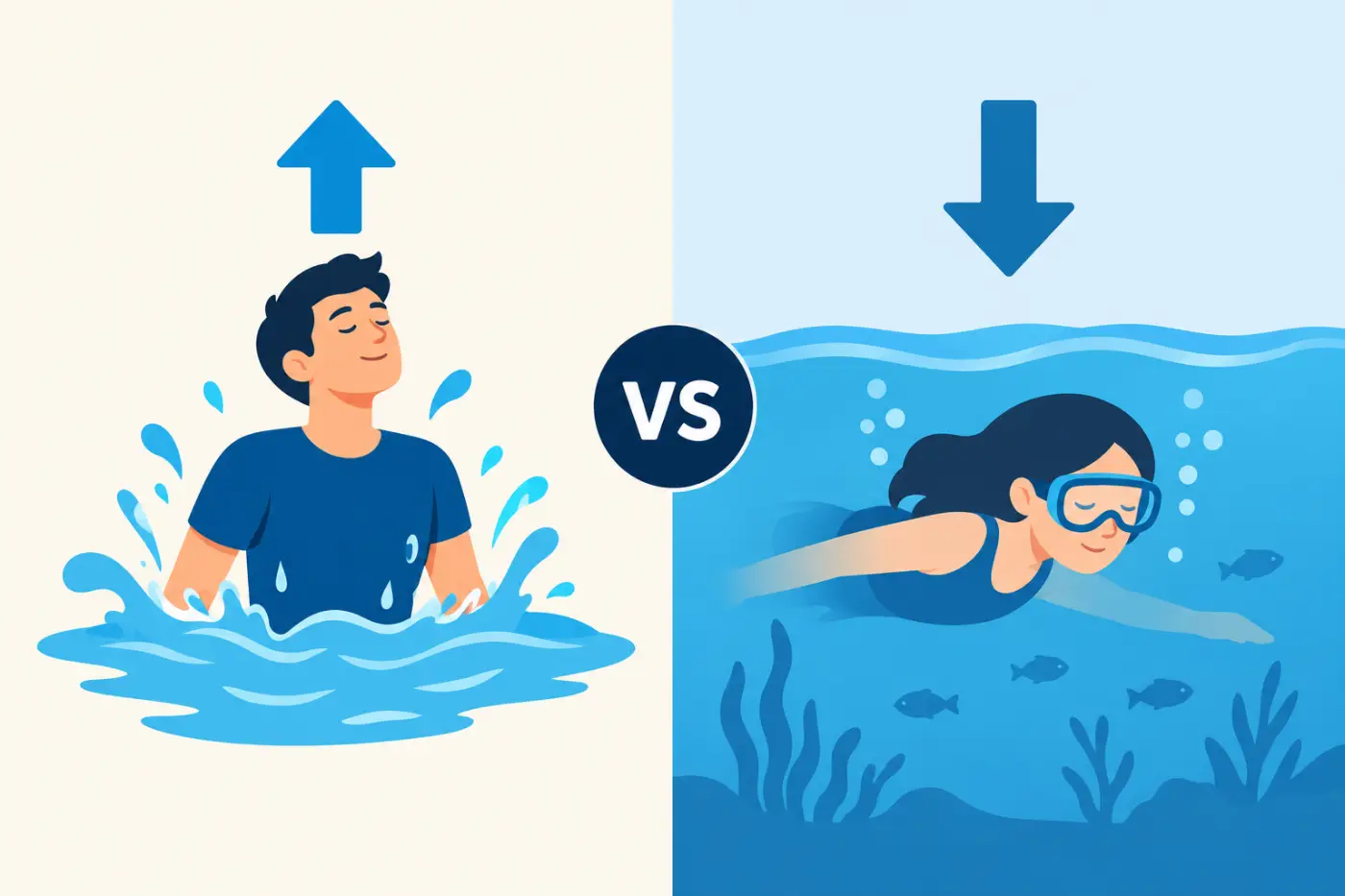
The two words look almost identical, which makes the mix up easy. Both are linked to the idea of being in water or coming out of it. The key difference is the direction of the action. Immersion means going into something or being deeply surrounded by it. Emersion means coming out of something after being immersed.
You will see immersion much more often in normal writing. We use it for swimming, language learning, training, education, virtual reality, and many other situations. Emersion mainly appears in technical or formal contexts, especially when something emerges from water or another liquid.
This guide explains the difference in plain English. You will learn what each word means, how to use it in a sentence, why people confuse them, and how to remember the difference without checking a dictionary every time.
Quick Definition
Immersion means placing something into a liquid or becoming deeply involved in an activity, language, culture, or experience. Emersion means the act of coming out of a liquid or emerging after being immersed. Immersion is common in everyday English, while emersion is uncommon and more specialized.
Direct Answer
Immersion is the correct choice for most situations involving being placed into water or becoming deeply involved in something. Emersion is used when something comes out of water or emerges from a state of immersion.
Comparison Table
| Word or phrase | Meaning | Example sentence | When to use it |
|---|---|---|---|
| Immersion | Being placed into something or becoming deeply involved in it | The swimmer practiced immersion techniques in the pool. | Use it for entering water, deep involvement, language learning, training, and similar ideas. |
| Emersion | The act of coming out of water or emerging after immersion | The diver began emersion after completing the underwater exercise. | Use it mainly in technical or formal writing about emerging from water or another medium. |
Why These Words Cause Confusion
The confusion comes from the way the two words look and sound.
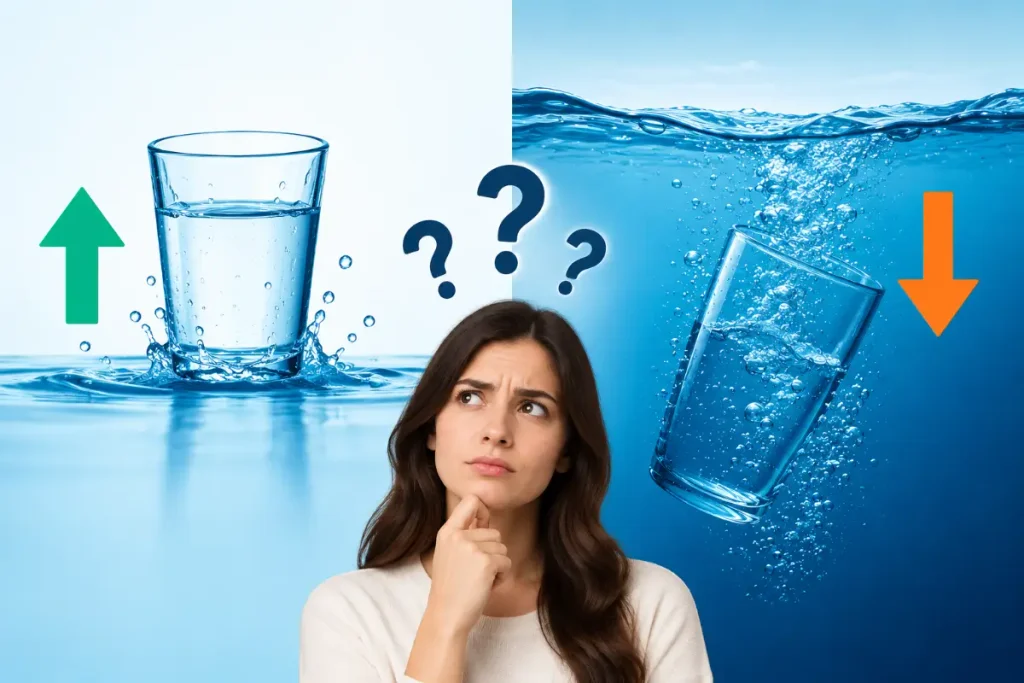
Both words contain the word immersion pattern. Both relate to movement into or out of something. They also come from related Latin roots. That shared history makes the difference harder to spot at first glance.
The easiest way to separate them is to focus on direction.
Think about a swimmer entering a pool. The swimmer moves into the water. That is immersion.
Now picture the same swimmer climbing out of the pool. The swimmer moves out of the water. That is emersion.
The words describe opposite stages of a process.
Immersion points inward. Emersion points outward.
That simple idea solves most cases.
There is another reason the confusion continues. Many people have heard immersion often but rarely see emersion. When they encounter the less common word, they may assume it is a spelling mistake. In some situations, that assumption makes sense because emersion is unusual in ordinary conversation.
Still, emersion is a legitimate English word.
You do not need to avoid it when the meaning is correct. You simply need to use it in the right setting.
For example, a science writer might describe a device being lowered into water and later brought back to the surface. The first action involves immersion. The second involves emersion.
In everyday speech, though, most people would simply say the device was placed underwater and then brought back up. That sounds more natural to a general audience.
What Immersion Means
Immersion is the much more common word of the two.
At its most basic level, immersion means putting something into a liquid so that it becomes covered or surrounded by that liquid.
- A child might immerse a toy in a bucket of water.
- A researcher might immerse a sample in a chemical solution.
- A swimmer might immerse their body in a pool.
Those examples use the physical meaning of the word.
However, immersion has another meaning that has become extremely common. It can describe deep involvement in an activity, subject, language, culture, or experience.
That meaning does not require water at all.
For example, a student may spend several months in a Spanish speaking community and use Spanish every day. You could describe that as language immersion.
A person playing a virtual reality game may feel completely surrounded by the digital environment. That can also be called an immersive experience.
A new employee may take part in an intensive training program. The company might call it an immersion program because the employee spends a lot of time learning and practicing the work.
So immersion has both a physical and an abstract meaning.
Physical Immersion
The physical meaning is the easiest to understand.
If you immerse something in water, you put it into the water.
For example:
- The nurse immersed the equipment in a cleaning solution.
- The child immersed the cup in the sink.
- The diver’s body was fully immersed in the water.
- The word can also describe a person entering water.
- She slowly immersed herself in the warm pool.
The phrase fully immersed often means completely covered by a liquid. It can also mean deeply involved in something.
Immersion In Language Learning
Language immersion is one of the most familiar nonphysical uses of the word.
In an immersion program, learners spend a large amount of time hearing, reading, speaking, and using a new language. Instead of studying the language only from a textbook, they interact with it throughout daily activities.
For example:
- The school offers an English immersion program for students who speak other languages at home.
- Living with a Spanish speaking family gave him a strong language immersion experience.
- She improved her French through daily immersion.
- The idea is simple. The learner becomes surrounded by the language.
That is why immersion works as a useful metaphor. Just as a swimmer becomes surrounded by water, a language learner becomes surrounded by the language.
Immersion In Culture
Immersion can also describe spending meaningful time in another culture.
Someone who lives abroad may experience cultural immersion by taking part in local traditions, eating local food, learning social customs, and communicating with local people.
For example:
- Living in Seoul gave her a chance to experience Korean culture through immersion.
- The students spent a week in Mexico as part of a cultural immersion program.
Cultural immersion can teach things that a short classroom lesson may not show. It puts a person directly into the setting they want to understand.
Immersion In Work And Training
Businesses and schools also use immersion to describe intensive learning.
An immersion course usually gives learners a lot of practice in a short period.
For example:
- The new teachers attended a two day immersion course.
- The training included hands on immersion in classroom activities.
- The students joined an engineering immersion program during the summer.
In these examples, nobody is getting into a pool. The word describes deep involvement.
What Emersion Means
Emersion is a real word, but it is far less common.
It generally means the act of emerging from water or coming out of something after being immersed.
The direction matters.
- Immersion describes going in.
- Emersion describes coming out.
For example:
- The diver began emersion after finishing the underwater inspection.
- The instrument was visible again during emersion.
- The procedure included immersion followed by controlled emersion.
You may notice that these sentences sound more technical than ordinary conversation. That is normal. Emersion is not a word most people use every day.
- A person is much more likely to say:
- The diver came out of the water.
- The instrument was brought back to the surface.
- The diver surfaced after the inspection.
- Those sentences are easier for general readers to understand.
- That does not make emersion incorrect. It simply makes it less common.
Emersion In Technical Writing
You are most likely to encounter emersion in scientific, technical, or specialized writing.
For example, a text about diving might describe the stages of entering and leaving water. A scientific paper might discuss an object being immersed in a liquid and later emerging from it.
The word can also appear in descriptions of astronomical events. In astronomy, emersion can describe an object becoming visible again after being hidden or obscured by another object.
For example, an astronomer may describe the emersion of a moon after it passes out of an eclipse or another period of concealment.
This use is specialized, so most general readers will not need the word very often.
If your audience is made up of everyday readers, a simpler phrase may be clearer.
The Main Rule To Remember
The most useful rule is this.
- Immersion means going in. Emersion means coming out.
- Imagine dropping a coin into a glass of water.
- The coin entering the water is immersion.
- The coin being taken out of the water is emersion.
- You can apply the same idea to a diver.
- The diver entering the water involves immersion.
- The diver coming back out involves emersion.
This direction based rule is more useful than trying to memorize complicated dictionary definitions.
Is Emersion A Misspelling Of Immersion
No. Emersion is not simply a misspelling of immersion.
Both words are valid English words. They have different meanings.
The problem is that emersion is uncommon. Because most people see immersion far more often, emersion can look strange when it appears on a page.
A spell checker may also treat uncommon words differently from common ones. That does not automatically mean the word is wrong.
The safest approach is to check the meaning you want.
- If you mean entering something or becoming deeply involved in something, use immersion.
- If you mean coming out after being immersed, emersion can be the right word.
- If you are writing for a broad audience, consider using simpler language if the technical word does not add value.
Common Mistakes With These Words
People usually make one of a few predictable mistakes when using these terms.
Using Emersion For Deep Involvement
This is one of the biggest errors.
- Someone may write that a student experienced emersion in a new language.
- That is incorrect if the writer means deep involvement in the language.
- The correct word is immersion.
You could write:
- The student learned Spanish through language immersion.
- The learner spent six months in an immersive Spanish program.
- The student became deeply immersed in the language.
- Emersion does not mean deep involvement in a subject.
Treating Emersion As The Common Form
Another mistake is assuming that emersion can replace immersion in normal sentences.
It cannot.
For example, this sentence is wrong:
The company created an emersion program for new employees.
If the company wants employees to become deeply involved in training, the natural term is immersion program.
The better sentence is:
The company created an immersion program for new employees.
Using Immersion For Coming Out Of Water
The opposite mistake can also happen.
If you specifically need a technical term for the act of emerging from water, emersion may be the better word.
For example:
The diver’s emersion was carefully controlled.
If you use immersion here, you change the meaning. Immersion points toward entering or being in the water.
Assuming Every Use Must Involve Water
- Immersion does not always involve water.
- That is one of the most important points to remember.
- You can have language immersion.
- You can have cultural immersion.
- You can have educational immersion.
- You can have virtual reality immersion.
- You can have immersion in a hobby.
- The shared idea is deep involvement.
Immersion In Everyday English
Immersion is useful because English speakers use it in many normal situations.
- You might hear someone say:
- I got completely immersed in that book.
- She became immersed in the project.
- He spent the summer immersed in Italian.
- The kids loved the immersive museum exhibit.
- The word can describe attention as well as physical surroundings.
- If you become so focused on a book that you lose track of time, you are immersed in the story.
- If you spend hours learning to play guitar and give the activity your full attention, you are immersed in the process.
- That broader meaning makes immersion a powerful and flexible word.
Immersive And Immersed
You will also see related forms such as immersive and immersed.
They are connected to immersion.
Immersive describes something that creates a strong sense of involvement or surroundings.
For example:
- The museum created an immersive experience.
- The game has immersive sound and visuals.
- The course uses immersive learning activities.
- Immersed describes a person or thing that is deeply involved or physically covered.
For example:
- She was immersed in her work.
- The roots were immersed in water.
- He became immersed in the local culture.
- These words are common in modern English.
Emersive is not a common everyday counterpart. If you are looking for a normal word related to coming out of water, emerging or surfacing will often sound more natural.
How To Use Immersion In A Sentence
Immersion can work as a noun.
For example:
- Language immersion helped her learn Spanish.
- The device requires complete water immersion.
- The program offers cultural immersion.
- It can also appear with related forms.
For example:
- The students became immersed in French.
- The teacher created an immersive learning environment.
- The child was fully immersed in the pool.
- The exact form depends on the sentence.
- If you are describing the process or experience, immersion often works.
- If you are describing someone or something as deeply involved, immersed may be better.
- If you are describing something that creates that feeling, immersive may be better.
How To Use Emersion In A Sentence
Emersion is usually used as a noun.
For example:
- The diver’s emersion took several minutes.
- The equipment was checked after emersion.
- The study examined the effects of repeated immersion and emersion.
- The word fits best in writing where the process of emerging has a specific technical meaning.
- For casual writing, simpler wording often wins.
Instead of:
The swimmer completed emersion from the pool.
You could write:
The swimmer came out of the pool.
Instead of:
The diver began emersion after the inspection.
You could write:
The diver began to surface after the inspection.
Both versions can be correct. The second is simply more natural for most readers.
A Simple Memory Trick
Use the first letter as your clue.
- I means in.
- Immersion starts with I.
- Think of the person going in.
- E means exiting.
- Emersion starts with E.
- Think of the person exiting.
- This is not a formal language rule. It is simply a memory trick.
- Another way to picture it is a swimming pool.
- Immersion is the jump into the pool.
- Emersion is climbing out.
- That image is easy to remember.
Once you connect the words with direction, the difference becomes much harder to forget.
Related Words That Can Cause Confusion
- English has several pairs that look similar but carry different meanings.
- Immersion and emersion are one example.
- The same kind of confusion can happen with words that differ by only a few letters.
- The best way to avoid mistakes is to focus on meaning instead of spelling alone.
Emerge
Emerge means to come out or become visible.
For example:
- The swimmer emerged from the water.
- The sun emerged from behind the clouds.
- This is often a much more natural choice than emersion.
Submerge
Submerge means to put something under water or another liquid.
For example:
- The diver submerged beneath the surface.
- The instructions say to submerge the object for ten minutes.
- Submerge and immerse are close in meaning when talking about water.
Surface
Surface means to come up to the top of the water.
For example:
- The diver surfaced after twenty minutes.
- This is common everyday English.
- If your readers are not familiar with technical language, surface is often the clearest choice.
Immerse
Immerse is the verb form related to immersion.
For example:
- Immerse the cloth in warm water.
- She immersed herself in the new language.
- The first example is physical.
- The second example is figurative.
Immersed
Immersed is the past form or adjective form.
For example:
- The sponge was immersed in water.
- He was deeply immersed in his research.
Immersive
Immersive describes something that surrounds or deeply engages a person.
For example:
- The theater created an immersive experience.
- The students took part in an immersive language course.
- These related forms are much more common than emersion.
Immersion Versus Submersion
Immersion and submersion can overlap when you are talking about water.
Submersion usually emphasizes being under the surface.
Immersion can describe the act of placing something into a liquid or becoming deeply involved in something.
For example:
- The machine was submerged underwater.
- The machine was immersed in a cleaning solution.
- Both sentences can describe a similar physical action, but the focus differs.
- Submersion strongly suggests being below the surface.
- Immersion has a wider meaning and can also describe nonphysical involvement.
- That is why immersion appears in areas such as language education and culture.
Why Immersion Is More Common
There is a practical reason you will see immersion much more often.
The word has developed several common meanings beyond its original physical sense. English speakers use it for water, education, languages, culture, entertainment, technology, and focused attention.
Emersion has kept a much narrower meaning.
It is mainly useful when the act of emerging has technical importance.
Words that work across many everyday situations tend to appear more often. Immersion is one of those words.
That difference in frequency explains why many readers recognize immersion instantly but stop when they see emersion.
When You Should Use Immersion
Use immersion when you mean any of the following ideas.
- You are placing something into a liquid.
- You are entering water.
- You are surrounded by a language.
- You are deeply involved in a subject.
- You are deeply involved in an activity.
- You are surrounded by a digital or physical environment.
- You are describing an intensive learning experience.
For example:
- The course uses full language immersion.
- The device needs water immersion for testing.
- She became immersed in the novel.
- The students joined a cultural immersion program.
- The museum offers an immersive experience.
- These uses are natural and widely understood.
When You Should Use Emersion
Use emersion when you specifically mean coming out after being immersed.
The word makes the most sense in technical or specialized contexts.
For example:
- The research measured the object during immersion and emersion.
- The diver’s controlled emersion was part of the experiment.
- The instrument was observed during both immersion and emersion.
- You do not need to force the word into everyday writing.
If your sentence is easier to understand with emerged, surfaced, came out, or became visible, use the simpler option.
Clear writing is usually better than showing off a rare word.
What Does Emersion Mean In Astronomy
Emersion has a special use in astronomy.
It can describe the moment an astronomical object becomes visible again after being hidden or obscured.
For example, an astronomer may observe a moon emerging from an eclipse or another period of concealment. The event can be described as an emersion.
- This is different from the common physical water meaning.
- The central idea remains the same, though.
- Something was hidden or covered and then became visible again.
- That is why the word fits the astronomical context.
Readers who encounter emersion in astronomy should not assume it is a spelling mistake. It may be a precise technical term.
Can You Use Emersion In Normal Conversation
You can, but most people do not.
A technically correct word is not always the best word for a general audience.
If you tell a friend that you completed your emersion from the lake, the sentence may sound unusual. The friend will probably understand you, but they may wonder why you did not simply say you got out of the lake.
Technical writing has different needs.
A scientific report may need a precise term for a specific process. In that setting, emersion can be useful.
Everyday conversation usually favors shorter and more familiar expressions.
That is a good writing rule in general. Use specialized vocabulary when it adds precision. Avoid it when it only makes a simple idea harder to read.
Is Immersion Always About Water
No.
Water is the original image that makes the word easy to understand, but modern English uses immersion far beyond physical water.
- You can be immersed in a book.
- You can be immersed in music.
- You can be immersed in work.
- You can be immersed in a language.
- You can be immersed in a culture.
- You can be immersed in a game.
- You can be immersed in a conversation.
- In each case, the word suggests strong involvement.
For example:
- After starting the mystery novel, I became completely immersed in the story.
- The student spent a year immersed in Japanese.
- She was so immersed in the project that she forgot to check the time.
None of these examples involve water.
Does Immersion Mean Complete Involvement
Often, yes.
- When immersion describes an activity or experience, it usually suggests a high level of involvement.
- Still, the exact level depends on context.
- Someone can be immersed in a book for ten minutes.
- A student can spend years in an immersive language program.
- A visitor can have a brief immersive cultural experience.
- The word does not require a specific amount of time.
- The main idea is that the person becomes deeply involved or surrounded by the thing being described.
Why Context Matters
A word can have more than one meaning, and immersion is a good example.
- Consider this sentence:
- He was immersed in water.
- That is physical.
- Now consider:
- He was immersed in his work.
- That is figurative.
- The surrounding words tell you which meaning applies.
- This is why you should not memorize immersion as meaning only underwater.
- The broader meaning is involvement or being surrounded by something.
- Emersion is narrower, so context matters even more.
If a sentence describes a person becoming deeply involved in a subject, immersion is almost certainly the word you need.
If the sentence describes something coming out of water or becoming visible after being hidden, emersion may fit.
Examples That Make The Difference Clear
Here are some simple examples.
- The diver entered the water and became fully immersed.
- The diver later began his emersion.
- The students learned Spanish through immersion.
- The swimmer’s emersion marked the end of the exercise.
- She became immersed in the novel.
- The equipment was removed after emersion from the solution.
- The school offers a French immersion program.
- The scientific report recorded the device during immersion and emersion.
- The virtual reality system created an immersive experience.
- The diver surfaced after completing the underwater task.
- Notice how the first set of examples focuses on entering, being surrounded, or becoming deeply involved.
- The second set focuses on coming out or becoming visible again.
- That is the central distinction.
FAQs
Is emersion a real word?
Yes. Emersion is a legitimate English word. It generally refers to emerging from water or becoming visible after being hidden or covered. It is much less common than immersion.
Is emersion vs immersion a spelling mistake?
No. The two words are spelled differently because they have different meanings. Immersion refers to entering or being deeply involved in something, while emersion refers to coming out after being immersed.
Which word is correct for language learning?
Immersion is the correct word for language learning. A language immersion program surrounds learners with the language through regular use. Emersion does not describe this kind of learning.
What is the difference between immersion and emersion?
Immersion points inward. It describes entering a liquid or becoming deeply involved in an activity, subject, language, or experience. Emersion points outward and describes coming out after being immersed.
Is emersion commonly used in English?
No. Emersion is uncommon in everyday English. You are more likely to see it in technical, scientific, diving, or astronomy related writing.
Can immersion mean coming out of water?
No. Immersion refers to entering or being in a liquid. If you mean coming out of water, you can use emersion in a technical context or simply say emerged, surfaced, or came out of the water.
What is an easy way to remember immersion and emersion?
Think of I as in for immersion. Think of E as exit for emersion. Immersion means going in, while emersion means coming out.
Is immersed the same as immersion?
They are related forms of the same word. Immersion is usually a noun, while immersed can describe a person or thing that is deeply involved or physically covered. For example, you can experience language immersion, and you can become immersed in a language.
Conclusion
The difference between these two words is easier than it first appears. Immersion means going into something, being surrounded by it, or becoming deeply involved in it. Emersion means coming out after being immersed or becoming visible again after being hidden.
For most everyday writing, immersion is the word you will need. It works for water, language learning, culture, education, entertainment, work, and focused attention. It is common, flexible, and easy for readers to understand.
Emersion is still correct when the situation calls for it. You may find it in technical writing about diving, scientific processes, or astronomy. In casual writing, words such as surfaced, emerged, or came out may sound more natural.
If you are still unsure, remember one simple idea. Immersion means in. Emersion means out. That quick mental picture will help you choose the right word the next time you face this spelling and meaning question.
The practical takeaway is simple. Use immersion for entering something or becoming deeply involved. Save emersion for the specific idea of emerging or becoming visible again. That rule will cover almost every situation you are likely to encounter.
Meta Description: Emersion vs immersion explained in simple English. Learn the meaning, key difference, examples, common mistakes, and easy way to remember each word.

Dr. Arthur Pendelton is a veteran historical linguist and grammar expert with over 30 years of experience in academic editing. A retired professor, Arthur specializes in the etymology and evolution of the English language. He is passionate about “unpacking the history behind the rules,” helping readers understand why we spell, punctuate, and phrase things the way we do today. Whether he’s settling debates on archaic usage or explaining complex linguistic shifts, Dr. Pendelton brings scholarly precision to every article.
4 thoughts on “Emersion vs Immersion which spelling is correct”