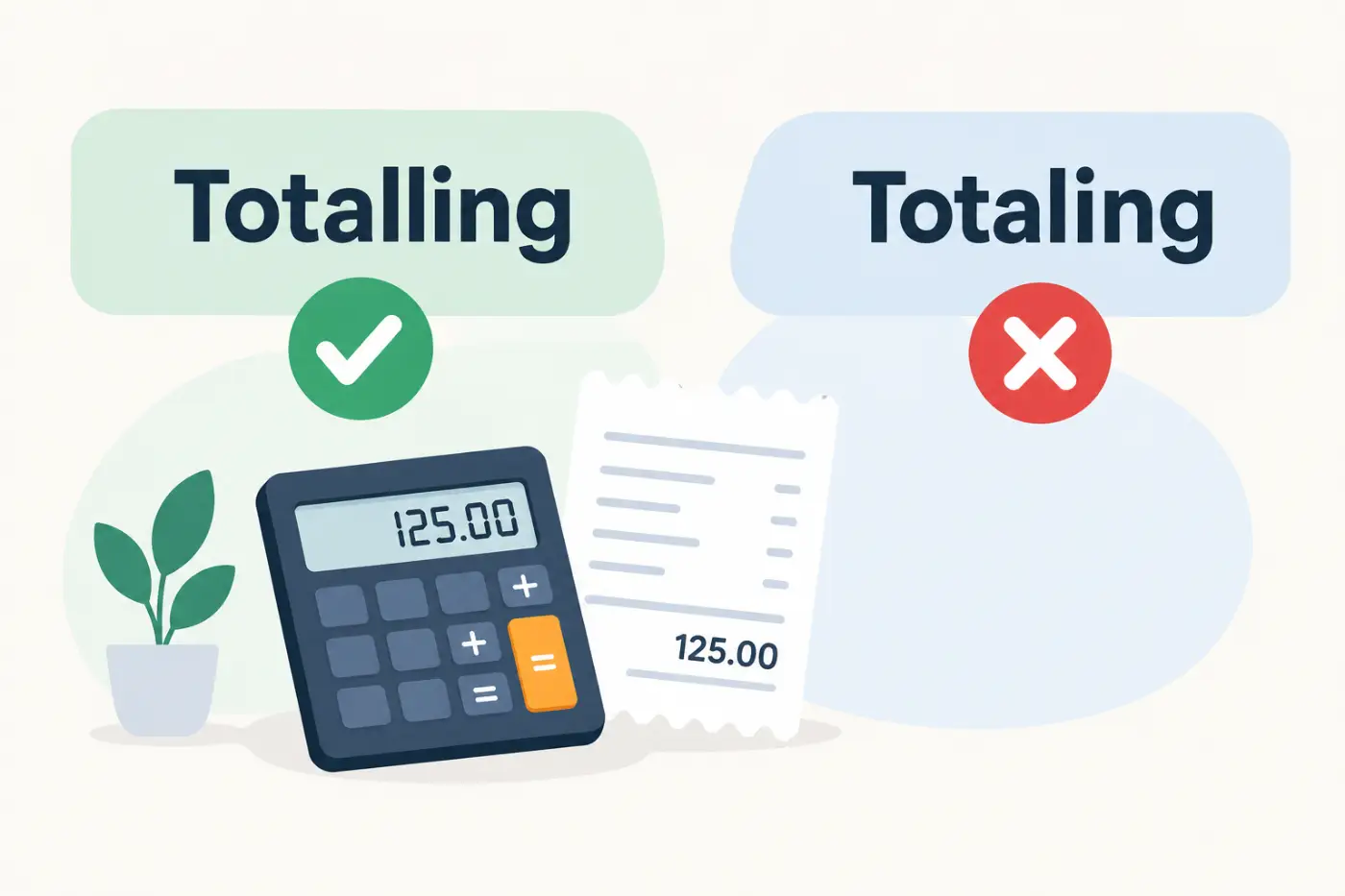
If you have ever stopped mid-sentence and wondered about Totalling or Totaling, you are not alone. This spelling pair confuses writers, students, editors, and even native English speakers. One version has two Ls. The other has one. Both appear in books, websites, emails, and official documents.
So which spelling is right? The short answer is simple: both are correct, but they belong to different versions of English. American English usually uses totaling, while British English, Australian English, and many other forms of English prefer totalling.
This guide answers all of those questions in plain English. You will learn the spelling rule, see real examples, avoid common mistakes, and pick up an easy trick to remember the correct form every time.
Quick Definition
Totaling and totalling are two spellings of the same word. Both mean adding numbers together to find a final amount or reaching a complete amount.
The difference is not meaning. It is simply a matter of regional spelling:
- Totaling = American English.
- Totalling = British English and many other forms of English.
Direct Answer
If you write in American English, use totaling. If you write in British English, use totalling. Both spellings are correct, and both have the same meaning.
Comparison Table
| Word | Meaning | Example Sentence | When to Use It |
|---|---|---|---|
| Totaling | Adding up to a final amount | The expenses are totaling $500. | American English |
| Totalling | Adding up to a final amount | The expenses are totalling £500. | British English |
| Totaled | Reached a final amount | Sales totaled $10,000. | American English |
| Totalled | Reached a final amount | Sales totalled £10,000. | British English |
Understanding The Meaning Of Total
Before looking at spelling rules, it helps to understand the base word.
The word total can work as a noun, adjective, or verb.
As a noun:
- The total was $150.
As an adjective:
- It was a total success.
When we add -ing to the verb, we create a present participle:
- The team is totaling the expenses.
- The team is totalling the expenses.
The action is exactly the same. Only the spelling changes.
Why Do Two Spellings Exist
English has many regional differences. American English and British English often spell words differently.
Some common examples include:
| American English | British English |
|---|---|
| Color | Colour |
| Favorite | Favourite |
| Traveling | Travelling |
| Canceled | Cancelled |
| Modeling | Modelling |
| Totaling | Totalling |
These differences developed over time. American English moved toward shorter spellings in many cases. British English often kept older forms.
Neither system is wrong. They simply follow different style rules.
The Rule Behind The Double L
The key question is this: why does British English add another L?
The answer comes from a spelling rule.
American English Rule
In American English, if a word ends with an unstressed syllable, the final consonant is often not doubled before adding endings like -ing or -ed.
Examples:
- Travel → traveling.
- Cancel → canceled.
- Total → totaling.
British English Rule
British English often doubles the final L before adding endings, even when the stress is not on the last syllable.
Examples:
- Travel → travelling.
- Cancel → cancelled.
- Total → totalling.
This is why both versions exist.
Pronunciation Does Not Change
Many people think that two spellings might create two pronunciations.
That is not the case.
Both words sound exactly the same:
TOH-tuhl-ing
No matter which spelling you choose, the pronunciation stays the same.
Real Examples In Sentences
Here are examples using American spelling:
- The receipts are totaling more than $700.
- The repairs are totaling thousands of dollars.
- We spent the afternoon totaling the sales figures.
- Their losses are totaling nearly one million dollars.
Here are examples using British spelling:
- The costs are totalling more than £700.
- She is totalling the figures from the report.
- Their expenses are totalling far more than expected.
- The donations are totalling a record amount.
Notice that the meaning never changes.
When To Use American Spelling
Choose totaling if you are writing for:
- American readers.
- US schools.
- American businesses.
- US newspapers.
- US websites.
Most American style guides prefer this spelling.
Examples include:
- Associated Press Stylebook.
- Chicago Manual of Style.
- Many US dictionaries.
If your audience is mainly in the United States, use American spelling consistently.
When To Use British Spelling
Choose totalling if you are writing for:
- British readers.
- Australian audiences.
- Canadian publications using British style.
- International organizations that follow British English.
Consistency matters more than the spelling itself.
If you begin with British spelling, stay with it throughout the piece.
Common Mistakes People Make
Mixing Styles
One of the biggest mistakes is mixing American and British spelling.
For example:
Incorrect:
- The company is totaling expenses and cancelling orders.
This combines American and British forms.
Better:
American:
- The company is totaling expenses and canceling orders.
British:
- The company is totalling expenses and cancelling orders.
Using Spell Check Without Checking Language Settings
Many people trust spell check completely.
If your computer is set to US English, it may mark British spelling as incorrect.
If your computer uses UK English, the opposite may happen.
Always check your language settings before editing.
Thinking One Version Is Wrong
Many writers assume that only one spelling is correct.
That is not true.
English is spoken around the world, and different regions use different spelling systems.
Related Word Pairs
Understanding similar examples makes the rule easier to remember.
Traveling Or Travelling
American:
- Traveling.
British:
- Travelling.
Canceled Or Cancelled
American:
- Canceled.
British:
- Cancelled.
Modeling Or Modelling
American:
- Modeling.
British:
- Modelling.
Signaling Or Signalling
American:
- Signaling.
British:
- Signalling.
The same pattern appears again and again.
How Dictionaries Handle These Spellings
Modern dictionaries usually list both forms.
American dictionaries often show:
- Totaling.
British dictionaries often show:
- Totalling.
Many online dictionaries mention regional usage so readers know which spelling fits their audience.
What About Search Engines
People search for both spellings.
Someone in the United States may type:
- How do you spell totaling?
Someone in the United Kingdom may search:
- Is totalling correct?
Search engines understand both forms because they have the same meaning.
For writers, the best approach is to match your audience.
Does It Matter In Professional Writing
Yes, consistency matters in professional writing.
Editors notice mixed spelling styles.
For example:
- Academic papers.
- Business reports.
- News articles.
- Books.
- Marketing content.
A company using American English should use American spelling throughout.
A British publication should do the same with British forms.
Consistent spelling looks polished and professional.
A Simple Memory Trick
Here is an easy way to remember:
Think about location.
- United States = shorter spelling = totaling.
- Britain = double L = totalling.
You can also group similar words together:
- Traveling, canceling, totaling.
- Travelling, cancelling, totalling.
Patterns are easier to remember than single words.
Historical Background
English spelling changed over hundreds of years.
American English became more standardized during the nineteenth century. Noah Webster, the famous American lexicographer, supported simpler spellings.
That is why American English often prefers:
- Color instead of colour.
- Honor instead of honour.
- Totaling instead of totalling.
British English kept many traditional forms.
Neither approach is better. They are simply different language traditions.
How Teachers Explain This Rule
Teachers often explain the rule through stress patterns.
Words stressed on the last syllable usually double the final consonant:
- Begin → beginning.
- Admit → admitting.
Words with stress earlier in the word often do not:
- Visit → visiting.
British English treats the letter L differently in many cases, which explains forms like:
- Travelling.
- Cancelling.
- Totalling.
This is one reason English spelling can feel confusing.
Is One Spelling More Common
Usage depends on location.
In the United States:
- Totaling is much more common.
In Britain, Australia, and New Zealand:
- Totalling appears more often.
Globally, both spellings are widely recognized.
The Role Of Style Guides
Style guides help writers stay consistent.
Popular guides include:
American Guides
- Chicago Manual of Style.
- AP Stylebook.
- MLA Handbook.
British Guides
- Oxford Style Manual.
- The Guardian Style Guide.
If you write for a company or publication, follow its preferred style.
Examples From Everyday Life
You may see these spellings in:
Finance
- The expenses are totaling $2,000.
- The expenses are totalling £2,000.
Insurance
- The accident damage totaled the vehicle.
- The accident damage totalled the vehicle.
Shopping
- The items are totaling more than expected.
- The items are totalling more than expected.
School Work
- Students are totaling scores from the test.
- Students are totalling scores from the test.
The context stays the same.
Why Readers Notice Spelling Differences
Readers often notice spelling because it signals location.
Seeing words like:
- Colour.
- Favourite.
- Travelling.
suggests British English.
Seeing:
- Color.
- Favorite.
- Traveling.
suggests American English.
Spelling can quietly tell readers where content comes from.
Which Spelling Should You Choose
Ask yourself three questions:
- Who is my audience?
- Which style guide am I following?
- Am I staying consistent?
Those answers usually solve the problem quickly.
- If your audience is American, use American spelling.
- If your readers are British, use British spelling.
Simple.
FAQs
Is totaling correct?
Yes. Totaling is the standard American English spelling. It is widely used in US schools, businesses, and publications.
Is totalling correct?
Yes. Totalling is the standard British English spelling. It is common in the UK, Australia, and many other English-speaking countries.
Do totaling and totalling mean different things?
No. Both words have exactly the same meaning. They refer to adding up numbers or reaching a complete amount.
Why does British English use two Ls?
British English often doubles the letter L before adding endings like -ing and -ed. This is the same pattern seen in words like travelling and cancelled.
Which spelling should I use in school assignments?
Use the spelling your teacher, school, or style guide requires. American schools usually prefer totaling, while British schools prefer totalling.
Is one spelling more professional?
Neither is more professional. Consistency is what matters. Pick one style and use it throughout your writing.
Does pronunciation change?
No. Both spellings are pronounced the same way.
Conclusion
The confusion around Totalling or Totaling comes from one simple fact: English has more than one standard spelling system.
American English uses totaling. British English uses totalling. The meaning, pronunciation, and grammar stay exactly the same. Only the regional style changes.
If you remember the pattern used in words like traveling/travelling and canceling/cancelling, this spelling pair becomes much easier to handle.
The next time you see two versions of the word, do not ask which one is right. Ask which version fits your audience. That single question will guide you to the correct choice every time.

Dr. Arthur Pendelton is a veteran historical linguist and grammar expert with over 30 years of experience in academic editing. A retired professor, Arthur specializes in the etymology and evolution of the English language. He is passionate about “unpacking the history behind the rules,” helping readers understand why we spell, punctuate, and phrase things the way we do today. Whether he’s settling debates on archaic usage or explaining complex linguistic shifts, Dr. Pendelton brings scholarly precision to every article.