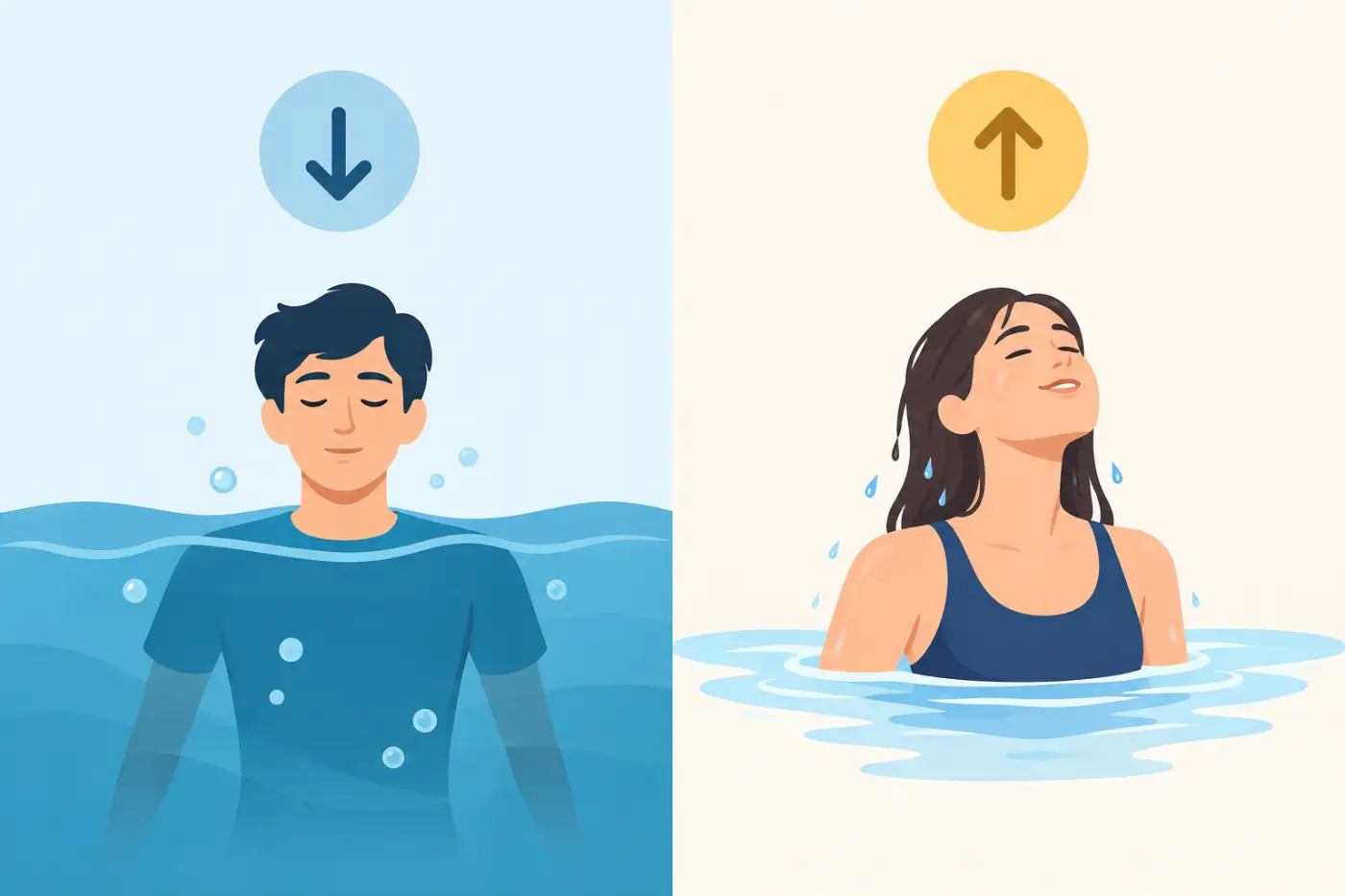
If you’re confused about immerse vs emerse, the correct word for modern standard English is immerse. Use immerse when you mean to put something fully into a liquid or become deeply involved in an activity, subject, culture, or experience. Emerse is an obsolete form that you may find in older texts, but it isn’t the normal choice in present day English.
The confusion makes sense because the two spellings look almost identical. They also sound very similar when spoken. That small difference in spelling can make it hard to know which word belongs in your sentence.
For most writing, the answer is simple. Choose immerse. You might immerse yourself in a book, immerse a cloth in water, or immerse yourself in a new language. The word works for both a physical action and a deep mental or emotional involvement.
There is another reason this question can feel tricky. English also has words such as emerge, emersion, and emersed. These are real words with their own meanings. They can look related to immerse, but they describe a different idea. Once you understand that difference, the spelling becomes much easier to remember.
This guide explains the meaning of immerse, the status of emerse, the difference between immerse and related words, common mistakes, useful examples, and a few simple memory tricks. By the end, you’ll know exactly which word to use in your own writing.
Quick Definition
Immerse is a standard English verb that means to put something completely into a liquid or to become deeply involved in something. Emerse is an obsolete form of immerse and is not the normal word to use in modern English.
Direct Answer
Use immerse in modern English. Avoid emerse unless you are discussing an old text or a historical use of the word.
Comparison Table
| Word or phrase | Meaning | Example sentence | When to use it |
|---|---|---|---|
| Immerse | Put something fully into a liquid or become deeply involved in something | She immersed herself in the new language. | Normal modern English |
| Emersed | Rising above or standing out of a surface | The emersed leaves grew above the water. | Mainly technical or scientific writing |
| Emerse | An obsolete form of immerse | The old text uses emerse in its instructions. | Historical texts only |
| Emerge | Come out of something or become visible | The swimmer emerged from the water. | Modern English |
| Emersion | The act of emerging or reappearing | The astronomer recorded the emersion of the object. | Technical or scientific contexts |
| Immersion | The act or state of being immersed | Language immersion helped her learn quickly. | Modern English noun |
The table shows why these words can cause trouble. Immerse and emerse are close in spelling, but one is the normal modern verb and the other is obsolete. Emersed and emersion are different again. They belong to the word family connected with emerging or rising out of something.

Understanding Immerse
The best way to remember the correct spelling is to understand what the word actually means.
Immerse is a verb. In its most literal sense, it means to put something completely under the surface of a liquid. If you immerse a piece of fabric in water, the fabric goes below the surface. If you immerse an egg in boiling water, the egg is covered by the water.
Merriam Webster defines the word as putting something into something that surrounds or covers it, especially a liquid. The dictionary also gives a second major meaning, which is to engross or absorb someone completely.
That second meaning is extremely common in everyday English.
- You can immerse yourself in a novel.
- You can immerse yourself in music.
In each case, the idea is similar. You give something your full attention and become deeply involved in it.
The Physical Meaning Of Immerse
The original and most direct sense of the word involves being surrounded by something, often a liquid.
Consider these examples.
- The instructions say to immerse the vegetables in boiling water.
- Please immerse the cloth completely in the dye.
- The scientist immersed the sample in a solution.
- She immersed the plant roots in water before testing them.
The verb works well in instructions because it clearly tells someone to place an object fully below a surface.
Notice the difference between immerse and a weaker verb such as dip.
If you dip a spoon into soup, only part of the spoon might enter the soup. If you immerse the spoon, the word suggests that the spoon goes completely under the surface.
That distinction matters in technical instructions, recipes, laboratory directions, and other situations where precision counts.
The Figurative Meaning Of Immerse
The figurative meaning is just as important.
When you say someone is immersed in a subject, you mean that person is deeply involved in it. Their attention is focused on that subject.
For example.
- She immersed herself in American history.
- He immersed himself in the study of jazz.
- They immersed themselves in the local culture.
- I immersed myself in the book and forgot about the time.
- The team immersed itself in research before making a decision.
This use does not involve water. Instead, it creates a picture of someone becoming surrounded by an idea, activity, or experience.
That image makes the word easy to understand. Think of a person stepping into deep water. Soon the water surrounds them. In the figurative sense, a person can become surrounded by a subject in much the same way.
Immerse Yourself In Something
One of the most common patterns is immerse yourself in something.
This phrase means to become deeply involved in something.
For example.
She immersed herself in Spanish before moving to Madrid.
He immersed himself in the history of the city.
I immersed myself in the course materials before the exam.
They immersed themselves in the project and finished it ahead of schedule.
The phrase often appears when someone gives a lot of time and attention to a subject.
It can also describe cultural experiences.
Travelers often immerse themselves in local food and traditions.
A student may immerse herself in a new language by reading, listening, speaking, and watching shows in that language.
An artist may immerse himself in a new style before creating his own work.
The word suggests depth. It is stronger than simply saying someone studied something or spent time on it.
Why Immerse Has Two Main Meanings
At first, the physical and figurative meanings may seem unrelated. They actually share a clear idea.
Imagine dropping a stone into a bucket of water. The water surrounds the stone. The stone is fully inside the liquid.
Now imagine spending an entire day studying one subject. Your attention is surrounded by that subject. You may stop thinking about other things.
That is the connection.
The physical meaning describes being surrounded by a liquid. The figurative meaning describes being deeply surrounded by an activity, subject, or experience.
Cambridge gives both meanings. It explains that immerse can mean becoming completely involved in something and can also mean putting something completely under the surface of a liquid.
Why Emerse Causes Confusion
The spelling emerse looks like it should be a normal English word because it resembles immerse and emerge.
That assumption causes many spelling mistakes.
Emerse does appear in English records, but it is an obsolete form of immerse. In other words, it existed as a word, but modern standard English does not normally use it. Wiktionary lists it as an obsolete form of immerse and gives historical examples of its use.
That distinction is important.
Calling emerse completely meaningless would be inaccurate. The word has a history. You can find it in older writing. But seeing a word in an old source does not mean it is a good choice for modern writing.
English contains many old spellings that have fallen out of common use. Emerse is one of them.
If you are writing an email, essay, article, report, school assignment, website, or business document today, use immerse.
Is Emerse Ever Correct
There is a narrow sense in which you may encounter emerse.
You might see it in an old book, historical document, or discussion of older English. In that setting, the spelling may be preserved because the writer is quoting or studying the original language.
That does not make it the preferred modern spelling.
Think of it like an old road sign that uses a spelling people no longer use. The sign may be historically genuine, but you would not copy its wording into a modern instruction unless you had a specific reason.
The same principle applies here.
For ordinary modern writing, choose immerse.
Do Not Confuse Emerse With Emersed
This is where the topic gets more interesting.
Emersed is a real word used in modern English, especially in technical and scientific contexts. Merriam Webster defines emersed as standing out of or rising above a surface such as the surface of a fluid.
This word is often used when discussing aquatic plants.
For example.
The emersed leaves grew above the water.
The plant has both submerged and emersed leaves.
The study examined how emersed plants responded to changes in water levels.
Here, emersed describes something that is above the surface rather than below it.
That is almost the opposite direction from immerse.
You can use this contrast as a memory aid.
Immerse means going in.
Emersed means being out or above the surface.
The two words may look similar, but their meanings point in different directions.
Immerse vs Emerse In Modern English
The safest rule is simple. Use immerse for normal modern writing.
- If you want to say that someone became deeply involved in a subject, use immerse.
- If you want to say that an object went completely into a liquid, use immerse.
This distinction keeps several easily confused words in their proper places.
Examples With Immerse
Here are some natural examples.
- She immersed herself in the novel.
- The chef immersed the vegetables in hot water.
- He immersed himself in his studies.
- We immersed ourselves in the local culture.
- The researcher immersed the sample in the solution.
- She became so immersed in the movie that she forgot to check her phone.
- The students immersed themselves in the language program.
- I immersed myself in the subject before writing the report.
The object or person becomes deeply involved or physically covered.
Examples With Emerged
Now compare those sentences with examples using emerge.
- The swimmer emerged from the pool.
- The sun emerged from behind the clouds.
- A clear pattern emerged from the data.
- The butterfly emerged from its cocoon.
- She emerged from the room after an hour.
Emerge means to come out, become visible, or become known.
That is different from immerse.
You put something into a liquid when you immerse it. Something comes out when it emerges.
The words may share a few letters, but their actions move in opposite directions.
Examples With Emersed
Emersed is more specialized.
The emersed leaves were exposed to sunlight.
The plant produced new emersed growth.
Researchers measured the height of the emersed stems.
The species can grow in both submerged and emersed conditions.
You are most likely to see this word in scientific writing, especially writing about plants and aquatic environments.
You do not need to force it into everyday conversation.
If you are simply saying that something came out of water, emerge is usually more natural.
Common Mistakes With Immerse
Many mistakes happen because writers remember the sound but not the spelling.
Mistake One Using Emerse As The Modern Verb
A writer may type emerse when they mean to say that someone became deeply involved in a subject.
For example.
- Incorrect: She emersed herself in the study of art.
- Correct: She immersed herself in the study of art.
The second sentence uses the normal modern form.
Mistake Two Confusing Immerse With Emerge
These words are easy to mix up because both involve a change in position.
- Immerse means to put into something.
- Emerge means to come out or become visible.
Compare these examples.
- The diver immersed himself in the water.
- The diver emerged from the water.
The first sentence describes going into the water. The second describes coming out.
That simple contrast can help you choose the right verb quickly.
Mistake Three Using Immersion When You Need Immerse
- Immerse is a verb.
- Immersion is a noun.
For example.
She immersed herself in the course.
Her immersion in the course lasted six months.
The first sentence describes an action. The second names the experience or state.
Merriam Webster and Cambridge both recognize immersion as the noun connected with immerse.
Mistake Four Treating Immersed As A Verb In Every Sentence
Immersed can be the past tense or past participle of immerse. It can also work as an adjective.
For example.
- She immersed herself in the book.
- She was immersed in the book.
The first sentence uses immersed as part of the verb form. The second uses it to describe her state.
Both are standard.
How To Use Immerse Correctly
The most common structure is immerse something in something.
For example.
- Immerse the paper in water.
- Immerse the brush in paint.
Another common structure is immerse yourself in something.
For example.
- Immerse yourself in the language.
- Immerse yourself in the culture.
- You can also use passive forms.
- The cloth was immersed in the solution.
- The sample was immersed in water.
- The students were immersed in the new language.
These structures are useful because they show how flexible the word can be.
Immerse With In
The preposition in is especially common after immerse.
- You immerse something in water.
- You immerse yourself in a book.
The phrase immerse in creates a clear picture of entering and becoming surrounded by something.
Can You Say Immerse Into
You may sometimes see phrases such as immerse yourself into a subject. People understand the meaning, but immerse yourself in something is the more established and natural pattern.
For polished writing, use in.
- Say:
- She immersed herself in the language.
- Not:
- She immersed herself into the language.
The same principle applies to many common expressions. The right preposition can make a sentence sound natural instead of awkward.
Related Words You Should Know
Understanding the word family makes this spelling easier to remember.
Immersion
Immersion is the noun form.
- It can describe the act of putting something into a liquid.
- It can also describe deep involvement in an activity or environment.
For example.
- The immersion of the equipment took several minutes.
- The language course uses full immersion.
- The program gives students an immersion experience.
Language immersion is especially common in education. Students spend a large amount of time hearing and using the target language rather than studying it only through short lessons.
Immersed
Immersed is the past form and past participle of immerse. It can also describe a state of deep involvement.
For example.
- She immersed herself in the project.
- She was immersed in the project.
- He became immersed in the music.
The equipment was immersed in water.
Immersive
Immersive is an adjective.
It describes something that creates a strong sense of involvement or surrounds your attention.
For example.
- The museum offers an immersive experience.
- The game has an immersive story.
- The theater created an immersive environment.
Merriam Webster defines immersive as something that involves or provides deep absorption in an activity or environment.
This word has become especially common when people talk about games, virtual environments, museums, entertainment, education, and travel.
Emersion
Emersion is a different noun.
It means the act of emerging or coming out. In astronomy, it can refer to the reappearance of a celestial body after an eclipse or similar event.
That gives you an important contrast.
- Immersion points toward going in.
- Emersion points toward coming out.
The spelling difference is small, but the meanings are quite different.
A Simple Memory Trick
Here is an easy way to remember the main distinction.
Think of immerse as in.
The word starts with im, and the action sends something into a surrounding substance.
You immerse your hands in water.
You immerse yourself in a book.
Now think of emerge as exit.
When something emerges, it comes out or becomes visible.
- The swimmer emerges from the pool.
- The sun emerges from behind the clouds.
- A new idea emerges from the discussion.
This is not a formal grammar rule. It is simply a memory trick. But it gives you a quick mental picture when you are choosing between similar words.

Why Spelling Matters In This Case
A single letter can change the status of a word.
That happens often in English because many words have developed through centuries of use. Older forms sometimes survive in books, dictionaries, technical fields, or regional speech even after another form becomes standard.
That is why you may encounter emerse and wonder if it is simply another spelling of immerse.
Historically, it has been used that way. Modern English, however, favors immerse. Wiktionary identifies emerse as an obsolete form of immerse, while major modern dictionaries define immerse as the standard verb for the meanings discussed here.
This is a useful lesson beyond this one word.
A word can exist in historical records without being a good choice for modern writing.
If your goal is clear communication, current standard usage matters more than the fact that a spelling appeared somewhere in the past.
Choosing The Right Word In Real Writing
Suppose you are writing a sentence about studying.
You want to say that someone became deeply involved in a subject.
Write:
She immersed herself in biology.
Not:
- She emersed herself in biology.
- Now suppose you are writing about water.
You want to tell someone to put an object completely into the liquid.
Write:
- Immerse the cloth in the solution.
- Again, emerse is not the normal modern choice.
Now suppose you are writing about an aquatic plant whose leaves rise above the water.
Write:
The plant developed emersed leaves.
That is a specialized use, and the adjective emersed is appropriate.
Finally, suppose you want to describe something coming out of water.
Write:
The swimmer emerged from the pool.
These four sentences cover most of the confusion.
- Immerse means go in.
- Emersed means above a surface.
- Emerge means come out.
- Emersion means the act of emerging.
Once you connect each word with its basic direction, the differences become much easier to manage.
Pronunciation And Sound
Another reason people confuse these words is pronunciation.
Immerse is pronounced roughly like ih MERS in American English. Cambridge gives the US pronunciation as /ɪˈmɝːs/.
Because the word is short and the final sound is familiar, a listener may not notice the spelling in conversation.
That can lead to mistakes when someone later writes the word down.
The solution is simple. When you know the meaning you want, connect that meaning to the spelling.
Deep involvement or complete submersion calls for immerse.
Coming out calls for emerge.
A specialized description of something rising above water can call for emersed.
You do not need to memorize a long grammar rule. You only need to connect the word with the action.
When To Use Immerse In Formal Writing
Immerse works well in formal writing, academic writing, journalism, business writing, and everyday communication.
For example.
- The program immerses students in practical training.
- The study immersed participants in a controlled environment.
- The author immersed herself in historical research.
- The course is designed to immerse learners in spoken English.
These sentences sound natural because the word has a well established modern meaning.
It is also useful when you want stronger wording than simply saying involved.
Compare these two sentences.
- She was involved in the project.
- She was immersed in the project.
The second sentence suggests a deeper level of attention and participation.
That does not mean immerse is always better. Strong writing uses the word only when the deeper meaning is intended.
Avoid Using Immerse For Simple Participation
Not every activity requires the word immerse.
- If someone attended one meeting, saying they immersed themselves in the project would probably sound exaggerated.
- If someone read one article about a subject, you probably do not need to say they immersed themselves in research.
The word suggests depth and sustained attention.
For example.
- She read an article about French history.
- She spent six months studying French history and immersed herself in primary sources.
The second sentence gives a much stronger picture.
Good word choice is not just about using the correct spelling. It is also about using the word at the right level of strength.
The Role Of Context
Context often solves spelling questions faster than memorization.
Ask yourself what the sentence is trying to say.
- Is something being placed under liquid.
- Use immerse.
- Is someone becoming deeply involved in a subject.
- Use immerse.
- Is something coming out or becoming visible.
- Use emerge.
- Is something standing above a liquid surface.
- Emersed may be correct.
- Is the sentence about the act of coming out or reappearing.
- Emersion may be correct.
- This approach is more useful than staring at two spellings and trying to guess which one looks right.
Meaning comes first. Spelling follows meaning.
FAQs
Is immerse the correct word?
Yes. Immerse is the standard modern English word. It means to put something completely into a liquid or to become deeply involved in something.
Is emerse a real word?
Yes, but it is obsolete in English. You may find it in older texts as a form of immerse, but it is not the normal choice for modern writing.
Is immerse vs emerse a spelling mistake?
In most modern writing, using emerse when you mean immerse is a spelling mistake. Emerse has a historical use, but current standard English uses immerse for the common meanings.
What does immerse mean?
Immerse means to put something completely under a liquid or to become deeply involved in an activity, subject, or experience. You can immerse an object in water or immerse yourself in a book.
What is the difference between immerse and emerge?
Immerse means to put something into or become deeply involved in something. Emerge means to come out, become visible, or become known. The two words describe opposite directions in many physical situations.
What does emersed mean?
Emersed means standing out of or rising above a surface such as water. It is a real adjective that appears especially in scientific writing about aquatic plants.
Is emersion the opposite of immersion?
They can describe opposite ideas in some contexts. Immersion refers to being put into or surrounded by something, while emersion refers to emerging or coming out. Emersion also has a specific astronomy meaning involving the reappearance of a celestial body.
Should I use emerse in modern writing?
Usually, no. Use immerse in modern English unless you are specifically discussing an older text or historical language. For everyday writing, immerse is the clear and accepted choice.
Conclusion
The main answer to immerse vs emerse is straightforward. Use immerse in modern English. It is the standard verb for putting something completely into a liquid and for becoming deeply involved in a subject, activity, or experience.
Emerse has a place in the history of English, but it is obsolete as a normal form of the verb. That makes it a poor choice for modern emails, essays, articles, reports, and everyday writing.
Also keep the related words separate. Emerge means to come out or become visible. Emersed describes something that stands above a surface. Emersion refers to the act of emerging and has a specialized use in astronomy.
The easiest rule to remember is this. Immerse means go in. Emerge means come out. If you want to describe deep involvement, use immerse. If you want to describe something rising above water, emersed may be the right technical term.
The next time you face this spelling choice, focus on the meaning before you look at the letters. If the idea is deep involvement or complete submersion, choose immerse. That one simple check will keep your writing clear and correct.

Dr. Arthur Pendelton is a veteran historical linguist and grammar expert with over 30 years of experience in academic editing. A retired professor, Arthur specializes in the etymology and evolution of the English language. He is passionate about “unpacking the history behind the rules,” helping readers understand why we spell, punctuate, and phrase things the way we do today. Whether he’s settling debates on archaic usage or explaining complex linguistic shifts, Dr. Pendelton brings scholarly precision to every article.