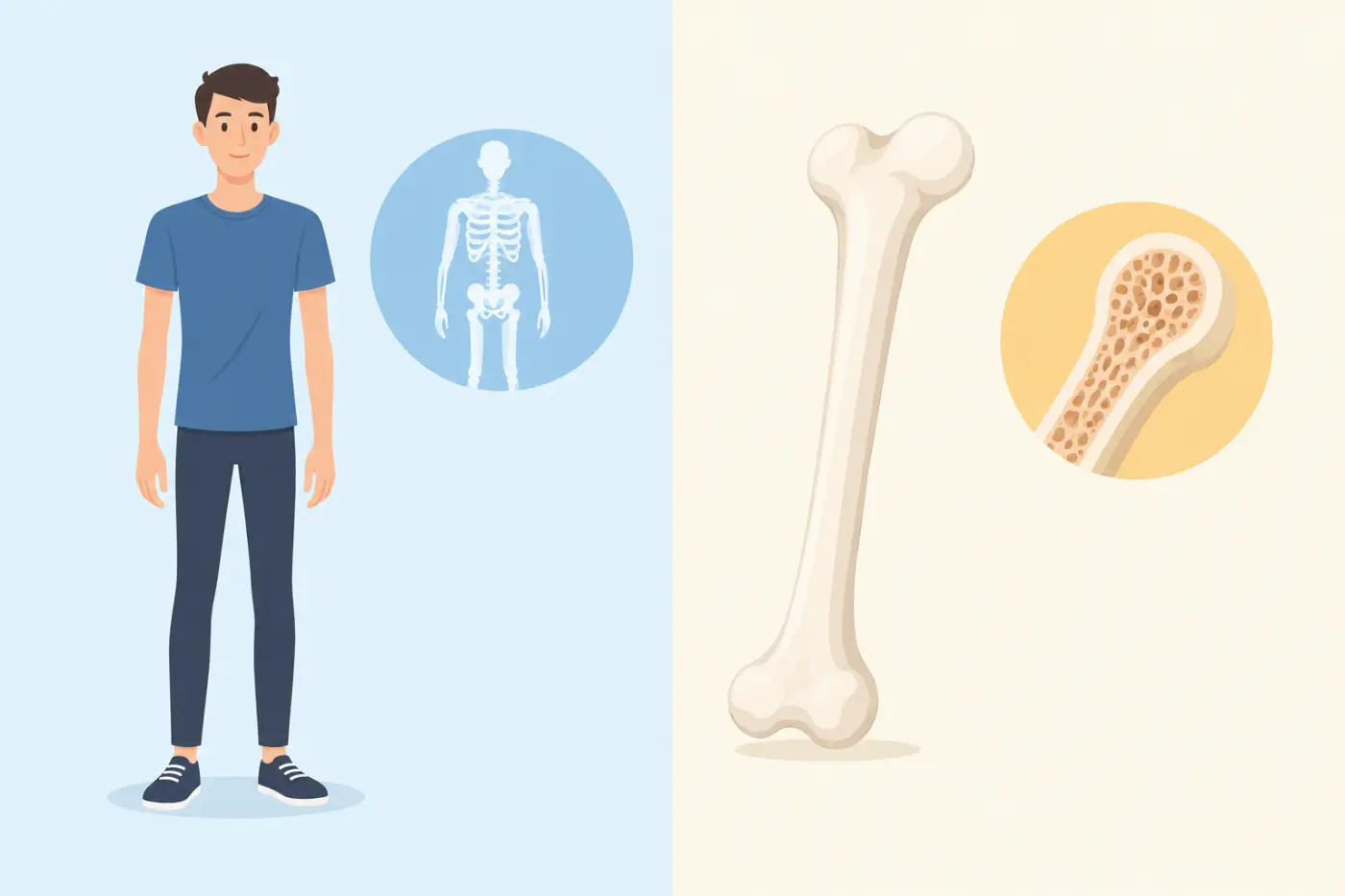
If you’re stuck between bony or boney, use bony in normal English writing. It’s the standard spelling of the adjective that means related to bones, full of bones, or very thin with noticeable bones. Major dictionaries list boney as a variant, but bony is the form you’ll want most of the time.
This small spelling question causes more confusion than you might expect. Both forms sound the same when spoken. Both can appear in English dictionaries. That makes it easy to wonder if one is wrong or if they have different meanings.
The good news is that the practical rule is simple. When you’re describing a person, animal, body part, fish, structure, or anything connected with bones, bony is the safest and most common choice.
This guide explains the difference between the two spellings, shows you how to use the standard form in real sentences, and explains why the extra letter appears in the less common form. You’ll also see examples that make the spelling easier to remember.
Quick Definition
Bony is an adjective that means related to bone, made of bone, containing many bones, or having prominent bones. It can also describe someone or something that looks very thin because the bones are easy to see. Boney is a recognized variant spelling, but it is much less common in standard English.
Direct Answer
Bony is the standard spelling you should normally use. Boney exists as a less common variant, so it is not simply a meaningless spelling error, but bony is the better choice for everyday American English and formal writing.
Comparison Table
| Word or phrase | Meaning | Example sentence | When to use it |
|---|---|---|---|
| Bony | Related to bone or having noticeable bones | The dog had a bony frame. | Use this as the standard adjective. |
| Boney | Variant spelling of bony | The old horse looked boney. | Use only when the spelling is intentional or required by a name or source. |
| Bone | A hard part of the body | The bone in his arm was fractured. | Use this as the noun. |
| Bonier | More bony | Her hands looked bonier after she lost weight. | Use this comparative form when comparing two things. |
| Boniest | Most bony | That was the boniest fish I had ever eaten. | Use this superlative form for the highest degree. |
Why The Spelling Causes Confusion
The main reason for the confusion is simple. The word bone already ends with an e. When you want to turn it into an adjective, it feels natural to keep the original spelling and add y.
That can make boney look perfectly logical.
English spelling does not always work that way. Some words lose their final silent e before the suffix y is added. Bony follows that pattern.
Think about the base word first.
- The noun is bone.
- The adjective is bony.
You do not need to keep the final e from the noun.
This is similar to other words that change slightly when a suffix is added. English has many spelling patterns like this. They can feel inconsistent at first, but they become easier once you recognize the pattern.
The standard adjective has been used for centuries. Merriam Webster traces its first known use to the fourteenth century. Modern dictionaries still give bony as the main form and list boney as a variant.
So if you are writing an essay, article, email, school assignment, report, or professional document, the simple choice is clear.
Write bony.
Why The Extra E Looks Natural
Your brain may want to write boney because you can clearly see the word bone inside it.
That instinct makes sense.
You may think:
Bone plus y equals boney.
But standard English uses a different spelling:
Bone plus y equals bony.
The final e disappears.
This is one reason spelling questions can be tricky even for fluent English speakers. Pronunciation does not help much here. Both forms are pronounced the same way.
When two spellings sound identical, you have to rely on standard usage and memory.
That is why dictionary support matters. Cambridge lists boney as another form of bony, while Merriam Webster also identifies it as a variant.
Is The Less Common Form Wrong
Not exactly.
Calling it completely wrong would miss an important detail. Boney is recorded as an alternative spelling. The American Heritage Dictionary describes it as a variant of bony.
Still, that does not mean the two forms are equally useful.
Standard English favors bony.
If you are trying to make your writing look polished and natural, bony is the better choice.
The less common form may appear in older writing, informal writing, names, surnames, creative work, or other special contexts. It can also appear when someone intentionally follows a source that uses that spelling.
That distinction matters.
A word can exist in a dictionary without being the best choice for everyday writing.
English has many examples of this. Some words have rare variants that readers understand but do not expect to see often. The same idea applies here.
What Bony Means
The adjective has several closely related meanings.
The first meaning is connected to actual bone.
For example:
- The skull has a bony structure.
- The surgeon examined the bony growth.
- The injury affected the bony part of the knee.
In these sentences, the adjective points directly to bone or something made from bone.
The second meaning is having many bones.
You can use it to describe food such as fish.
For example:
That fish is very bony.
This fish has too many small bones for my liking.
The dictionary meaning is not limited to human anatomy. A fish can be called bony because it contains many bones. Merriam Webster also uses the term bony fish for fish with skeletons made of bone rather than cartilage.
The third meaning relates to appearance.
A person can have a bony face, bony hands, or bony fingers.
In that case, the word often suggests that the bones are prominent because there is little flesh covering them.
For example:
- She had long bony fingers.
- His face looked thin and bony.
- The old dog had a bony frame.
Cambridge gives this sense as being very thin so that the bones show under the skin.
Bony Does Not Always Mean Skinny
This point is worth remembering.
Many people connect the adjective only with thin people. That is not the full meaning.
- Something can be bony because it contains bones.
- A fish can be bony.
- A body part can be bony.
- A structure can be bony.
- A person can look bony because their bones are prominent.
- Context tells you which meaning the writer intends.
- Consider these two sentences.
- The fish was bony.
- The man had a bony face.
- The first sentence most likely means the fish had many bones.
- The second sentence describes appearance.
- The same adjective works in both cases.
That flexibility is common with descriptive English words. You understand the exact meaning from the noun it modifies and the surrounding sentence.
Section Two
Bony or Boney In Everyday Writing
If you want one practical rule, use bony.
It works naturally in American English and is the form most readers will expect.
Here are some common examples.
- She had bony hands.
- The cat was thin and bony.
- The old horse had a bony back.
- The doctor noticed a bony lump near the joint.
- The fish was tasty but very bony.
- The skull has a hard bony structure.
- He had long bony fingers.
Examples About People
When describing a person, the word often means thin, angular, or marked by prominent bones.
For example:
- He had a bony face and deep set eyes.
- Her bony hands rested on the table.
- The man had a tall, bony frame.
- His fingers were long and bony.
- She had a naturally bony build.
These sentences are grammatically correct, but there is a small style point to remember.
Calling someone bony can sound blunt.
It can suggest that the person is very thin or has little flesh covering the bones. That is not always negative, but the word can feel less gentle than terms such as slim or slender.
Compare these sentences.
- She has a slender face.
- She has a bony face.
The first sounds softer and more neutral.
The second creates a sharper image. You can almost picture the shape of the bones.
That makes the adjective useful in descriptive writing. It gives the reader a strong visual impression.
Examples About Animals
The same idea works with animals.
The stray dog looked bony and weak.
The old horse had a bony frame.
The cat had long bony legs.
The bird had a small bony body.
The adjective can describe an animal that looks thin or has noticeable bones.
It can also describe actual bone structures.
The bird has a bony wing structure.
The animal developed a bony growth.
Again, context tells you the exact meaning.
Examples About Food
Fish is one of the most common food related uses.
You might say:
This fish is very bony.
The soup contained a few bony pieces.
We removed the bony parts before serving the fish.
A fish can be described this way because it has many bones that can make eating it difficult.
The phrase bony fish also has a more specific biological meaning. It refers to fish with a skeleton made primarily of bone rather than cartilage.
That technical meaning appears in science and biology. In ordinary conversation, though, someone saying a fish is bony usually means the fish has lots of bones.
Examples About Body Parts
The adjective is common when describing visible or structural parts of the body.
Here are several natural examples.
He had bony shoulders.
Her bony wrists were easy to see.
The doctor examined the bony area near the joint.
The injury affected the bony structure of the foot.
She rested her hand on the bony ridge above her eye.
These examples show why the word is useful. It can describe appearance in one sentence and anatomy in another.
Comparative And Superlative Forms
The adjective can also change to show degree.
- The comparative form is bonier.
- The superlative form is boniest.
For example:
- His hands looked bonier after the illness.
- The horse seemed bonier than it had the previous year.
- That was the boniest fish I had ever eaten.
These forms follow the normal pattern used with many short adjectives ending in y.
The y changes to i before the ending.
- Bony becomes bonier.
- Bony becomes boniest.
Merriam Webster lists bonier and boniest as the standard comparative and superlative forms.
Do not add an extra e when forming these words.
The standard forms are:
- Bony.
- Bonier.
- Bonniest.
That last word is different because bonniest belongs to bonny, a different word meaning attractive or pleasing in certain varieties of English. Do not confuse it with boniest.
This is a good example of why spelling matters.
Common Mistakes With This Word
The biggest mistake is adding the extra e.
- A writer may type:
- She had boney fingers.
- The standard form is:
- She had bony fingers.
Another mistake is assuming the adjective always means unhealthy or underweight.
It does not.
A person can naturally have prominent bones without being unhealthy.
You also should not use the adjective as a noun when you mean bone.
For example:
- Incorrect use: The doctor examined his bony.
- Better: The doctor examined his bone.
- The adjective needs something to describe.
You can say:
The doctor examined the bony area.
Or:
- The doctor examined the bone.
- The first describes an area in relation to its structure.
- The second directly names the body part.
Mistake With Bone And Bony
The noun and adjective serve different jobs.
- Bone is usually a noun.
- The bone in my arm hurts.
- The doctor examined the bone.
- The bird has hollow bones.
- Bony is an adjective.
- The bird has a bony structure.
- His hands look bony.
- The fish is bony.
This difference is easy to understand if you think about the role of each word.
- A noun names something.
- An adjective describes something.
- Bone names the hard body structure.
Bony describes something connected with bone or marked by bones.
Mistake With Bonny
There is another word that can cause trouble.
Bonny is not the same as bony.
In many varieties of English, especially Scottish English, bonny means attractive, pretty, or pleasing.
For example:
- She is a bonny child.
- That is a completely different meaning from bony.
- Bony relates to bones.
Bonny relates to beauty or attractiveness in the contexts where that word is used.
The difference is only one letter, but the meanings are worlds apart.
If you are writing American English, you are unlikely to need bonny in ordinary writing.
Still, knowing the difference can prevent confusion.
A Simple Memory Trick
The easiest way to remember the standard spelling is to focus on the final e in bone.
Think of it this way.
- Bone is the noun.
- Bony is the adjective.
- The final e drops before the y.
You can also connect the word with familiar examples.
- Bony fingers.
- Bony face.
- Bony fish.
- Bony structure.
If you see the adjective in these common phrases often enough, the spelling will start to feel natural.
Another useful trick is to say the word slowly while writing it.
Bo ny.
- You do not hear the final e.
- That does not prove the spelling by itself, but it can help you remember the shorter form.
- The strongest trick is simple repetition.
- Write bony several times in real sentences.
- The old dog looked bony.
- She had long bony fingers.
- The fish was bony.
- The skull has a bony structure.
Once the pattern becomes familiar, the extra e will start to look out of place.
When Boney Can Appear
Although bony is the standard form, boney is not imaginary.
It appears in dictionaries as a variant.
Cambridge lists it as another form of the adjective. Merriam Webster also lists it as a less common variant.
That means you may encounter it in real writing.
You might see it in an older text.
You might see it in a creative work.
The important point is not to panic when you see it.
It does not automatically mean the writer has made a spelling mistake.
At the same time, you do not need to copy that spelling into your own writing.
For normal American English, choose bony.
Names And Special Uses
Capitalized Boney can also appear as a proper name.
For example, it may occur as a surname.
It has also been used as a nickname for Napoleon Bonaparte.
That is a different situation from using the adjective.
Names do not have to follow ordinary spelling rules in the same way common words do.
If someone’s last name is Boney, you should write the name exactly as it is.
You would not change a person’s surname simply because another spelling is more common as an adjective.
This is an important writing rule.
Common nouns and adjectives follow normal dictionary conventions.
Proper names follow the established spelling of the name.
Why Dictionaries List Both Forms
Dictionaries do more than tell you which spelling is preferred.
They also record real language use.
When a less common spelling appears often enough in written or spoken English, dictionaries may record it as a variant.
That does not make every variant equally common.
It simply tells you that readers may encounter it.
The dictionary evidence here is consistent.
Merriam Webster gives bony as the main entry and lists boney as a variant.
Cambridge does the same by presenting bony as the main entry and noting boney as another form.
The American Heritage Dictionary describes boney as a variant of bony.
So there is no need to treat this as a battle between two completely different words.
They are closely related spellings of the same adjective.
The difference is mainly one of standard usage and frequency.
How To Choose The Right Spelling
If you’re writing for a US audience, the choice is easy.
Use bony in most situations.
This includes:
- School assignments.
- Business writing.
- Articles.
- Web content.
- Emails.
- Reports.
- Formal documents.
- Everyday messages.
- Creative writing.
Medical or scientific writing when the adjective is needed.
You can think of bony as the default spelling.
Only use boney when you have a specific reason.
For example, you may be reproducing a historical source. You may be using a person’s name. You may be following a publication that intentionally uses the variant.
For original writing, there is rarely a reason to choose the longer form.
Formal Writing
Formal writing benefits from standard spelling.
- Suppose you are writing:
- The scan showed a boney structure near the joint.
- There is no major meaning problem. Most readers will understand it immediately.
- Still, the cleaner version is:
- The scan showed a bony structure near the joint.
- The second form matches the standard dictionary spelling and looks more natural to most readers.
- That is especially useful in professional writing.
Casual Writing
Casual writing gives you more freedom, but the standard form is still the better default.
- You might text:
- That fish was so bony.
- That sounds completely natural.
There is no need to add an e simply because the writing is casual.
In fact, the shorter spelling is so common that many readers may see boney as an unusual choice.
Related Words And Expressions
Understanding related words can make the main spelling easier to remember.
Bone
Bone is the noun.
Example:
The doctor examined the bone.
Bony
Bony is the adjective.
Example:
The dog had a bony frame.
Bonier
Bonier is the comparative form.
Example:
His face looked bonier after several months.
Boniest
Boniest is the superlative form.
Example:
That was the boniest fish at the market.
Boneless
Boneless means having the bones removed or containing no bones.
Example:
I ordered boneless chicken.
This is almost the opposite idea from describing something as bony.
Skeletal
Skeletal is another related adjective.
It can describe the skeleton itself or something extremely thin.
For example:
- The museum displayed the skeletal remains of an animal.
- You can also describe a very thin person as having a skeletal appearance.
However, skeletal can sound more clinical or severe than bony.
Skinny
Skinny usually describes a person or animal that is very thin.
It does not normally mean related to bone.
For example:
- He is very skinny.
- That describes his overall body size.
- He has bony hands.
- That describes a specific physical feature.
- The two words can overlap, but they are not exact substitutes.
Bony Versus Thin
These words often appear in similar descriptions, but they create different images.
Thin is broad.
Bony is more specific.
Compare:
- She has thin hands.
- She has bony hands.
The first simply says her hands are not large or thick.
The second suggests that the shape of the bones is easy to see.
That difference can make your writing more vivid.
- If you want a neutral description, thin may work better.
- If you want the reader to picture prominent bones, bony is more precise.
Bony Versus Skinny
Skinny usually describes a person’s overall body.
For example:
The child was skinny.
Bony can describe the appearance of particular body parts.
For example:
- The child had bony knees.
- You can also use both together.
- The old dog was skinny and bony.
- That sentence strongly emphasizes the animal’s thin appearance.
- Still, the words do not always carry the same tone.
- Skinny can sound casual.
- Bony can sound more visual.
The best choice depends on the image you want to create.
Bony Versus Skeletal
Skeletal is usually stronger.
If you describe someone as skeletal, the image can suggest extreme thinness.
Bony is often less intense.
For example:
- He had a bony face.
- This gives a clear physical description.
- He had a skeletal face.
This sounds more dramatic and may suggest severe thinness or a very gaunt appearance.
Good writers choose the word that matches the strength of the description.
If you only mean that someone’s cheekbones or jaw are prominent, bony may be the better fit.
Pronunciation
The standard adjective is pronounced with two syllables.
- In American English, it sounds like BOH nee.
- The alternative spelling has the same pronunciation.
- That explains part of the confusion.
- When you hear the word, there is no clue telling you which spelling the writer intends.
- You can only hear the sound.
- Writing requires you to know the conventional spelling.
This is a common problem in English. Many words have different spellings that produce the same sound. These are called homophones when they are different words with the same pronunciation, although the situation here is slightly different because the two forms are variants of the same adjective.
The safest approach is to learn the standard written form.
For this adjective, that form is bony.
Style Tips For Using The Word Well
Using the correct spelling is only part of good writing.
You should also choose the word carefully.
If you are describing someone, think about tone.
A sentence such as this can sound harsh:
He was bony and unattractive.
A more neutral description might be:
He had a thin face and prominent cheekbones.
The second sentence gives the reader more useful detail without making a broad judgment.
That is a good writing habit.
Choose words based on the picture you want to create, not simply because they are technically correct.
You can also make the adjective more precise by pairing it with a specific noun.
Instead of: She looked bony.
Try:
She had bony hands.
Or:
Her face looked thin and bony. Specific details usually create stronger writing.
The reader can picture a bony hand much more easily than a vague statement about someone looking bony.
FAQs
Is bony the correct spelling?
Yes. Bony is the standard spelling used for the adjective related to bones or prominent bones. Dictionaries also record boney as a variant.
Is boney a real word?
Yes. Boney is a recognized variant spelling of bony. It is much less common, so bony is the better choice for normal writing.
Should I use bony or boney in American English?
Use bony in standard American English. It is the form most readers will expect, and it works well in both everyday and formal writing.
What does bony mean?
Bony can mean related to bone, made of bone, full of bones, or having noticeable bones. It can also describe a very thin person or animal whose bones are easy to see.
What is the plural of bony?
Bony is an adjective, so it does not normally have a plural form. If you need a noun for multiple bones, use bones. You can describe them with the adjective, as in bony structures.
What is the comparative form of bony?
The comparative form is bonier. The superlative form is boniest. For example, you can say that one person’s hands look bonier than another person’s hands.
Is bony the same as skinny?
Not exactly. Skinny usually describes someone who is very thin, while bony often focuses on bones that are prominent or easy to see. The two words can overlap, but they give slightly different images.
What is the difference between bony and bonny?
Bony relates to bones. Bonny is a different word that can mean attractive or pretty, especially in Scottish English. They look similar, but their meanings are completely different.
Conclusion
If you have been wondering about bony or boney, remember one simple rule. Use bony as the standard spelling when you mean related to bones, full of bones, or noticeably thin.
The extra e in boney may look natural because the noun is bone. Still, standard English normally drops that final e before adding y. Dictionaries recognize the longer spelling as a variant, but it is not the form you need for most everyday writing.
The word can describe a person, animal, body part, fish, or physical structure. It can mean that bones are prominent, that something contains many bones, or that something is made of bone. Context determines the exact meaning.
So when you’re writing and the spelling gives you pause, keep it simple. Write bony. Save boney for a specific name, source, or situation where that variant is intentional.

Dr. Arthur Pendelton is a veteran historical linguist and grammar expert with over 30 years of experience in academic editing. A retired professor, Arthur specializes in the etymology and evolution of the English language. He is passionate about “unpacking the history behind the rules,” helping readers understand why we spell, punctuate, and phrase things the way we do today. Whether he’s settling debates on archaic usage or explaining complex linguistic shifts, Dr. Pendelton brings scholarly precision to every article.