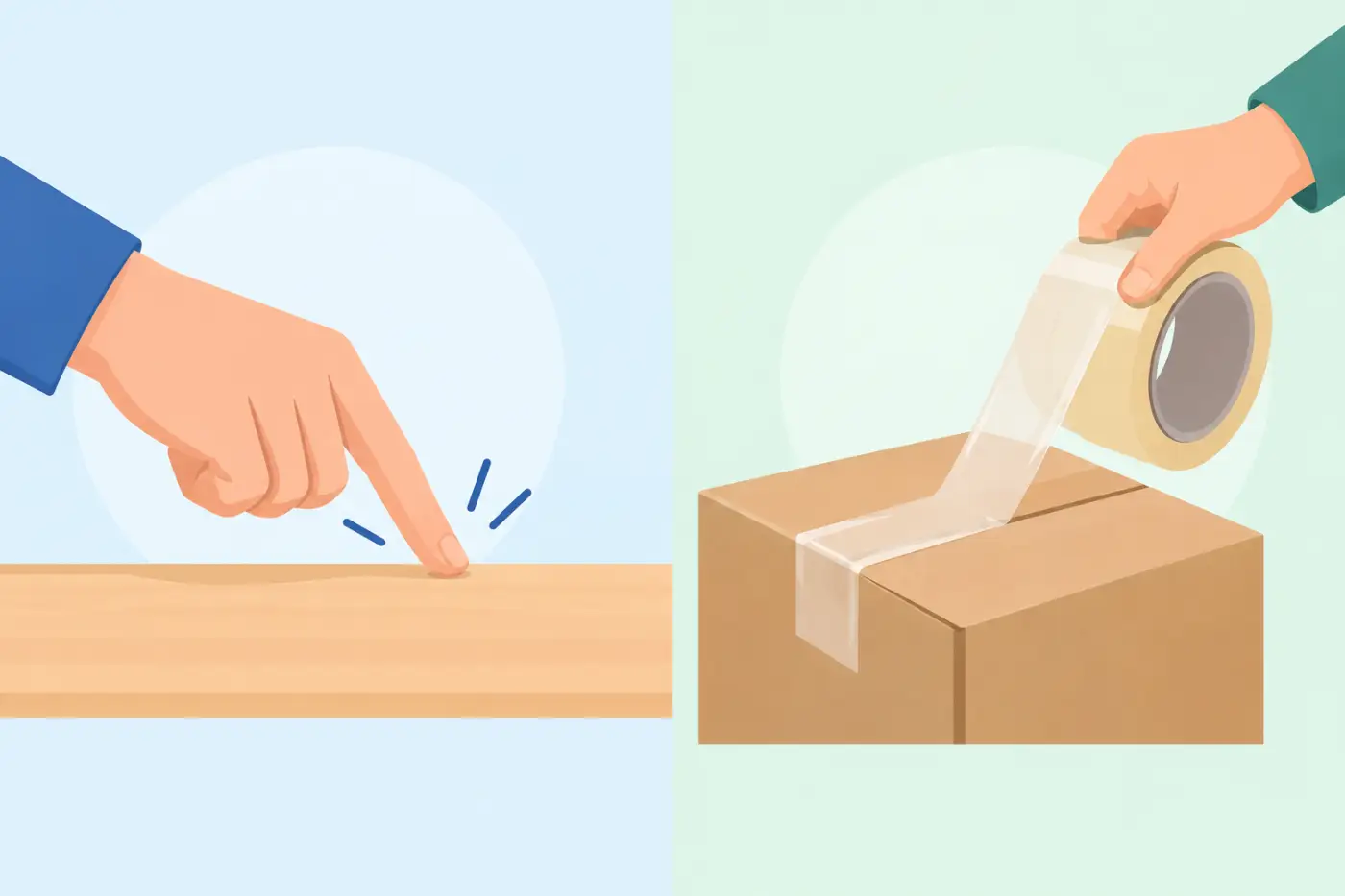
If you’re confused by tapping vs taping, you’re not alone. These words look almost identical, but they describe very different actions. One comes from tap, while the other comes from tape.
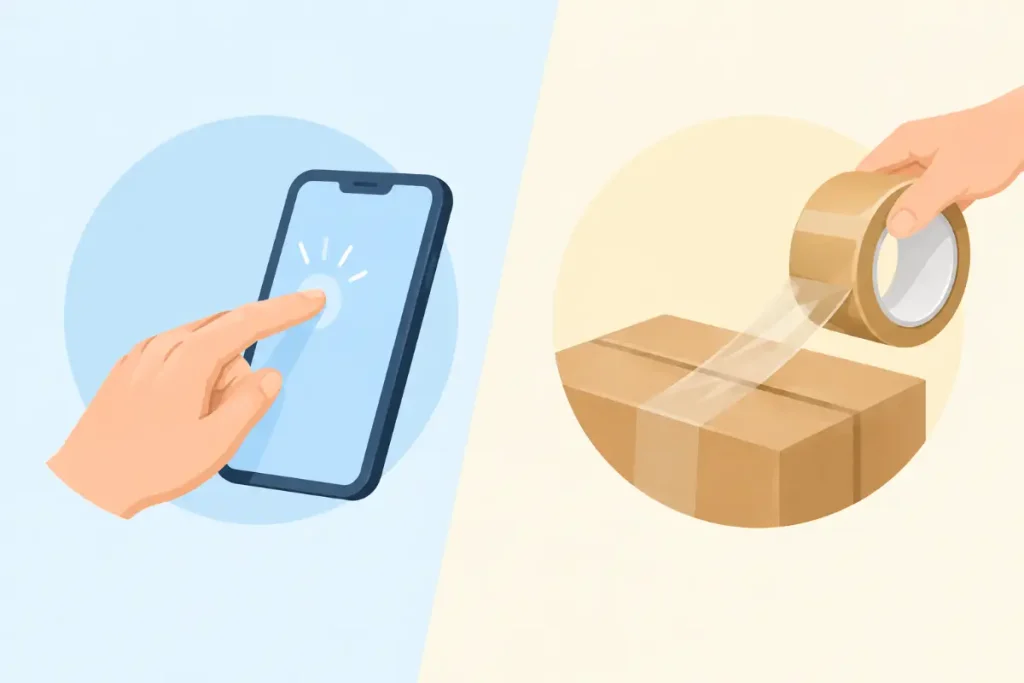
Tapping means touching something lightly or repeatedly. You might tap your phone screen, tap someone on the shoulder, or tap your fingers on a desk. Taping usually means putting tape on something, fastening something with tape, or recording something with a tape based system.
The spelling gets tricky because both words come from short verbs that end with the letter p. The difference becomes much easier once you look at the base words. Think of it this way: tap gives you tapping, while tape gives you taping.
This guide explains the difference in plain English. You’ll see the spelling rule, real sentence examples, common mistakes, pronunciation tips, and simple ways to remember which word to use.
Quick Definition
Tapping is the act of touching something lightly or repeatedly with a finger, hand, foot, or another object. Taping means putting tape on something or recording something using a tape based method.
Direct Answer
Use tapping when you mean touching or striking something lightly. Use taping when you mean applying tape, securing something with tape, or recording something.
Comparison Table
| Word | Meaning | Example Sentence | When to Use It |
|---|---|---|---|
| Tapping | Touching or striking lightly | She was tapping the screen. | Use it for repeated or light taps. |
| Taping | Applying tape or recording | He is taping the box shut. | Use it for tape or recording. |
| Tap | The base verb for tapping | Tap the screen once. | Use it for the action itself. |
| Tape | The base verb for taping | Tape the paper to the wall. | Use it when tape is involved. |
| Tapped | Past tense of tap | She tapped my shoulder. | Use it for a completed tapping action. |
| Taped | Past tense of tape | He taped the package. | Use it for a completed taping action. |
The Basic Difference
The easiest way to understand these words is to look at the words they come from.
- Tapping comes from tap.
- Taping comes from tape.
A tap is a light touch or light strike. A tape is a strip of material used to stick, hold, seal, mark, or attach things. The meanings are separate, so the spellings need to stay separate too.
Consider these two sentences.
- She is tapping the screen.
- She is touching the screen with light repeated movements.
- She is taping the note to the wall.
- She is using tape to attach the note to the wall.
The difference is clear once you focus on the action. In the first sentence, there is no tape. In the second sentence, tape is the key part of the action.
That simple idea solves most spelling questions.
What Tapping Means
Tapping describes a light touch or strike. The action can happen once or many times, depending on the sentence.
You can tap a table with your finger. You can tap someone on the shoulder to get their attention.
The word can also describe repeated small movements.
For example:
She kept tapping her fingers on the desk.
The sentence tells us that her fingers touched the desk again and again.
You can also use the word for digital actions.
Tap the button to continue.
Tap the icon to open the menu.
I was tapping the screen, but nothing happened.
In all these examples, the base word is tap.
What Taping Means
Taping comes from tape and usually involves using tape.
You might tape a package shut. You can tape a broken piece of paper.
The word has another meaning connected to recording.
A person can tape a television program, an interview, a conversation, or another event. This meaning comes from the older use of tape as a recording medium. Today, people still use the verb even when the recording itself is digital.
For example:
- We are taping the interview this afternoon.
- The station taped the show yesterday.
- She taped the meeting for later review.
The recording does not need to involve a physical tape. The verb can still mean record.
Why The Spellings Look So Similar
The confusion comes from the base words.
- Tap has one p.
- Tape has one p followed by a final e.
When you add ing to these words, English spelling rules change the forms in different ways.
- Tap becomes tapping.
- Tape becomes taping.
That difference may look strange at first. After all, you might expect tap plus ing to become taping. But English spelling does not work that way.
The final consonant in tap gets doubled before the ending ing.
The final e in tape gets removed before ing.
So you get two different results.
- Tap + ing = tapping.
- Tape + ing = taping.
Once you learn that pattern, the spelling becomes much easier to remember.
The Spelling Rule Behind Tapping
The spelling of tapping follows a common English rule.
When a short verb ends in a consonant vowel consonant pattern, the final consonant is often doubled before adding an ending that starts with a vowel.
The word tap has three letters.
- T is a consonant.
- A is a vowel.
- P is a consonant.
That creates the consonant vowel consonant pattern.
When you add ing, the final p doubles.
Tap becomes tapping.
The same pattern appears in many common words.
- Run becomes running.
- Sit becomes sitting.
- Get becomes getting.
- Plan becomes planning.
- Stop becomes stopping.
These words follow the same basic spelling idea.
The final consonant gets doubled before the ending is added.
Why Tap Becomes Tapping
The extra p isn’t there because the word suddenly has a different meaning. It appears because of English spelling rules.
The base word is still tap.
The form tapping simply shows that the word has taken the ing ending.
Compare these forms.
- Tap.
- Taps.
- Tapped.
- Tapping.
The meaning stays connected to the same basic action.
The spelling changes because grammar changes the form of the word.
The Same Rule Appears In Other Words
Learning the pattern through other familiar words can help.
- Run becomes running.
- Hop becomes hopping.
- Sit becomes sitting.
- Drop becomes dropping.
- Beg becomes begging.
- Cut becomes cutting.
These forms may look unusual if you think only about the base word. But they become natural once you recognize the spelling pattern.
That is why tapping has two p letters.
Why Tape Becomes Taping
The word tape follows a different spelling pattern.
Tape ends with a silent e. When you add ing, that final e usually disappears.
Tape becomes taping.
The same thing happens in many common verbs.
- Make becomes making.
- Write becomes writing.
- Bake becomes baking.
- Use becomes using.
- Save becomes saving.
So the spelling of taping is not an exception. It follows a familiar rule for verbs ending in silent e.
Why There Is Only One P
This is where many people make the mistake.
They see the word tap and think the p should double.
But the base word isn’t tap.
It is tape.
The final e is removed, but the p does not double.
- Tape + ing becomes taping.
- It does not become tapping.
That distinction matters because tapping and taping have different meanings.
Tapping In Everyday Sentences
The word tapping appears in many ordinary situations.
Here are some natural examples.
- She was tapping her foot during the song.
- I heard someone tapping on the window.
- He kept tapping his pencil on the desk.
- Try tapping the screen twice.
- The child was tapping the glass.
- She was tapping her fingers while she waited.
- He walked over and started tapping on the door.
- I accidentally pressed the wrong button while tapping the screen.
These sentences all describe light contact or repeated strikes.
The object being tapped can change. You can tap a person, surface, screen, button, container, or even your foot.
Tapping On A Phone
Phones have made the word tapping especially common.
When you touch a phone screen with your finger, you normally tap it.
- You can tap an app.
- You can tap a link.
For example:
- Tap the blue button to submit the form.
- She was tapping through her messages.
- I tapped the screen twice.
- He kept tapping the wrong icon.
You would not use taping in these sentences because no tape is involved.
Tapping Someone On The Shoulder
Another common use involves getting someone’s attention.
She tapped me on the shoulder.
He tapped his friend on the arm.
Someone was tapping her from behind.
The action is a light touch. It has nothing to do with tape.
This is one of the easiest ways to remember the meaning.
If a person uses a finger or hand to get your attention, you probably need a form of tap.
Taping In Everyday Sentences
The word taping usually appears when someone uses tape.
He is taping the box shut.
She is taping the paper to the wall.
We are taping the loose cable in place.
They are taping the edges of the package.
I spent the morning taping labels onto the boxes.
The action involves tape.
That is the main clue.
Taping A Box
Imagine you’re preparing a package for shipping.
You fold the box.
You place the items inside.
Then you use packing tape to close it.
You are taping the box shut.
For example:
I am taping the box before I take it to the post office.
The worker was taping the package closed.
She finished taping the box and added the shipping label.
In each case, tape is part of the action.
Taping Something To A Surface
You can also use taping when attaching one thing to another.
- He is taping the picture to the wall.
- She taped the note to the refrigerator.
- They are taping signs to the doors.
- The teacher was taping student artwork to the display board.
- Again, the word comes from tape.
Taping Can Also Mean Recording
There is another meaning worth knowing.
Taping can mean recording something.
This use comes from the days when audio and video were commonly recorded on physical tape. The technology has changed, but the verb remains part of everyday English.
You may hear phrases such as:
- We are taping the show tonight.
- The interview was taped yesterday.
- The host is taping a new episode.
They taped the meeting for people who couldn’t attend.
Today, the actual recording might happen on a computer or digital device. The word taping can still be used.
This can confuse learners because no physical tape may be visible.
The important point is that taping can have two related uses. It can mean using tape to attach something, or it can mean recording something.
Tapping vs Taping In Real Life
The easiest way to choose the right word is to ask what action is happening.
If something is being touched or struck lightly, use a form of tap.
If tape is being used or something is being recorded, use a form of tape.
Consider these pairs.
- She is tapping the box.
- She is taping the box.
These sentences have very different meanings.
In the first sentence, she is lightly touching or striking the box.
In the second sentence, she is using tape on the box.
Another pair makes the difference even clearer.
He was tapping the paper to flatten it.
He was taping the paper to the wall.
The first action involves light contact.
The second action involves attaching the paper with tape.
A Simple Question To Ask Yourself
When you’re unsure, look at the base word.
- Can you replace the word with tap?
- If yes, use tapping.
- Can you replace it with tape?
- If yes, use taping.
For example:
- She is tapping the screen.
- Base word: tap.
- She is taping the poster to the wall.
- Base word: tape.
This small test works quickly and helps you avoid guessing.
Common Spelling Mistakes
People often make mistakes with these words because the pronunciation can feel similar.
One common mistake is writing tapping when the sentence means applying tape.
For example, this is incorrect:
He is tapping the box shut.
That sentence says he is lightly touching the box. If he is using tape to close it, write:
He is taping the box shut.
Another common mistake is writing taping when the sentence means touching something.
For example:
- She was taping her fingers on the desk.
- If she is repeatedly touching the desk with her fingers, the correct form is:
- She was tapping her fingers on the desk.
- The meaning determines the spelling.
A Mistake With Phones
Digital devices create another common source of confusion.
People often write:
Taping the screen.
But if they mean touching the screen, the correct word is:
Tapping the screen.
For example:
Tap the screen to wake the phone.
She was tapping the screen to open the app.
The action comes from tap, not tape.
A Mistake With Packages
Packages create the opposite problem.
Someone may write:
I am tapping the package shut.
If the person is using packing tape, the correct sentence is:
I am taping the package shut.
The package gives you a useful clue. If tape is involved, think tape.
Tapped And Taped
The same difference appears in the past tense.
- Tapped is the past tense of tap.
- Taped is the past tense of tape.
For example:
- She tapped me on the shoulder.
- He tapped the screen.
- I tapped the table with my finger.
- Those actions come from tap.
Now compare them with these examples:
She taped the package.
He taped the note to the wall.
- I taped the broken paper together.
- Those actions come from tape.
- The extra p in tapped follows the same spelling pattern as tapping.
- The final e in tape is removed before the past tense ending is added, giving taped.
Tapped And Taped In A Pair
Look at these two sentences.
- She tapped the box.
- She taped the box.
The first sentence says she touched or struck the box lightly.
The second says she used tape on the box.
The spelling difference changes the meaning completely.
This is a good example of why careful spelling matters. A single letter can change the action a reader imagines.
Tap And Tape As Verbs
Both tap and tape can work as verbs.
That is why their forms can become confusing.
The verb tap means to touch or strike lightly. It can also have other meanings in different contexts, such as drawing liquid from a source or making use of a resource.
The verb tape means to attach something with tape or record something.
Their ing forms are simply:
- Tap → tapping.
- Tape → taping.
Their past forms are:
- Tap → tapped.
- Tape → taped.
Learning the base verbs makes all four forms easier.
Pronunciation And Why It Can Be Tricky
In normal speech, tapping and taping don’t sound exactly the same.
Tapping has the short vowel sound found in words such as cat and map.
Taping has the long vowel sound found in name and game.
You can hear the difference in the base words.
- Tap.
- Tape.
- The final e in tape changes the vowel sound.
- That sound difference can help you remember the spelling.
- Think of the pair this way.
- Tap has a short a sound.
- Tape has a long a sound.
- Tapping keeps the short vowel sound.
- Taping keeps the long vowel sound from tape.
A Useful Pronunciation Trick
Say the base word slowly.
- If you hear tap, think about touching.
- If you hear tape, think about adhesive material or recording.
This works especially well when you’re writing a sentence and aren’t sure which form belongs there.
Tapping And Taping In Professional Writing
These words appear in emails, instructions, reports, captions, technical guides, and everyday messages.
Clear spelling matters because the wrong word can create a completely different image.
Consider an instruction for a phone app.
Incorrect:
Taping the button will open the menu.
Correct:
Tapping the button will open the menu.
Now consider instructions for packaging.
Incorrect:
Tapping the package securely will prevent it from opening.
Correct:
Taping the package securely will prevent it from opening.
In professional writing, context should make the action obvious.
Writing Clear Instructions
If you’re giving instructions, choose the word that describes the actual movement.
Use tapping for screen instructions.
Tap the menu icon.
Tap the search field.
Use taping for instructions involving adhesive tape.
Tape the label to the box.
Tape the edges securely.
A reader should never have to guess what you mean.
Tapping In Technology
Technology has made tapping one of the most common action words in modern instructions.
Smartphones, tablets, kiosks, watches, and other touch devices all use taps.
You might see instructions such as:
- Tap to continue.
- Tap twice to zoom.
That last example may describe contactless payment technology. Even then, the word tap refers to the user’s brief contact with the reader.
It does not refer to tape.
Tap And Hold
A common phrase is tap and hold.
It means touching an item and keeping your finger on it for a short period.
For example:
- Tap and hold the photo to move it.
- Tap and hold the message to see more options.
The word remains tap because the action begins with a touch.

Taping In Work And Home Projects
Taping appears often in home projects, crafts, repairs, packaging, painting, and office work.
You may tape a label onto a box.
You may tape a paper over a hole temporarily.
These actions all involve tape.
The type of tape can vary. It might be masking tape, packing tape, duct tape, clear tape, or another kind.
The verb remains tape.
A Quick Memory Trick
Use this simple mental picture.
Tapping has two ps because the finger keeps coming back.
That is not the actual spelling rule, but it can be a useful memory trick.
For taping, picture a roll of tape.
- Tape has an e.
- When you add ing, the e drops.
- Tape becomes taping.
Related Word Forms
Once you understand the base words, the related forms become easy.
Taps
- Taps is the third person singular form.
- She taps the screen.
- He taps his foot.
- The machine taps the surface.
Tapped
- Tapped is the past tense.
- She tapped my shoulder.
- He tapped the glass.
- I tapped the button.
Tapping
- Tapping is the present participle or gerund form.
- She is tapping the screen.
- I heard tapping at the window.
- Tapping your foot can be distracting.
Now compare the tape family.
Tapes
- Tapes is the third person singular form.
- She tapes the package.
- He tapes the poster to the board.
Taped
- Taped is the past tense.
- She taped the box.
- He taped the note to the wall.
Taping
- Taping is the present participle or gerund form.
- She is taping the package.
- He is taping the poster to the wall.
Seeing the entire word family makes the spelling pattern much easier to remember.
When Both Words Can Appear In One Sentence
Sometimes a sentence can correctly contain both words.
For example:
- She was tapping the box while taping the label onto it.
- This sentence describes two different actions.
- She was tapping the box.
- She was also using tape on the label.
Another example is:
He stopped tapping the desk and started taping the papers together.
- The first action involves light repeated contact.
- The second involves attaching papers with tape.
These sentences are useful because they show that the words are not interchangeable.
How Context Solves The Problem
Context usually gives you the answer.
Look at the words around the blank.
If the sentence mentions a screen, button, shoulder, door, window, table, or finger, tapping may be the right choice.
If it mentions a package, poster, label, wall, paper, box, or recording, taping may be the right choice.
Context isn’t a perfect rule because both words can appear with some of the same nouns. A box can be tapped or taped. A paper can be tapped or taped.
- The action still decides the answer.
- Ask what the person is doing.
- Are they touching it?
- Use a form of tap.
- Are they putting tape on it?
- Use a form of tape.
A Simple Editing Test
If you’re proofreading your own writing, don’t stare at the two spellings and hope one looks right.
- Instead, remove the ending.
- Take tapping and ask:
- Is the base word tap?
Yes.
- Take taping and ask:
- Is the base word tape?
Yes.
Then look at the meaning.
If the sentence still makes sense with the base word tap, use tapping.
If it makes sense with tape, use taping.
This method works faster than relying on visual memory.
Why English Learners Often Mix Them Up
English spelling can be frustrating because similar looking words don’t always follow the same visual pattern.
The problem becomes stronger with short words.
Tap looks very close to tape.
Adding ing makes the difference even harder to notice.
- Tap becomes tapping.
- Tape becomes taping.
A learner may remember the sound but forget the base word.
The best solution isn’t to memorize two isolated spellings. Learn the word families.
- Tap.
- Tapping.
- Tapped.
- Tape.
- Taping.
- Taped.
Once the families are connected, the spelling becomes logical.
Other Similar Spelling Patterns
The same kind of spelling change appears in many English words.
- Consider hop and hope.
- Hop becomes hopping.
- Hope becomes hoping.
- Now consider plan and plane.
- Plan becomes planning.
- Plane becomes planing.
The meanings differ because the base words differ.
This pattern is useful because it shows that the issue isn’t unique to tap and tape.
English often changes spelling when a suffix is added. The spelling reflects the structure of the base word.
Hop And Hope
- Hop means making a small jump.
- Hope means wanting or expecting something.
- Hope becomes hoping.
The same idea applies to tap and tape.
- Tap becomes tapping.
- Tape becomes taping.
Understanding the base word is the key.
FAQs
Is tapping the correct spelling for touching a screen?
Yes. Tapping is correct when you mean touching a screen lightly. For example, you can say, She is tapping the screen to open the app.
Is taping the correct spelling for using tape?
Yes. Taping is correct when you mean applying tape or attaching something with tape. You can say, He is taping the box shut.
Why does tapping have two ps?
Tapping comes from the short verb tap. The final consonant is doubled before the ing ending because of the standard spelling pattern for this type of short verb.
Why is it taping and not tappping?
Taping comes from tape, not tap. The final e in tape is removed before ing is added, so the result is taping.
Is tapping or taping used for a phone screen?
Use tapping for a phone screen. You tap a screen, tap an icon, tap a button, or tap a link.
Is it tapping the package or taping the package?
It depends on the action. If you are lightly touching the package, use tapping. If you are putting tape on the package, use taping.
Can taping mean recording?
Yes. Taping can mean recording a show, interview, meeting, or other event. The word comes from the older use of physical recording tape, but people still use the verb for digital recordings.
What is the easiest way to remember the difference?
Remember the base words. Tap means a light touch or strike, so it becomes tapping. Tape means adhesive material or recording, so it becomes taping.
Final Takeaway
The difference between tapping vs taping comes down to two simple base words. Tap means to touch or strike lightly. Its ing form is tapping. Tape means to attach something with tape or record something. Its ing form is taping. The spelling follows the base word. Tap doubles its final p before ing, while tape drops its final e before ing.
When you aren’t sure which one to write, stop and ask what the action means. If someone is touching a screen, knocking lightly, or making repeated light contact, choose tapping. If someone is applying tape or recording something, choose taping.
That quick meaning check will usually give you the answer before you even need to think about the spelling rule. Remember tap for touch and tape for stick or record. Once that distinction becomes familiar, these two words are easy to keep apart.

Dr. Arthur Pendelton is a veteran historical linguist and grammar expert with over 30 years of experience in academic editing. A retired professor, Arthur specializes in the etymology and evolution of the English language. He is passionate about “unpacking the history behind the rules,” helping readers understand why we spell, punctuate, and phrase things the way we do today. Whether he’s settling debates on archaic usage or explaining complex linguistic shifts, Dr. Pendelton brings scholarly precision to every article.